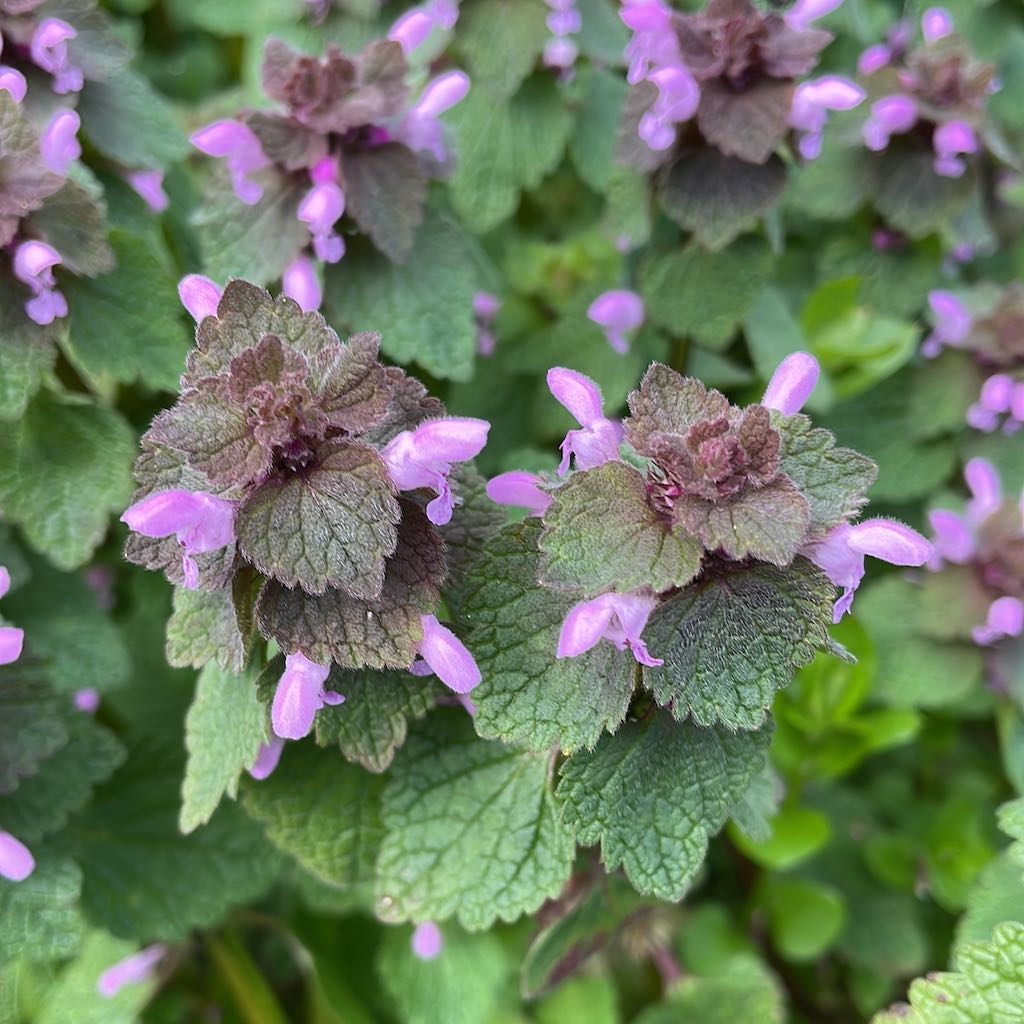
This low-growing annual features characteristic square stems cloaked in fuzzy, heart-shaped leaves with finely scalloped edges. The upper leaves crowd tightly together at the top, developing a striking, rich reddish-purple gradient tint. From beneath these colourful leaves emerge dense whorls of tiny, tubular, two-lipped pinkish-purple flowers that feature delicate hood-like upper petals.
Interesting Facts
Its common name “deadnettle” explicitly highlights that its soft, fuzzy leaves entirely lack the painful stinging hairs of true nettles, making it completely “dead” to the touch. Belonging directly to the Lamiaceae (mint) family, the entire plant is fully edible with a mild, earthy, slightly sweet flavor. Historically, it was highly valued in folk medicine for its potent astringent and anti-inflammatory properties.
Importance to Wildlife
An absolute lifeline for biodiversity, its unique ability to bloom in freezing late winter makes it a critical, early-season food source. It provides vital nectar and pollen for emerging queen bumblebees and solitary bees when few other flowers exist. The nutritious seeds feature tiny, oil-rich appendages called elaiosomes, which actively encourage local ants to collect and disperse them naturally.
Advice
Purple deadnettle is non-toxic and it is even possible to use the young leaves and vibrant purple tops in spring salads, to blend into nutritious green smoothies, or to brew into soothing herbal teas