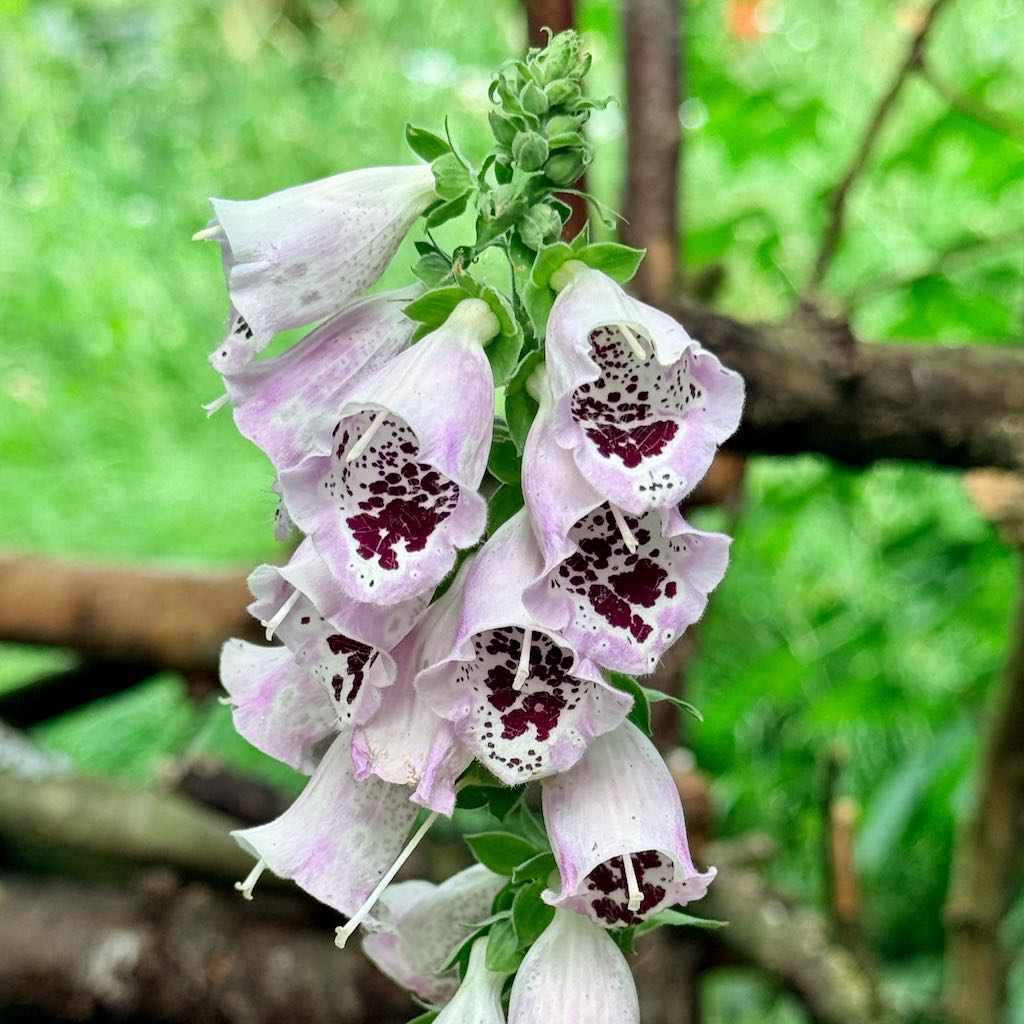
This dramatic biennial spends its first year forming a low, fuzzy rosette of large, oval, grey-green leaves. In its second summer, it sends up a tall, magnificent spire packed with downward-facing, tubular, bell-like flowers. These striking blooms are typically a vivid pinkish-purple or white, heavily speckled with dark spots and pale halos on the interior throats.
Interesting Facts
Rich in folklore, old myths claim that mischievous fairies handed the blossoms to foxes to wear on their paws to quieten their footsteps while hunting. Scientifically, it revolutionized cardiovascular medicine since the plant contains digitalis, a powerful chemical isolated in the late 18th century that is still refined today into life-saving prescription drugs used globally to regulate irregular heartbeats.
Importance to Wildlife
Foxgloves are a crucial summer lifeline for long-tongued insects. The lower petals act as an ideal landing pad, leading bumblebees directly up the tubular throat into a nectar paradise. Because honeybees cannot easily reach inside, it provides an exclusive sanctuary for wild bumblebees. After flowering, its massive seed heads provide an abundant autumn feast for small foraging garden birds.
Advice
Foxglove is toxic humans and animals if ingested. Don’t touch a Foxglove and never eat them.