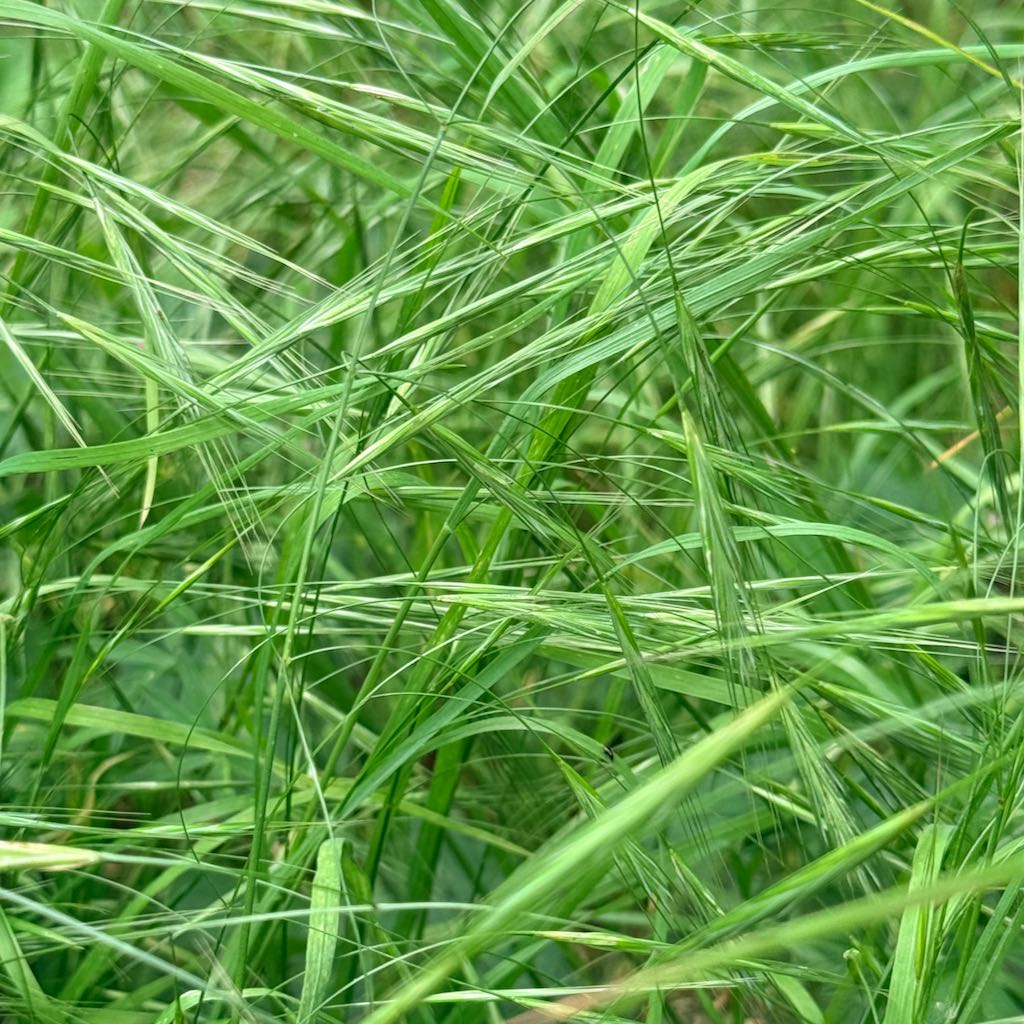
This upright winter annual grass features loosely tufted, hairy stems and flat, rough green leaves. It produces open, nodding seed heads with long, spreading branches. Each flower spikelet ends in rigid, needle-like awns measuring up to five centimetres long. As the plant dries in summer, the entire seed head turns a distinctive, straw-coloured pale brown.
Interesting Facts
Its terrifying name is entirely literal. The sharp, backward-pointing microscopic barbs on its long seed awns act like tiny fishhooks. These specialized structures are evolutionary marvels designed to latch onto passing animals for seed dispersal. Unfortunately, they easily drill deep into soil, clothing, and flesh, making it a highly notorious and intensely disliked weed across global agricultural rangelands.
Importance to Wildlife
While widely considered an invasive pest, its early green spring growth provides vital, high-protein forage for wild grazing mammals before other grasses mature. The dense, golden stands provide excellent nesting structure and ground cover for game birds and small rodents.
Advice
Ripgut Brome does not contain biochemical toxins, but it poses a severe physical hazard to dogs, cats, sheep, and horses. It’s best not to go near it.