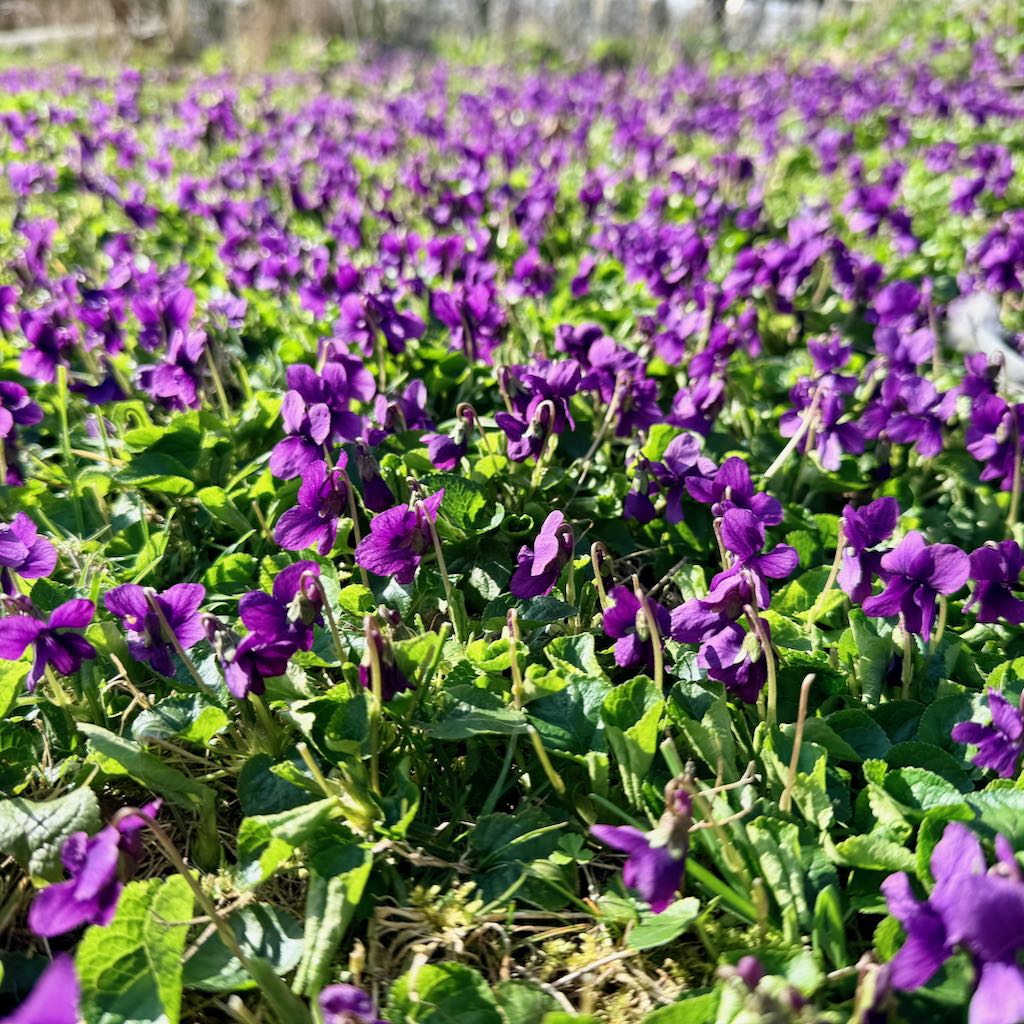
This low-growing perennial features beautiful, heart-shaped (cordate) leaves with finely scalloped edges that emerge directly from underground rhizomes. The distinct five-petaled flowers range in colour from deep violet and sky blue to pure white. The blooms feature a unique asymmetrical shape with a slight spur at the back, cradled by a lush, dark green foliage carpet.
Interesting Facts
Fascinatingly, wild violets produce two types of flowers. The showy spring blossoms are often sterile. In late summer, the plant grows hidden, petal-less, self-pollinating flowers near the soil line. When mature, these seed pods explosively launch seeds several feet away.
Importance to Wildlife
Violets are an absolute ecological necessity, serving as the exclusive larval host plant for beautiful Fritillary butterflies (without them, these butterfly species cannot survive). The early spring blooms provide a critical, life-saving nectar source for queen bumblebees and solitary mining bees emerging from winter hibernation. Additionally, ants actively collect and disperse the nutrient-rich seeds across the orchard floor.
Advice
While the violet itself is safe, it shares a nearly identical leaf shape with other plants (including Lesser Celandine and Wild Ginger) which are not safe to eat; for that reason you should never eat Wild Violets in case you have identified them wrongly.