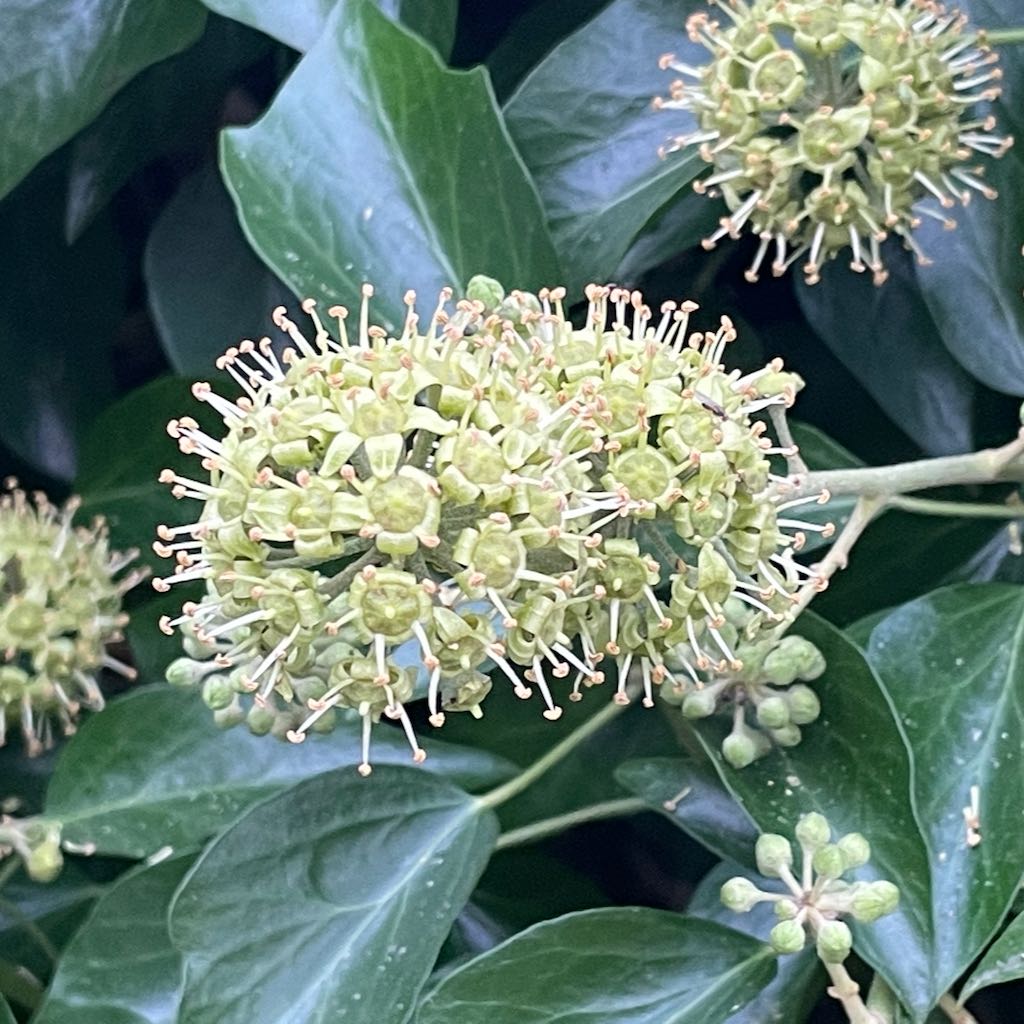
This versatile evergreen perennial exhibits two distinct growth phases. Its juvenile climbing vines feature characteristic, three-to-five-lobed, heart-shaped dark green leaves with striking pale veins, clinging to bark using tiny aerial rootlets. Upon reaching full sunlight, the adult flowering branches develop un-lobed, oval leaves and produce domed, umbrella-like clusters of small, yellowish-green flowers that ripen into glossy black winter berries.
Interesting Facts
Contrary to popular belief, it is not a parasite; its aerial roots provide pure physical grip rather than stealing nutrients from host trees. It holds deep cultural ties to winter solstices and Roman mythology as a symbol of fidelity. Remarkably, its tough, interlocking leaf canopy acts as natural insulation, protecting old masonry and orchard walls from severe frost damage and solar radiation.
Importance to Wildlife
An absolute cornerstone for late-season biodiversity, its autumn blooms provide a critical, final nectar lifeline for honeybees, hoverflies, and the specialized Ivy Bee before hibernation. Its dense, evergreen mats supply indispensable year-round nesting cover for birds and bats. Come mid-winter, its fat black berries offer an essential, high-calorie feast for hungry thrushes, woodpigeons, and overwintering blackcaps.
Advice
Ivy contains toxins and should not be consumed.