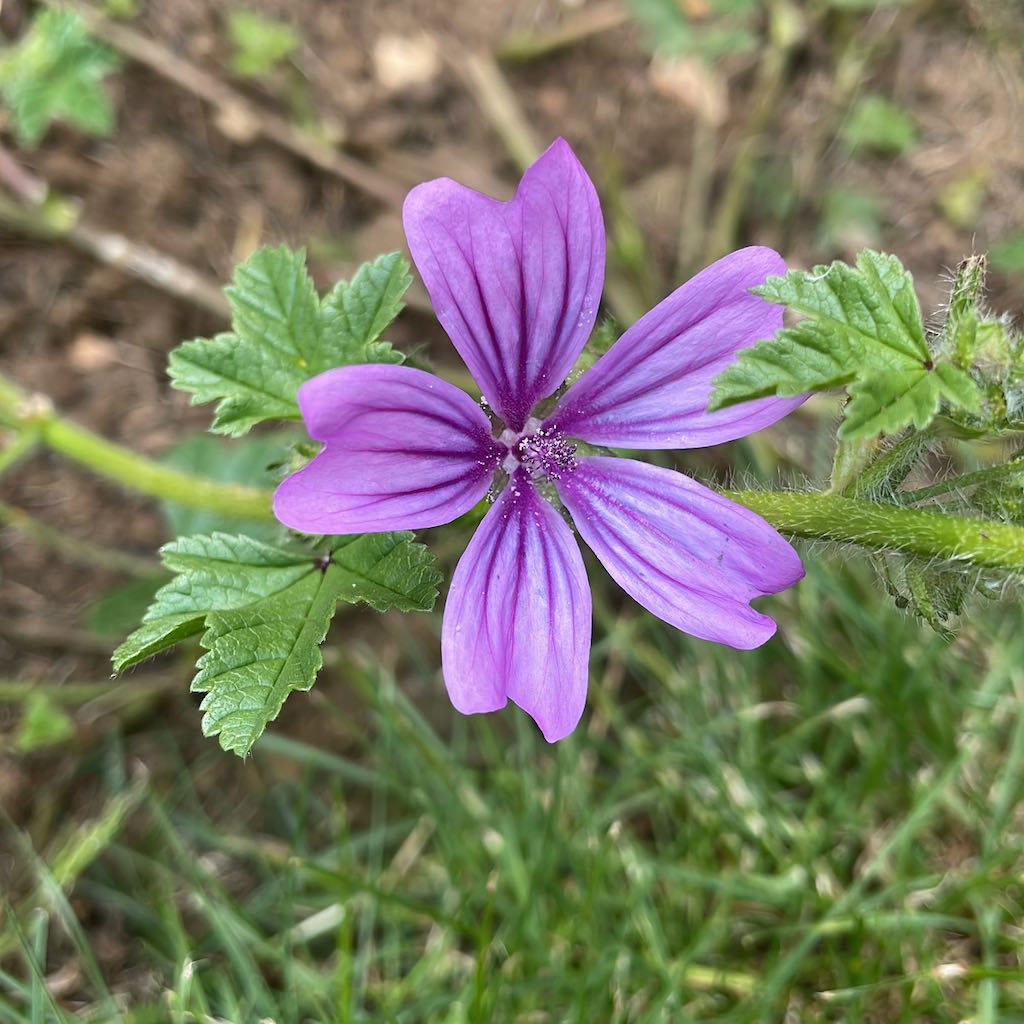
This robust, hairy plant features branching stems lined with alternate, kidney-shaped or heart-shaped green leaves that are deeply divided into five to seven crinkled lobes. It produces eye-catching clusters of large, saucer-shaped flowers featuring five notched petals. These striking blossoms display a vibrant pinkish-purple or mauve hue, beautifully marked with dark, prominent radiating violet veins.
Interesting Facts
Its delightful folk nickname “cheeses” captures a centuries-old childhood tradition of harvesting and eating its round, flat, segmented green seed pods, which look exactly like miniature wheels of cheese. Rich in soothing mucilage, it was historically used in European folk medicine to calm sore throats. Culturally, its natural plant pigments were widely extracted to create soft purple fabric dyes.
Importance to Wildlife
An exceptional biodiversity booster, its large, wide-open saucer blossoms serve as highly accessible nectar platforms. They draw a massive variety of summer pollinators, including honeybees, wild bumblebees, and specialized hoverflies. Crucially, it acts as an essential larval host plant for several native insects, most notably the striking Painted Lady butterfly, making it a stellar addition to any eco-friendly orchard margin.
Advice
Common Mallow is entirely safe for humans.