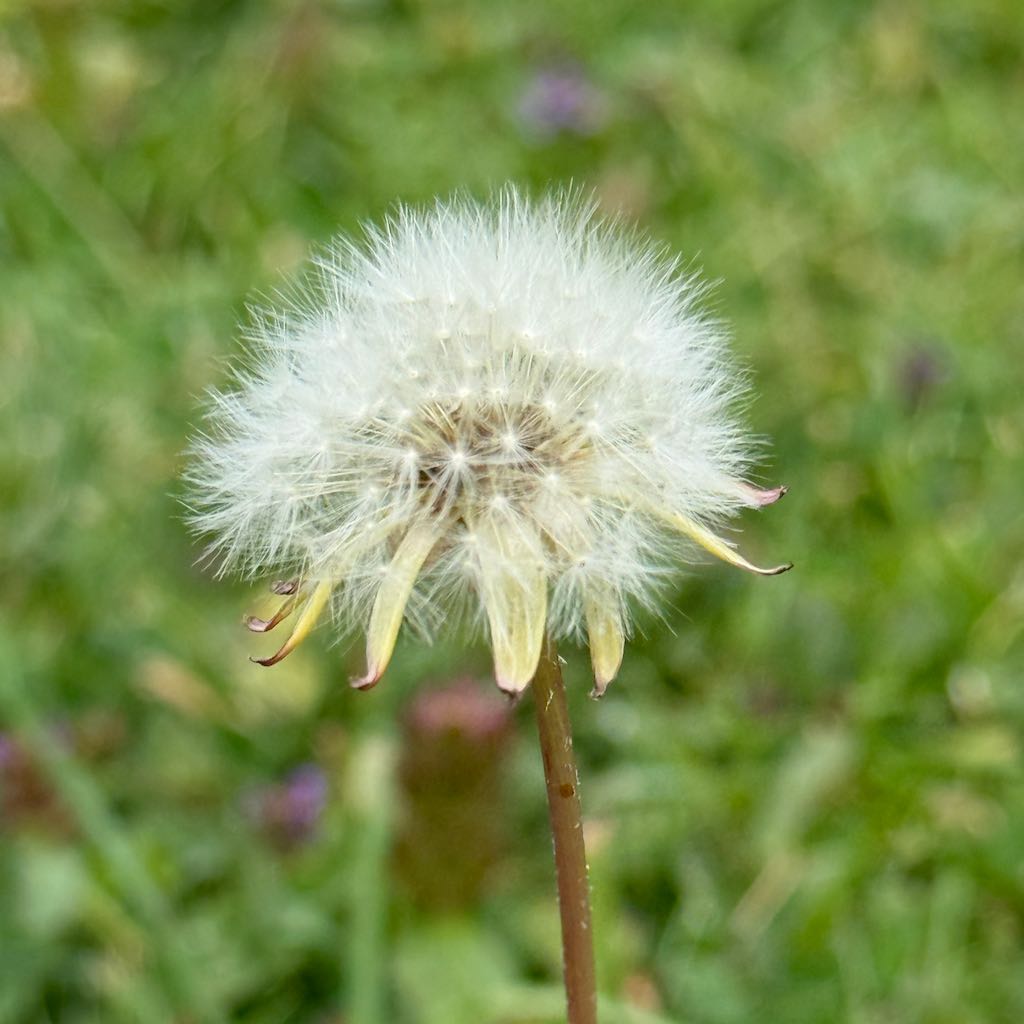
The common dandelion is a familiar, low-growing wildflower arising from a thick, milky-sapped taproot. It features a basal rosette of deeply lobed, lance-shaped leaves with tooth-like edges pointing inward. From the centre, hollow, leafless stalks rise to support a single, bright golden-yellow flower head. These composite blooms eventually mature into iconic, spherical white seed clocks composed of hundreds of feathery parachutes.
Interesting Facts
The name dandelion is a corruption of the French dent-de-lion, translating directly to “lion’s tooth,” referencing the jagged, deeply cut leaf edges. The plant acts as a powerful, scientifically proven diuretic when consumed. Remarkably, dandelions can reproduce via apomixis, a process where they produce viable seeds clones of the parent plant entirely without needing pollination.
Importance to Wildlife
This widespread wildflower is an absolute cornerstone of spring biodiversity, ranking among the top nectar producers for insects. Its early-season yellow blooms provide an essential, high-volume energy source for newly emerged queen bumblebees, solitary bees, and hoverflies. Later in the year, the highly abundant seed heads serve as a critical, high-energy food staple for foraging finches, sparrows, and other wild birds.
Advice
The common dandelion is entirely non-toxic to humans, dogs, cats, and livestock. It is a highly nutritious, edible plant rich in vitamins A, C, and K. Every part of the plant can be consumed; the young leaves add a peppery kick to salads, the roots can be roasted into a coffee substitute, and the yellow petals are traditionally brewed into dandelion wine.