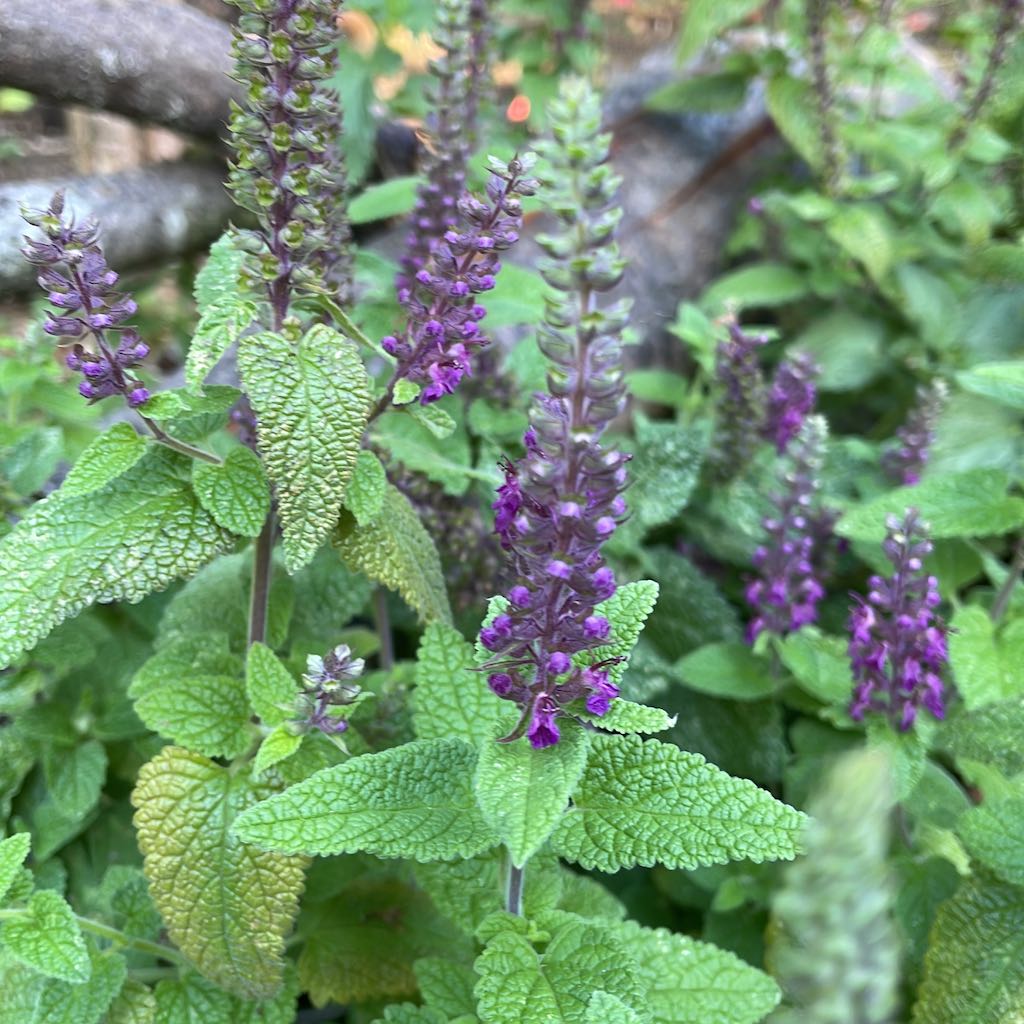
Wood sage is a native, downy perennial sub-shrub featuring square, erect stems arising from a creeping underground rhizome. It sports grey-green, oval, heart-shaped leaves with distinctively crinkled, net-veined surfaces that resemble true sage leaves. During midsummer, it produces long, slender, leafless spikes covered in pairs of pale, straw-coloured or greenish-yellow flowers featuring prominent, protruding purple-maroon stamens.
Interesting Facts
Despite its deceptive name and appearance, wood sage is actually a member of the mint (Lamiaceae) family and is completely unrelated to culinary sage. It has almost no scent or kitchen value, but historically, brewers used its bitter leaves as a hop substitute in beer production. Fascinatingly, its flowers grow in parallel pairs that turn dynamically to face the midday sun.
Importance to Wildlife
This plant provides massive ecological value to open habitats like heaths, dunes, and woodland margins. Its nectar-rich, two-lipped flowers are loved by bees, wasps, hoverflies, and butterflies. In addition, the massive volume of seeds it drops during autumn acts as a vital food source for foraging birds, while specific local beetles rely strictly on its foliage.
Advice
Unlike edible common sage, wood sage is toxic if consumed. Don’t confuse it will culinary Sage; because it will make you ill!