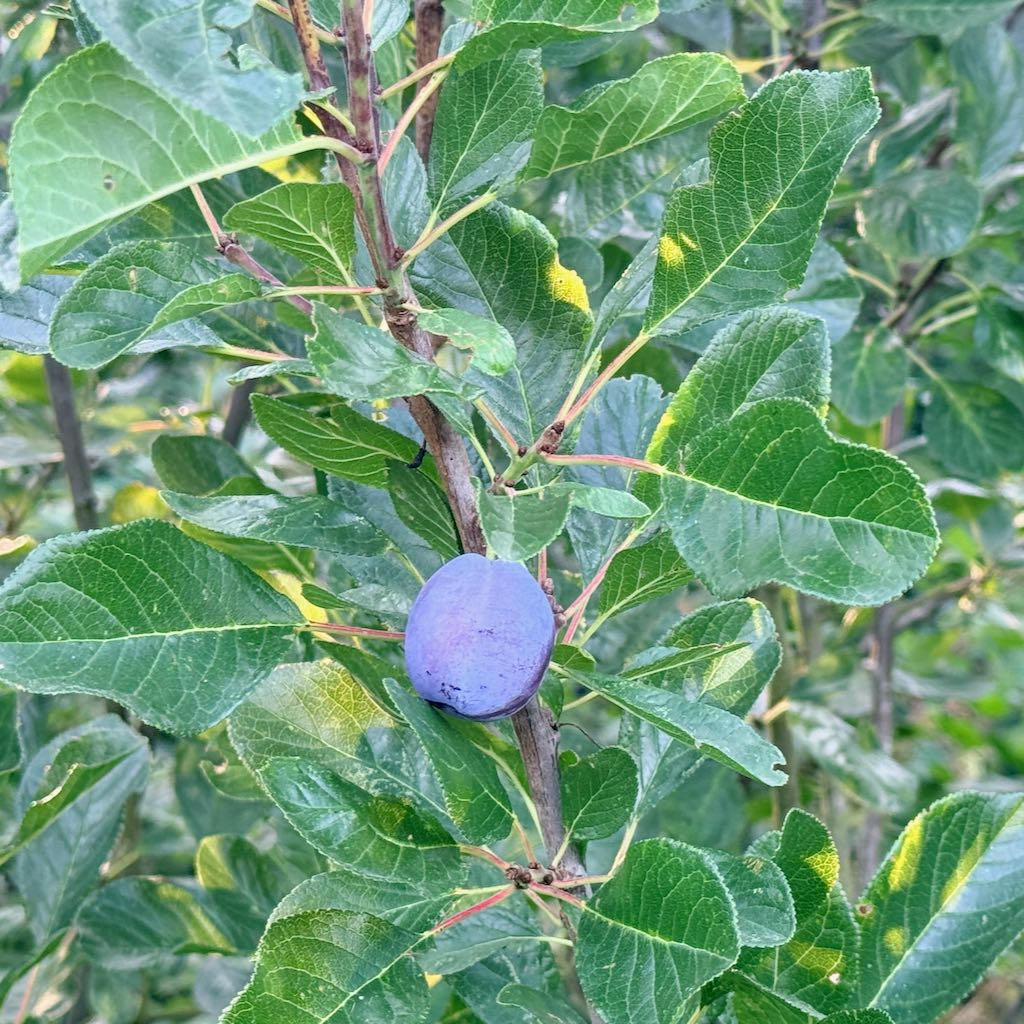
The damson is a small, tough, deciduous tree displaying an erect, spreading habit and thin bark often coated in mosses or lichens. Its branches bear dark green, shiny, oval-shaped leaves with finely serrated margins. In spring, the canopy is blanketed by clouds of small, five-petalled white flowers, which mature into heavy autumn crops of small, oval, indigo-purple plums.
Interesting Facts
The name damson derives from the Latin prunum damascenum, meaning “plum of Damascus,” reflecting ancient lore that Romans imported the tree from Syria. Known for its intensely tart, astringent flavor, it boasts high pectin levels, making it a historic favorite for British jams and gins. In the Industrial Revolution, the fruit skins were heavily utilised in northern England to manufacture vibrant purple fabric dye.
Importance to Wildlife
Damson trees are exceptional ecological engines within hedgerows and orchards. Their early spring blossoms deliver a vital, massive energy boost of nectar and pollen to emerging honeybees, bumblebees, and hoverflies. The dense, sometimes thorny branches offer nesting shelter and camouflage for garden birds, while the dropping, overripe autumn fruit supplies a sugar-rich winter feast for thrushes, wasps, and small mammals.
Advice
The flesh of the damson fruit is entirely non-toxic and highly edible when cooked.