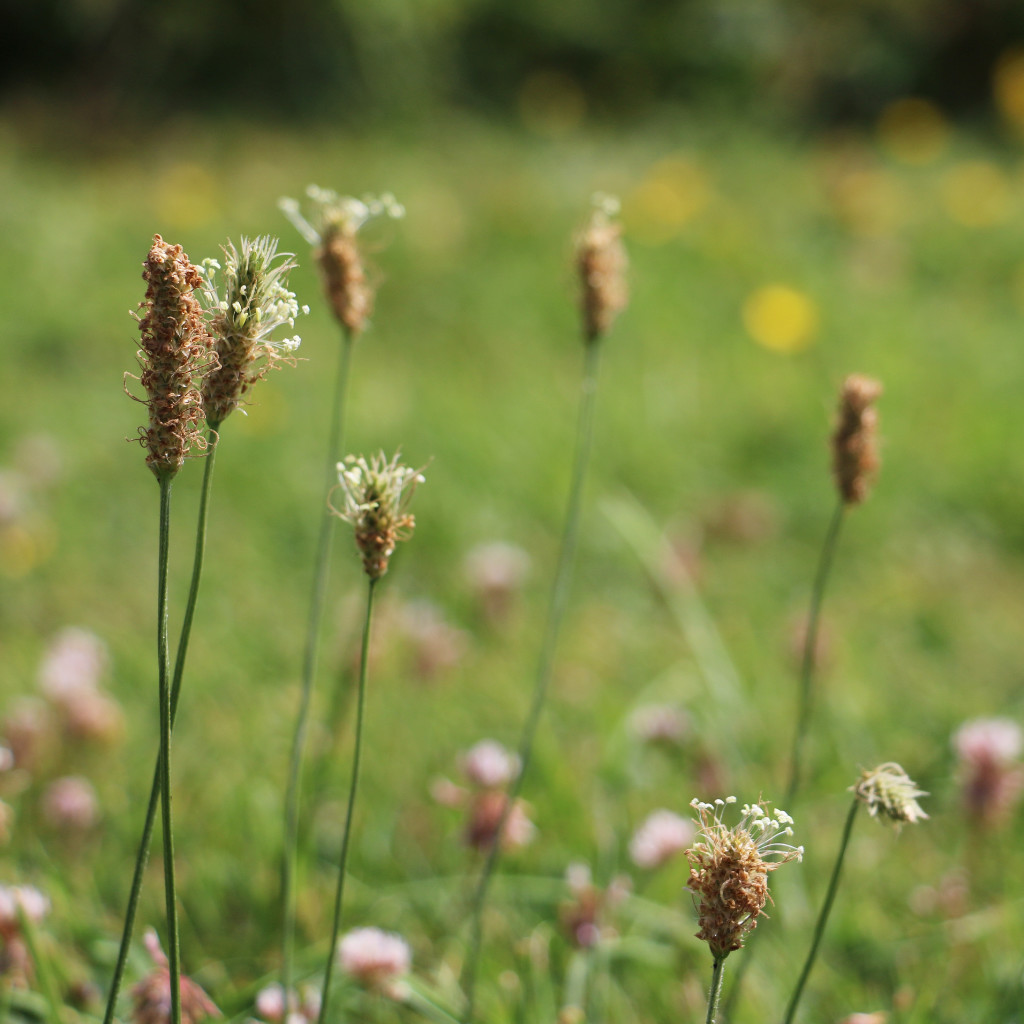
Ribwort plantain is a hardy, low-growing wildflower characterized by its distinctively ribbed, lance-shaped leaves that form a flat basal rosette. The long, narrow leaves feature prominent parallel veins running along their length. From the centre, wiry, leafless stalks rise to support dense, egg-shaped, brownish-green flower heads ringed by a delicate halo of prominent, creamy-white male stamens.
Interesting Facts
The common name “ribwort” references the tough, stringy veins running through the leaves, which resemble internal ribs. Historically, children used these sturdy flower stalks for a popular folk game called “soldiers,” mimicking a mock sword fight by trying to decapitate an opponent’s seed head. In traditional herbalism, its crushed leaves were widely valued for stopping minor bleeding and soothing insect bites.
Importance to Wildlife
This widespread plant is a crucial ecological foundation, particularly for native insects. It serves as an essential larval food source for several beautiful, declining butterflies, including the Granville fritillary and the heath fritillary. The wind-pollinated flowers are eagerly visited by pollen-gathering bumblebees and hoverflies, while the highly abundant autumn seed heads provide a vital high-energy food source for foraging finches.
Advice
Ribwort plantain is completely non-toxic to humans, dogs, cats, and grazing livestock.