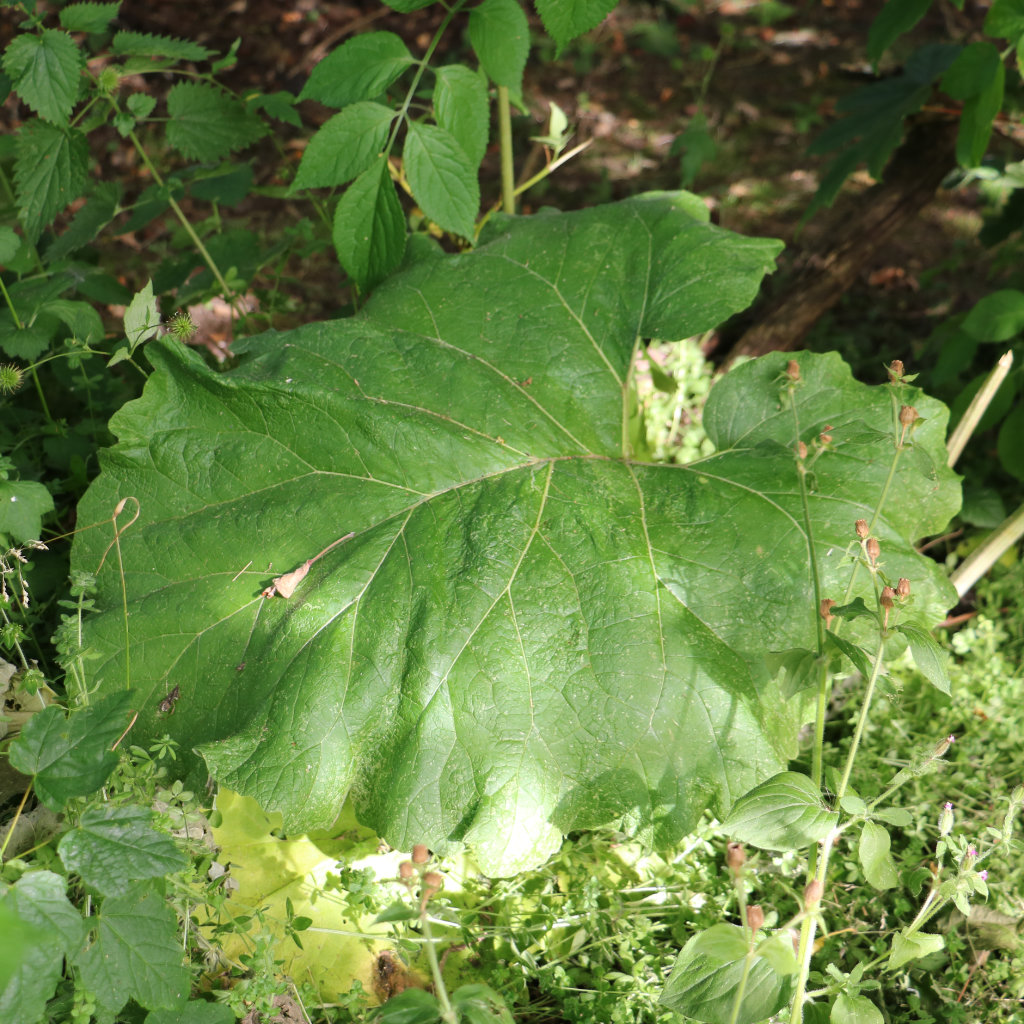
Common burdock is a large, coarse wildflower that forms a massive leafy rosette in its first year. By the second summer, it produces stout, branched, frequently reddish-tinted stems lined with alternate, hollow-stalked leaves. These large, heart-shaped green leaves possess light, woolly undersides. The branches terminate in tight, uneven clusters of purplish, thistle-like flower heads ensconced in sticky green bracts.
Interesting Facts
The genus name Arctium stems from the ancient Greek word for “bear,” referencing the coarse, fuzzy textures of the flower heads. The small, hooked prickles on common burdock seed heads famously served as the mechanical inspiration for the invention of Velcro. Historically, its deep carrot-like taproot was utilised in traditional British brewing alongside dandelion to produce a distinctively earthy, carbonated herbal beverage (that we call “Dandelion & Burdock”).
Importance to Wildlife
This species is a late-summer ecological treasure, offering vital nourishment to local wildlife. Its bright purple flower heads provide vast reserves of nectar and pollen heavily used by bees, hoverflies, and butterflies, such as painted ladies. The broad leaves offer a safe canopy for ground-dwelling invertebrates, while its oily winter seed heads are a favorite high-energy food source for goldfinches.
Advice
Common burdock is chemically non-toxic to humans, and its cooked roots, stalks, and young leaves are completely edible. However, the plant poses a severe mechanical injury hazard to domestic pets and livestock. The hundreds of stiff, hooked spines covering the dry seed burrs easily hitch a ride, tangling deeply into horse manes, sheep wool, and dog ears. This frequently triggers painful skin scratches, eye ulcers, or mouth sores.