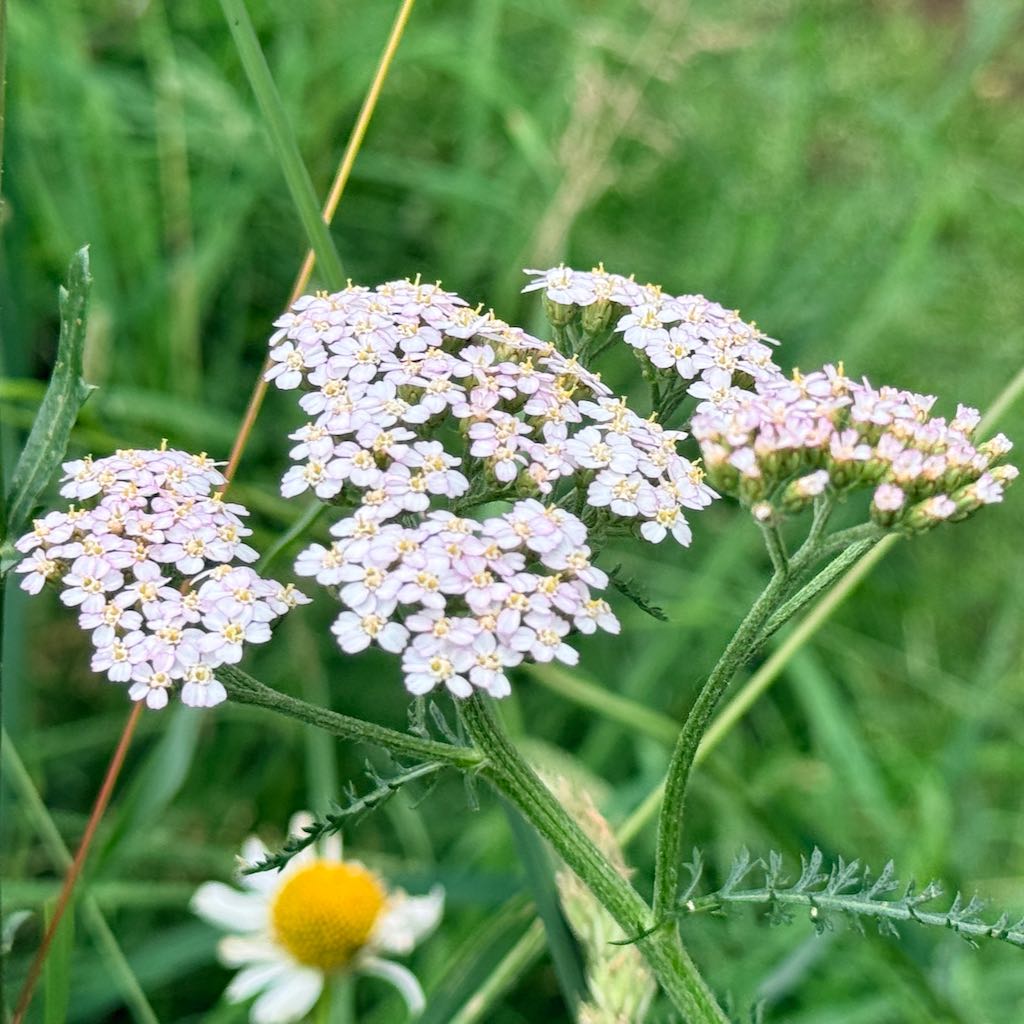
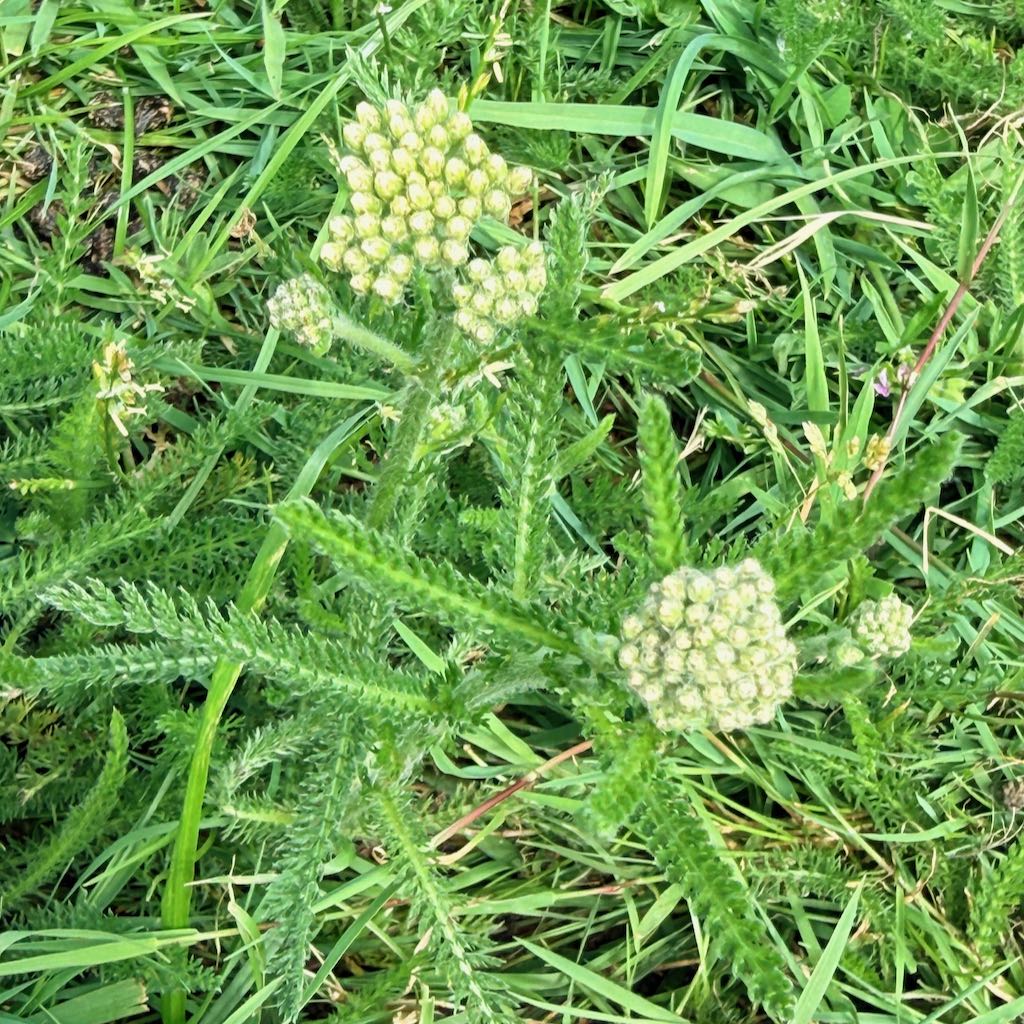
Common yarrow is an aromatic, erect wildflower easily recognized by its feathery, dark green foliage. The finely divided, fern-like leaves alternate up tough, furrowed stems. The plant is topped by flat-topped, umbrella-like clusters composed of numerous tiny, tightly packed flower heads. These long-lasting blooms are typically crisp white or pale pink, each featuring a distinctively yellow central disc.
Interesting Facts
The genus name Achillea honors the Greek hero Achilles, who allegedly used yarrow to staunch the bleeding wounds of his soldiers at the siege of Troy. Historically known as “nosebleed,” people stuffed its astringent leaves up their nostrils to stop bleeding—or conversely, to induce a nosebleed to relieve migraines. It was also utilized in medieval Europe to flavor and preserve beer before hops became popular.
Importance to Wildlife
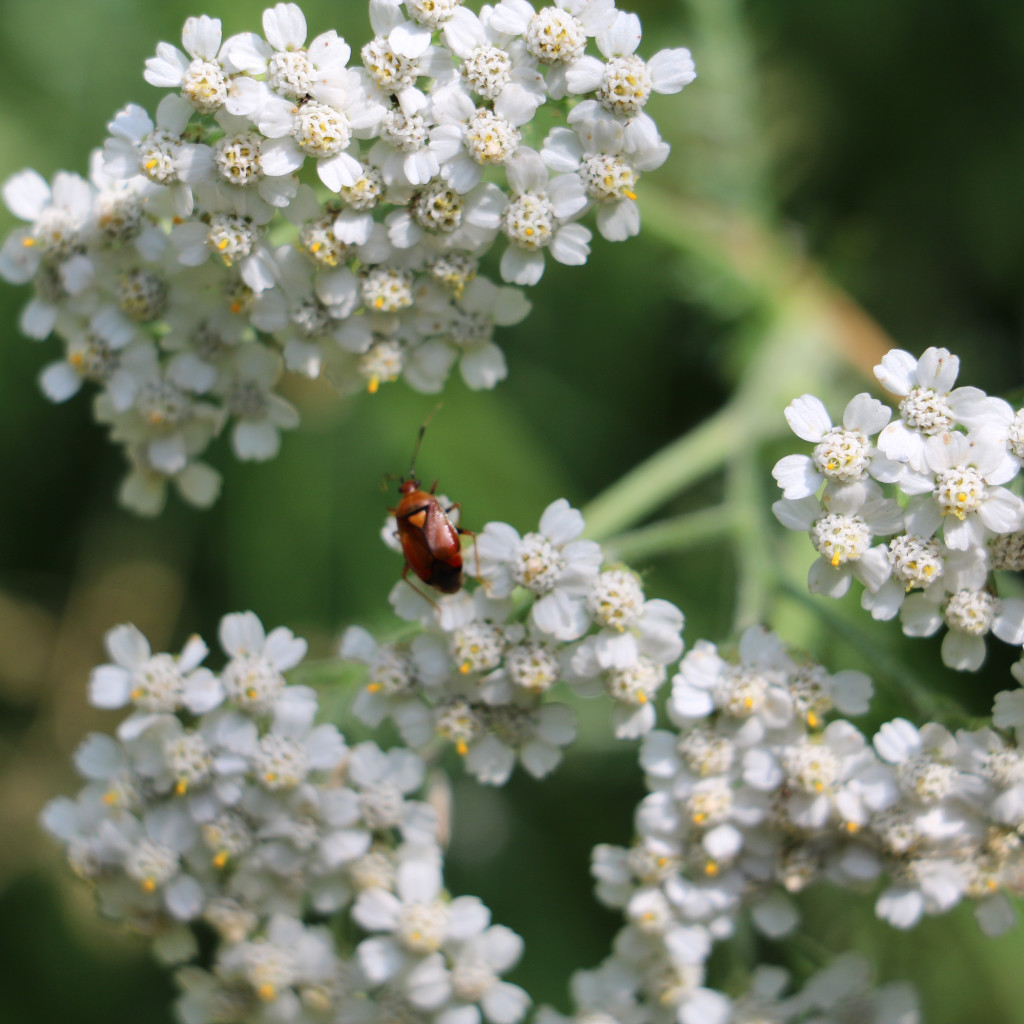
This widespread wildflower is an absolute powerhouse for biodiversity. Its flat, open flower platforms provide ideal landing pads and easy nectar access for a vast array of beneficial insects, including hoverflies, ladybirds, predatory wasps, and various butterflies. It serves as a vital larval host for several moth species, while birds like starlings actively use the aromatic leaves to line nests and repel parasites.
Advice
Common Yarrow is best avoided since it is mildly toxic.