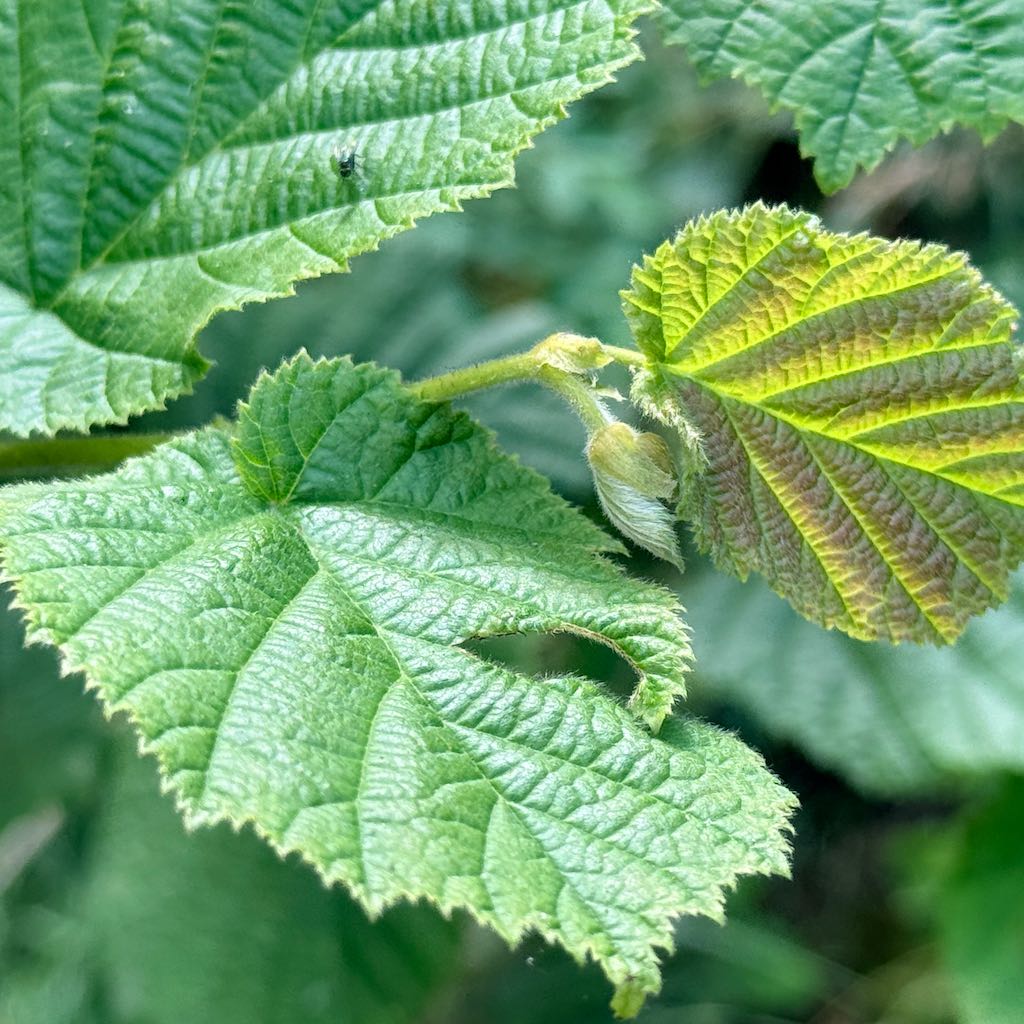
This deciduous perennial shrub features smooth, grey-brown bark and flexible, downy twigs holding large, rounded, bright green leaves with doubly toothed margins. In late winter, it produces hanging, golden-yellow male catkins alongside tiny, bud-like female flowers with vivid red stigmas. By autumn, these blossoms mature into highly prized, hard-shelled nuts nestled inside leafy, green-fringed husks.
Interesting Facts
Hazel possesses an extraordinary capacity for coppicing; cutting the stems to the ground triggers rapid regrowth, historically supplying flexible, durable wood for ancient wattle-and-daub housing, fencing, and walking sticks. In Celtic folklore, it was revered as a sacred symbol of cosmic wisdom. Today, its cultivated varieties fuel global culinary industries, heavily sought after for gourmet spreads and praline chocolates.
Importance to Wildlife
An invaluable early-season asset for orchard biodiversity, its pollen-dense winter catkins provide a critical, life-saving food source for bees emerging early from hibernation. The dense, multi-stemmed structure offers premium nesting camouflage for declining birds like nightingales. In autumn, the nutrient-dense nuts provide an indispensable, high-fat winter feast for red squirrels, dormice, jays, and specialized wood mice.
Advice
Hazel is non-toxic and exceptionally safe for humans and animals. Indeed the kernels (hazelnuts/cobnuts) are highly nutritious, packed with healthy fats, and enjoyed globally.