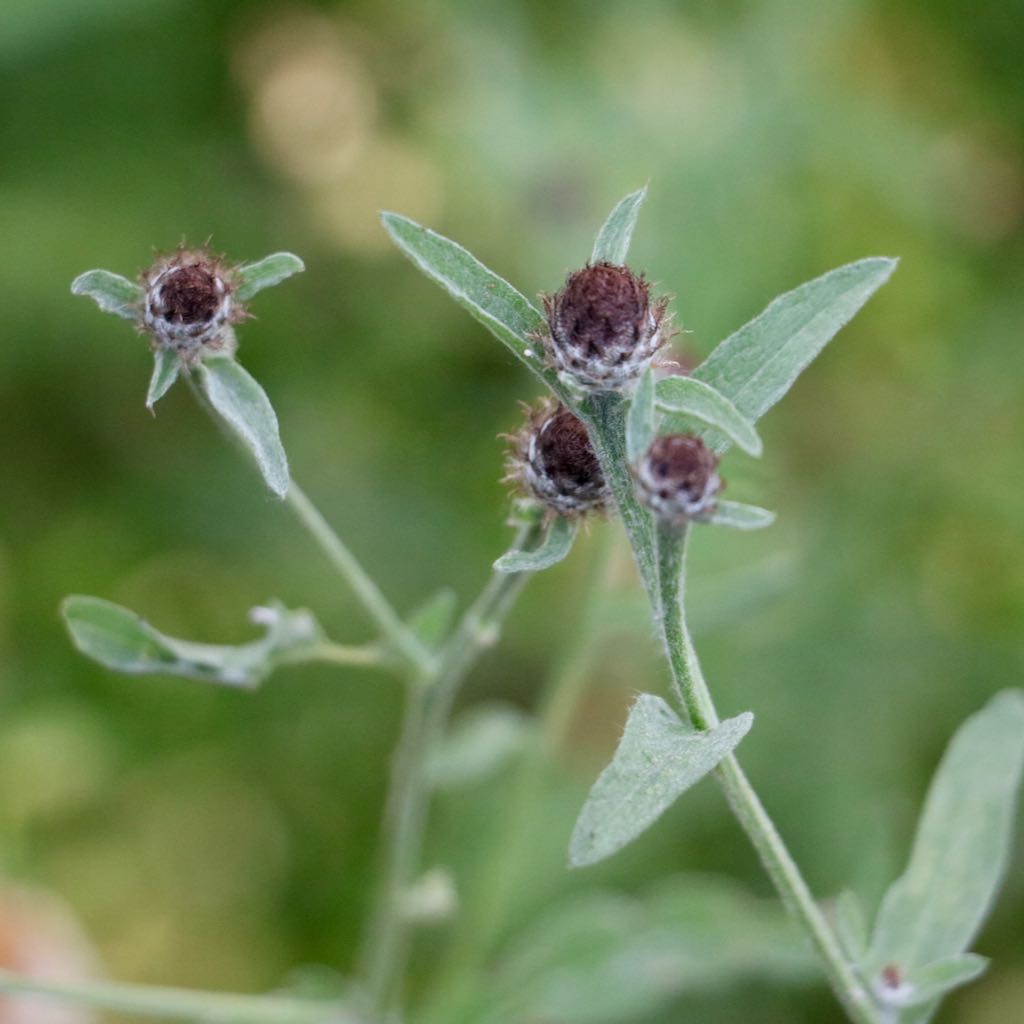
This upright perennial features tough, grooved, branching stems and dull green, lance-shaped leaves covered in fine hairs. It is crowned by distinctive thistle-like flower heads. Each hard, rounded, scale-covered brown bulb bursts into a dense explosion of vibrant, reddish-purple florets. The outer ring of petals is often larger and more flared, creating a ragged, crown-like display.
Interesting Facts
Its common names “hardhead” and “ironweed” celebrate the incredible toughness of its woody, bulbous seed heads, which are notoriously difficult to cut or crush. Historically, it was used in traditional European folk medicine to heal wounds and reduce inflammation. In rural folklore, young women used the flower buds in love divination games to predict their future suitors.
Importance to Wildlife
An absolute superpower for biodiversity, it ranks among the very top nectar-producing wildflowers in the UK. It acts as a massive magnet for bees, hoverflies, and butterflies, including the declining Meadow Brown and Marbled White. Come autumn, its tough, mature seed heads provide a vital, high-energy winter feast for charms of goldfinches and other foraging songbirds.
Advice
Common Knapweed in non-toxic to humans and animals.