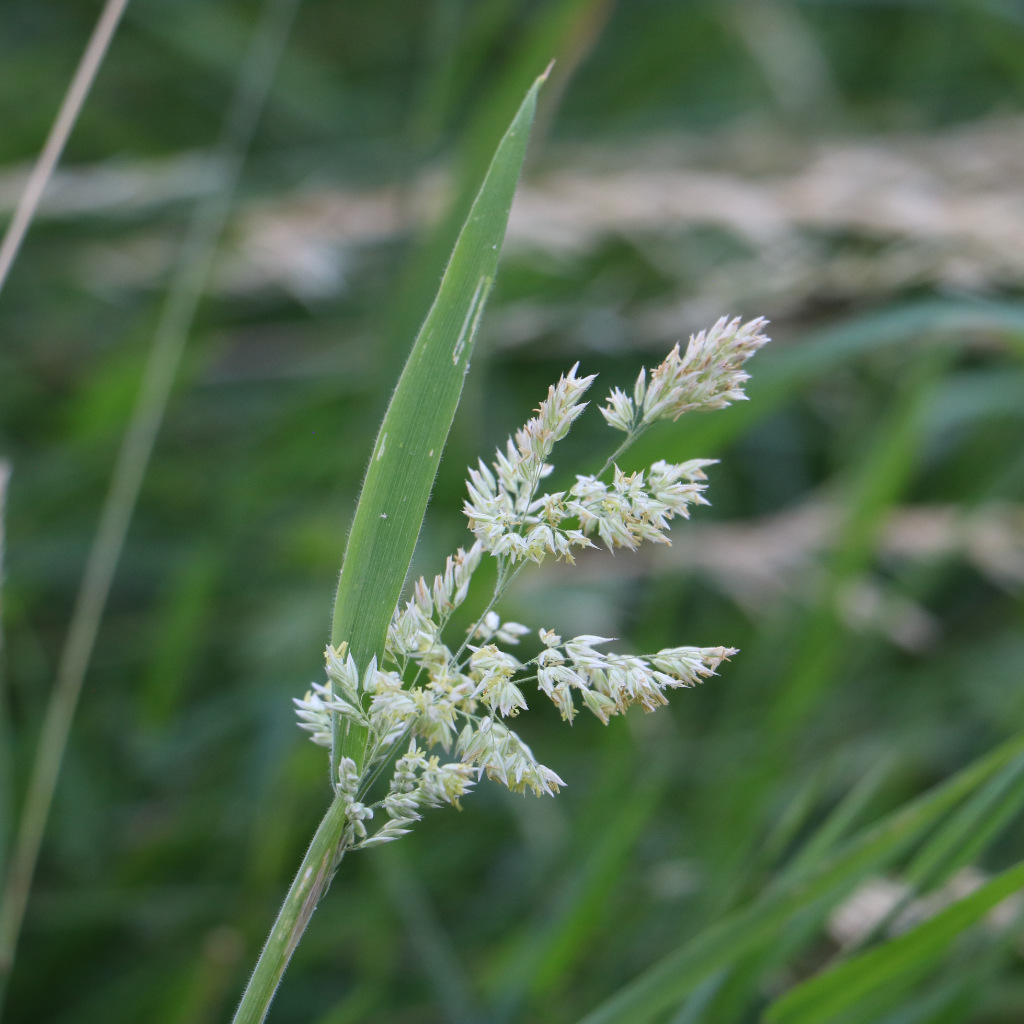
This perennial bunchgrass forms dense, pale green tufts instantly recognizable by its exceptionally soft, velvety coating of fine hairs covering all leaves and stems. In summer, it produces crowded, highly branched flower panicles. These airy, feather-like seed heads display a distinctive pinkish-purple or pale cream blush, giving a hazy, misty appearance to wild meadows and orchard rows.
Interesting Facts
Its poetic common name “Yorkshire Fog” celebrates the misty, cloud-like visual effect created when entire fields of its velvety, pale pink seed heads sway simultaneously in the wind. Highly adaptable, it thrives in wet, nutrient-poor, and heavily acidic ground. Intriguingly, it possesses a specialised genetic capacity to rapidly evolve an extraordinary tolerance to toxic, heavy metal-polluted soils.
Importance to Wildlife
This grass acts as a crucial ecosystem nursery by serving as a primary larval host plant for diverse native butterfly species, including the Essex Skipper, Small Skipper, and Wall Brown. Its dense winter tussocks supply vital nesting structure and ground cover for small mammals and beetles. Come autumn, its massive yields of tiny grains provide an indispensable feast for foraging songbirds.
Advice
Yorkshire Fog is non-toxic to both humans and animals.