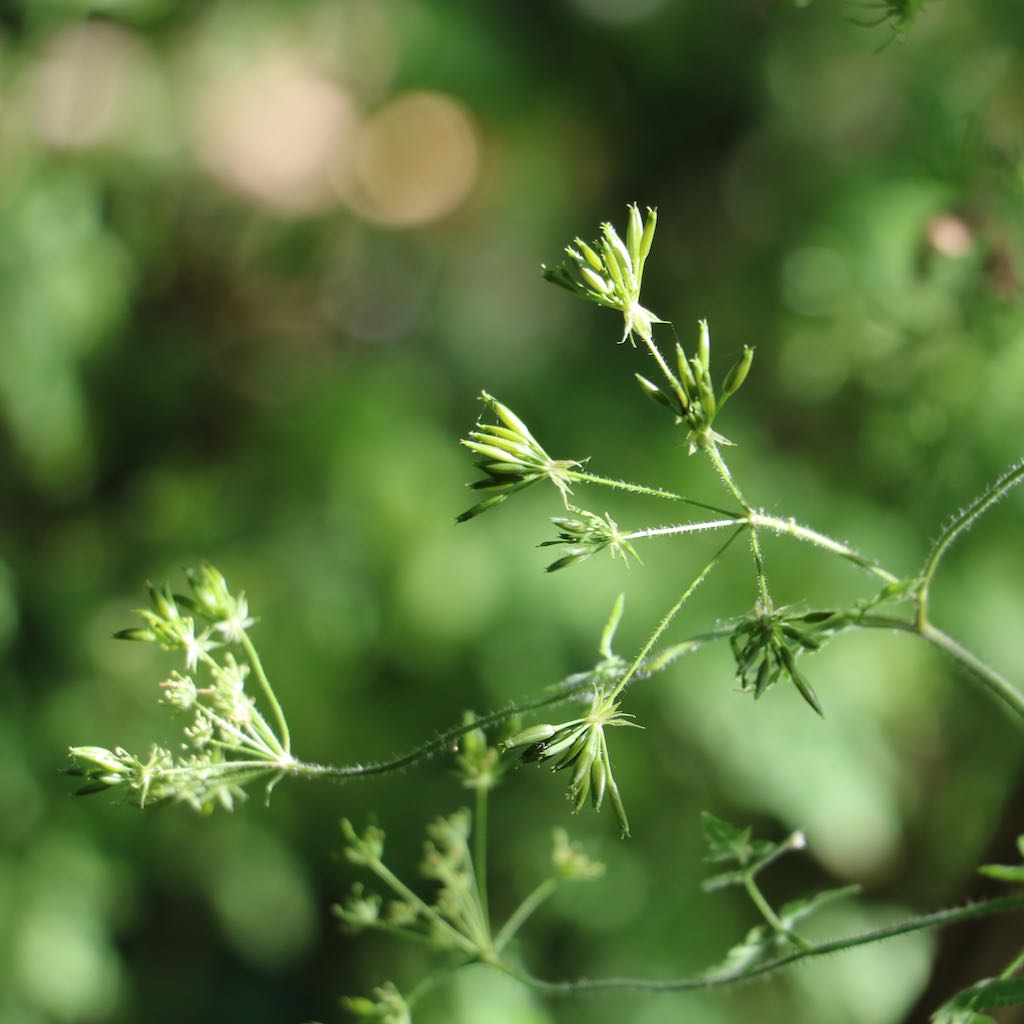
This upright biennial displays solid, coarsely hairy stems that are slightly swollen below the leaf joints and heavily mottled with distinct purple streaks or spots. Its dark green, fern-like leaves are split into deeply toothed, hairy leaflets. In summer, it produces flat, compound umbels composed of dozens of tiny, five-petalled white flowers.
Interesting Facts
Its species name temulum translates to “drunken,” referencing the erratic, staggering behavior observed in livestock that accidentally graze on it. Highly deceptive, this plant looks nearly identical to prized, edible wild chervil. However, it can easily be distinguished by its solid (rather than hollow) stem and its uniquely rough, sandpaper-textured hairs.
Importance to Wildlife
An underrated helper for agricultural ecosystem health, its broad, open white flower tables serve as highly popular, flat landing pads for a massive variety of beneficial predatory beetles, hoverflies, ants, and solitary bees. By drawing these insects into orchard hedge banks, it creates a powerful, natural security system that helps keep damaging aphid populations in check.
Advice
This plant looks very similar to edible Wild Chervil but it not; it’s toxic to both humans and animals and can even cause skin irritation if touched.