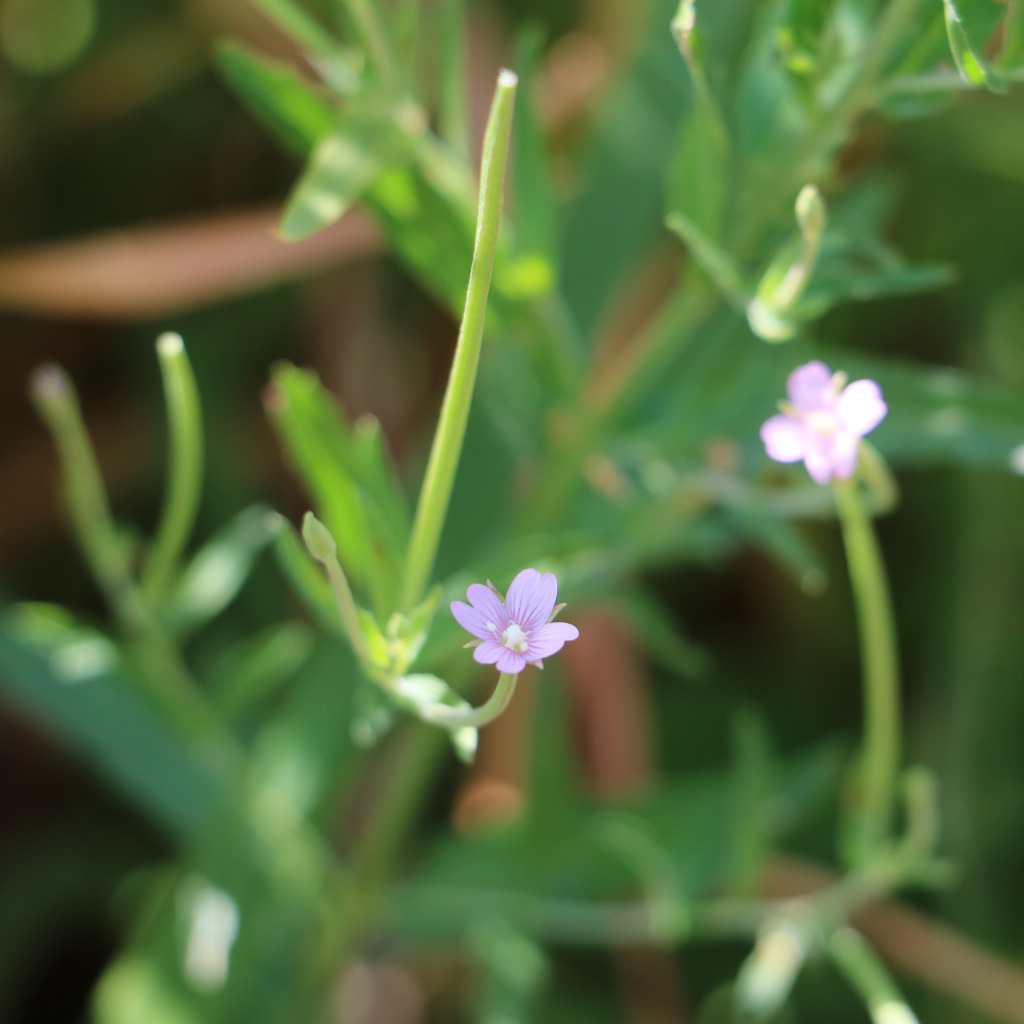
This upright perennial features rigid, branched stems characterized by four distinct, raised lines that give it a noticeably square cross-section. The narrow, lance-shaped green leaves are finely toothed and sit directly against the stem. It produces small, pale pink or lilac four-petalled flowers, which transition into incredibly long, slender seed pods that split open to release white, fluffy seeds.
Interesting Facts
Its Latin species name tetragonum translates directly to “four-angled,” celebrating its unique geometric stem structure. Like other willowherbs, it is a master of wind dispersal; a single plant can produce thousands of seeds equipped with silky hairs that float effortlessly for miles. Historically, its close relatives were used in traditional European herbalism to brew soothing, anti-inflammatory teas.
Importance to Wildlife
An underrated asset for orchard biodiversity, its late-summer blossoms provide a reliable nectar and pollen runway for hoverflies, solitary bees, and small butterflies. It serves as a vital larval host plant for several native insects, including the strikingly beautiful Elephant Hawk-moth. Once the seed pods burst, the remaining fluffy down is frequently gathered by small songbirds to line their nests.
Advice
This plant is non-toxic for both humans and animals.