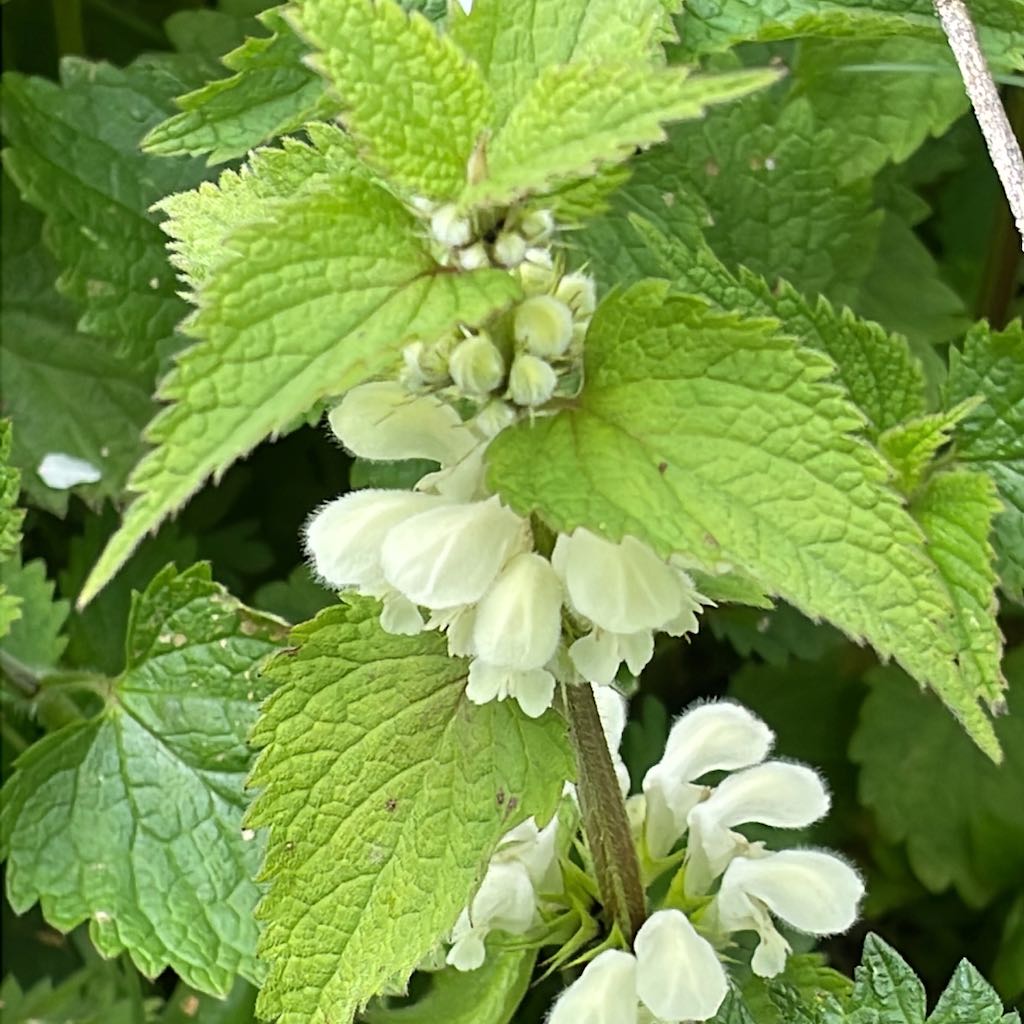
White dead-nettle is an upright wildflower that superficially mimics the stinging nettle but entirely lacks stinging hairs. It features square, hollow stems lined with opposite, heart-shaped leaves that are softly hairy with deeply serrated margins. The plant produces dense, circular whorls of large, creamy-white, hooded flowers clustered directly above the upper leaf joints.
Interesting Facts
The name “dead-nettle” signifies that the plant is harmless or “dead” to the touch. Children historically plucked the white tubular flowers to suck the sweet, honey-like nectar from the base. In traditional European folklore, it was highly regarded as a soothing herb, used in teas to treat melancholy, promote sleep, and alleviate various internal inflammations.
Importance to Wildlife
This species is a premier early and late-season ecological lifeline, particularly for long-tongued insects. Because it blooms almost year-round, it offers a vital food source when few other plants are active. The specialised hooded flowers are heavily frequented by queen bumblebees, carder bees, and moths, which easily access the deeply hidden, sugar-rich nectar.
Advice
White dead-nettle is completely non-toxic to humans and animals and, when young can even be added to salads or brewed in teas. Just be sure you have found White Dead-nettle (rather than a Stinging Nettle) before touching it.