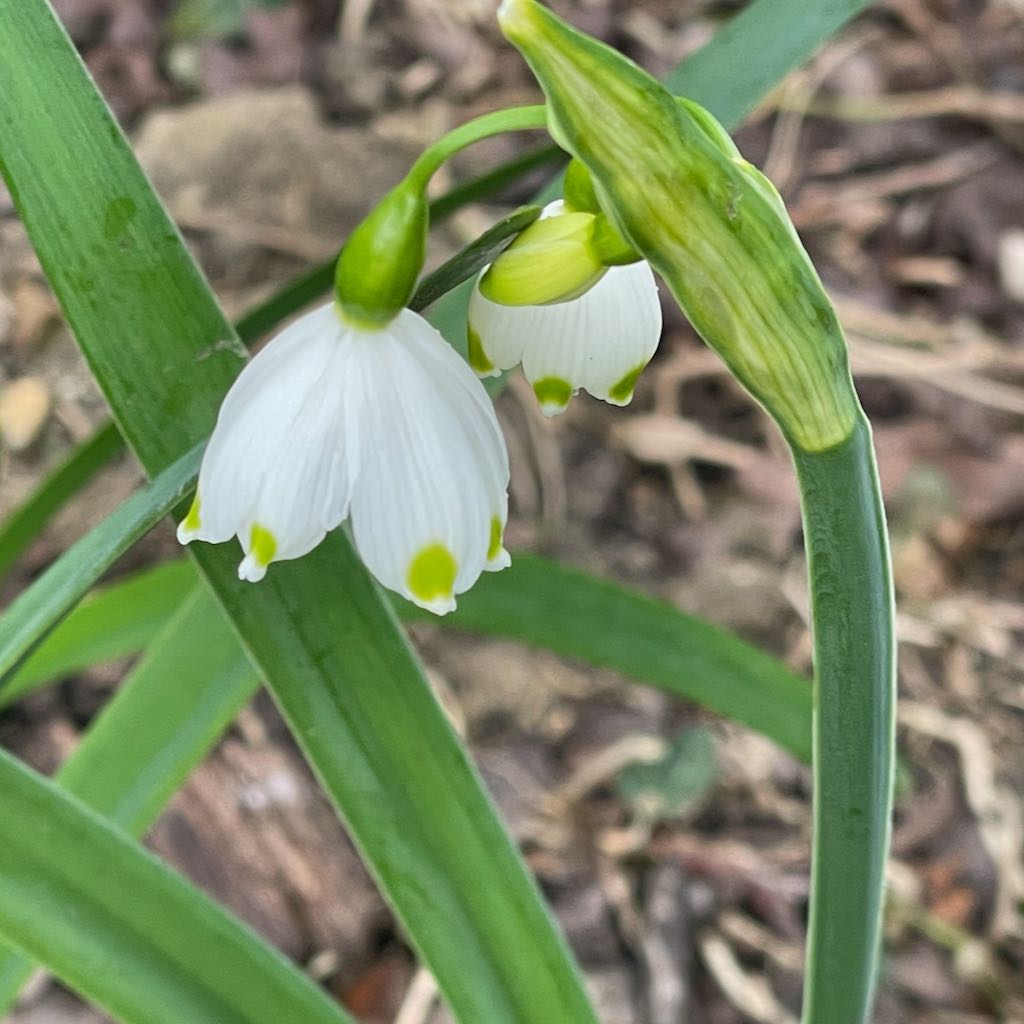
This elegant perennial features clumps of glossy, dark green, strap-like leaves that resemble daffodil foliage. Rising above the leaves are hollow, arching stems carrying loose clusters of nodding, bell-shaped flowers. Each pure white petal is tipped with a distinct, bright green or yellowish spot. The delicate blossoms sway gracefully in the wind, resembling large, multi-flowered snowdrops.
Interesting Facts
In the UK it’s sometimes known as the “Loddon Lily,” celebrating its rare, native stronghold along the banks of the River Loddon in Berkshire. Famously misnamed, “Summer” Snowflake actually blooms in mid-spring, earning its label simply because it arrives slightly later than the true winter snowdrop. Like its cousin the daffodil, it grows from underground bulbs that multiply to form dense colonies over time.
Importance to Wildlife
An invaluable early-season asset for orchard biodiversity, its nectar-rich bell flowers provide a critical food source for queen bumblebees and solitary mining bees emerging from winter hibernation. The dense, clumping foliage offers cool, humid shelter for beneficial orchard predators like frogs and ground beetles. Additionally, its seeds feature tiny, nutrient-rich appendages that encourage local ants to disperse them naturally.
Advice
Mammals don’t eat Summer Snowflake for a reason; they contain toxins that cause vomiting and much worse. Don’t consume or even touch Summer Snowflakes!