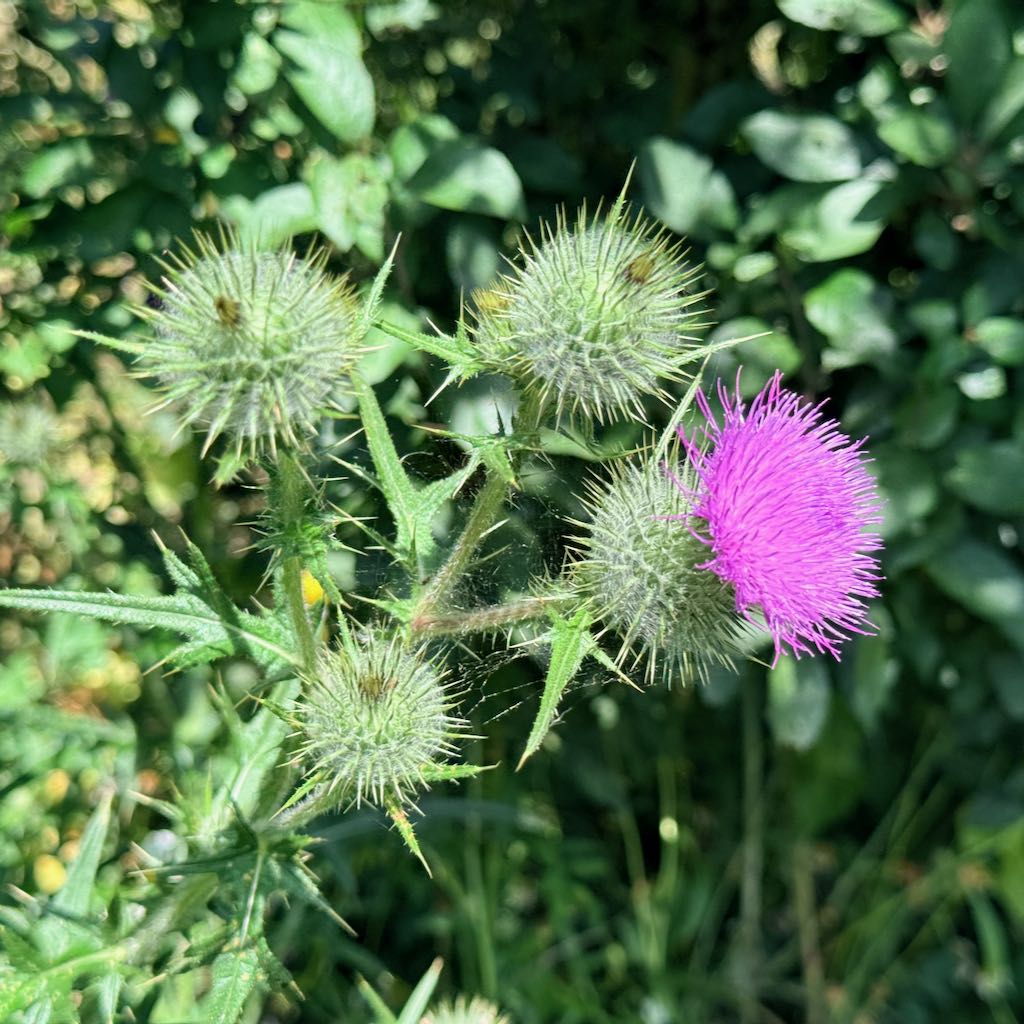
This formidable biennial features deeply lobed, dark green leaves heavily armed with long, razor-sharp spines. The winged, upright stems are similarly spiky and branching. It produces large, swollen, bulbous flower heads covered in tightly overlapping, spine-tipped green scales. These bases are topped by a spectacular, dense cushion of vibrant, feathery, reddish-purple florets that create a crown-like visual.
Interesting Facts
Proudly serving as the ancient, official national emblem of Scotland, this rugged plant is deeply woven into Celtic history and folklore. Its young flower stems can be peeled and boiled to taste remarkably like artichokes, while the roots are also edible. After flowering, the fluffy white down attached to its seeds was historically gathered by rural families to stuff exceptionally soft pillows.
Importance to Wildlife
An absolute biodiversity titan, it produces more nectar than almost any other native plant, acting as a vital lifeline for countless bumblebees, butterflies, and hoverflies. It is the primary, essential larval host plant for the beautiful Painted Lady butterfly. Come autumn, its massive yields of oil-rich seeds provide the absolute favorite food source for goldfinches, linnets, and greenfinches.
Advice
Thistles are best avoided because they are really spiny and will pierce the skin.