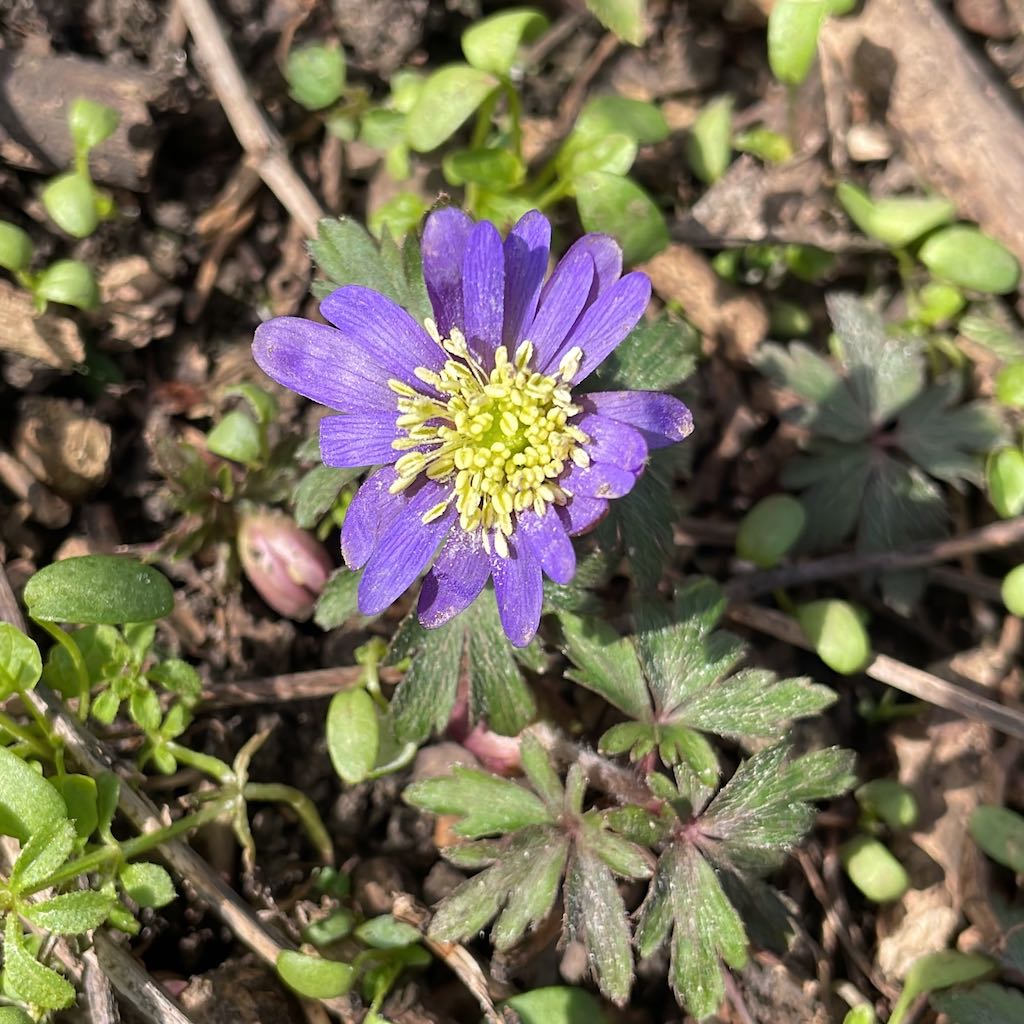
The Greek anemone is a charming, carpet-forming spring wildflower that features deeply divided, fern-like, dark green foliage. It produces numerous cheery, daisy-like flower heads composed of many slender, petal-like sepals surrounding a bright ring of yellow stamens. The flowers open wide in bright sunshine and come in striking shades of sky blue, deep violet, pink, and crisp white.
Interesting Facts
The genus name Anemone stems from the Greek word anemos, meaning “wind,” leading to its popular nickname “daughter of the wind” because the delicate petals easily tremble or blow open in spring breezes. The specific epithet blanda translates to “mild” or “charming”. Like many spring ephemerals, its flowers exhibit nyctinasty, closing tightly at night or on overcast days to protect their pollen from moisture.
Importance to Wildlife
Blooming in very early spring when temperature-resilient insects begin emerging, this plant provides an invaluable, early-season nectar and pollen lifeline. Its open, star-like structure offers easy landing pads for foraging solitary bees, honeybees, hoverflies, and early butterflies. Spreading smoothly to form a dense ground cover, the low foliage also creates excellent micro-habitats and damp shelter for beneficial garden invertebrates.
Advice
Like other members of the Buttercup family (to which it is loosely related) the Greek Anemone is toxic if consumed. It’s best not to touch it.