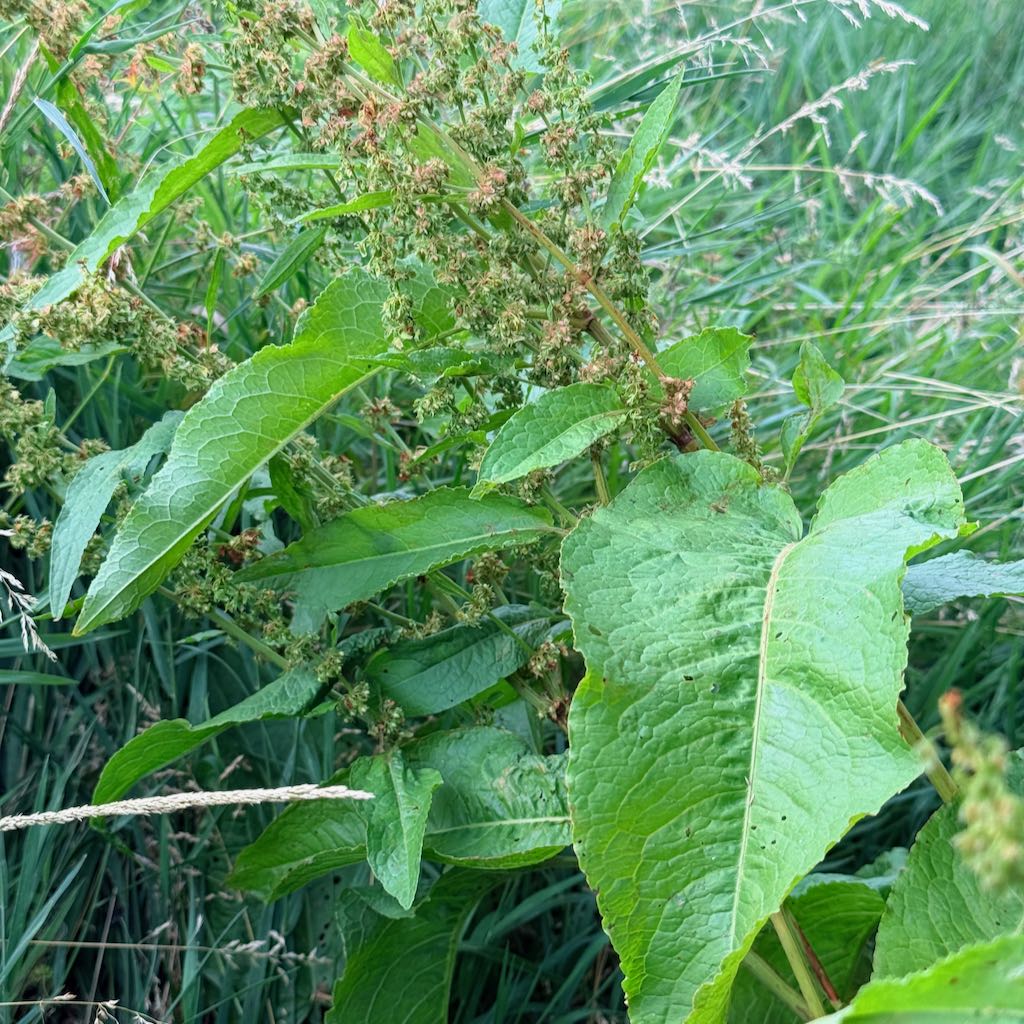
Broad-leaved dock is a robust, erect wildflower characterized by its massive, plastic-textured basal leaves that feature rounded tips and wavy margins. It produces tall, tough flowering stems terminating in dense, branched clusters of tiny, green-tinged flowers. As the season progresses, these blooms mature into highly conspicuous, reddish-brown seed heads that persist long into winter.
Interesting Facts
In British folklore, this plant is famously known as the natural antidote to stinging nettles; rubbing the sap-filled leaves on irritated skin provides a soothing, cooling effect. It is a highly aggressive survivor, developing a massive taproot that can regrow even if severed. Amazingly, a single mature dock plant can produce up to 60,000 highly durable seeds that remain viable in soil for over 50 years.
Importance to Wildlife
This species is a crucial ecological hub, hosting an exceptional variety of native insects. It serves as the primary larval food plant for several beautiful butterflies and moths, including the bright copper butterflies and the garden tiger moth. Its abundant, oil-rich seed heads provide a vital winter food source for declining farmland birds like bullfinches, siskins, and various finches.
Advice
Broad-leaved Dock is mildly toxic of consumed.