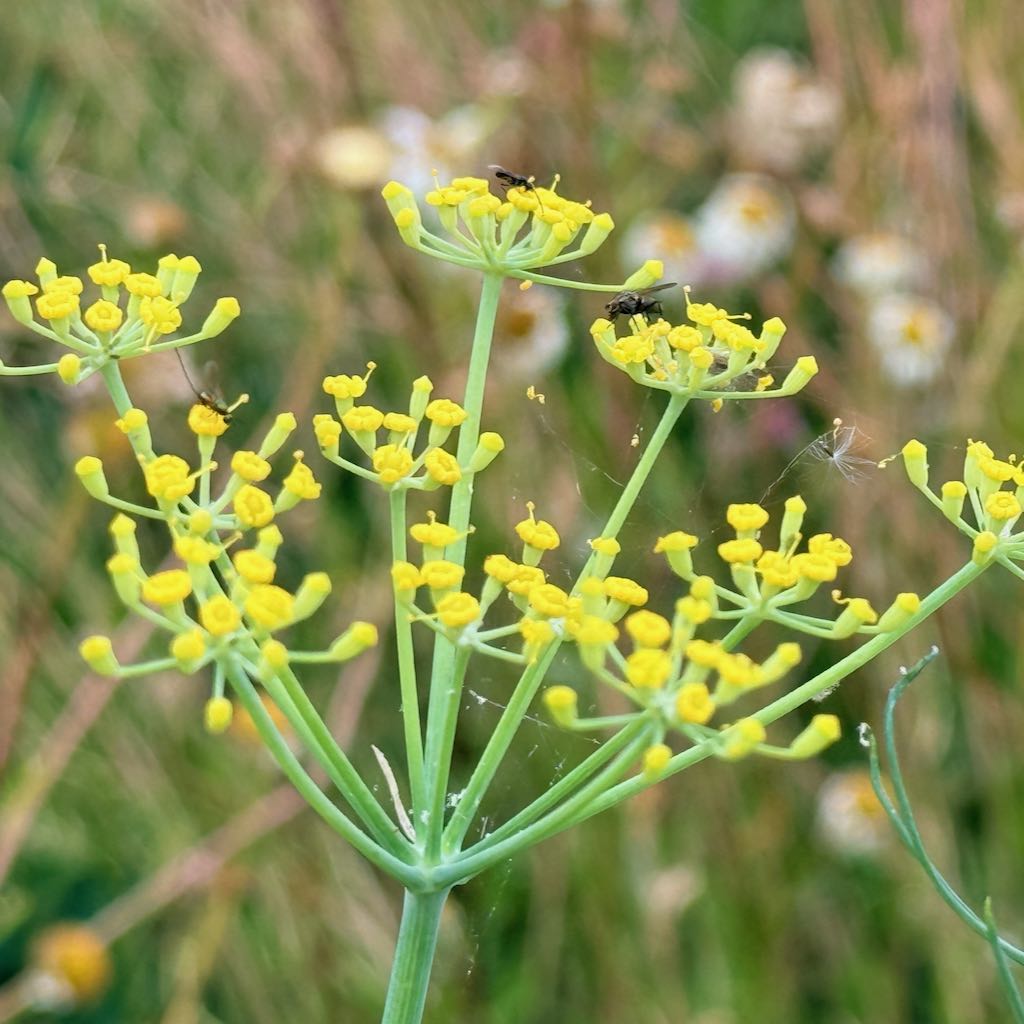
This statuesque perennial features sturdy, hollow, blue-green stems lined with highly dissected, feathery leaves that strongly resemble dill fronds. In mid-summer, it produces large, flat, umbrella-like clusters (umbels) composed of hundreds of tiny, bright yellow flowers. The entire plant releases a distinctive, sweet aniseed or liquorice aroma when the foliage or stems are crushed.
Interesting Facts
In ancient Greece, it was named marathos, and the famous battle of Marathon literally translates to a “plain of fennel” due to the wild plants growing there. Revered in medieval folklore as one of nine sacred herbs, people stuffed it into keyholes to ward off evil spirits. Modern culinary and wellness industries heavily utilize its flavorful seeds to aid digestion.
Importance to Wildlife
An absolute biodiversity titan in an orchard, its broad, open yellow flower tables offer easy nectar access for beneficial predatory insects like hoverflies, ladybirds, and parasitic wasps, which act as natural pest controllers. It is a critical, essential larval host plant for the spectacular Swallowtail butterfly. Come autumn, its abundant seed yields provide an indispensable feast for songbirds.
Advice
The crunchy bulb of the Fennel can be used in cookery.
Fennel is not difficult to see; it often appears taller than the plants around it.