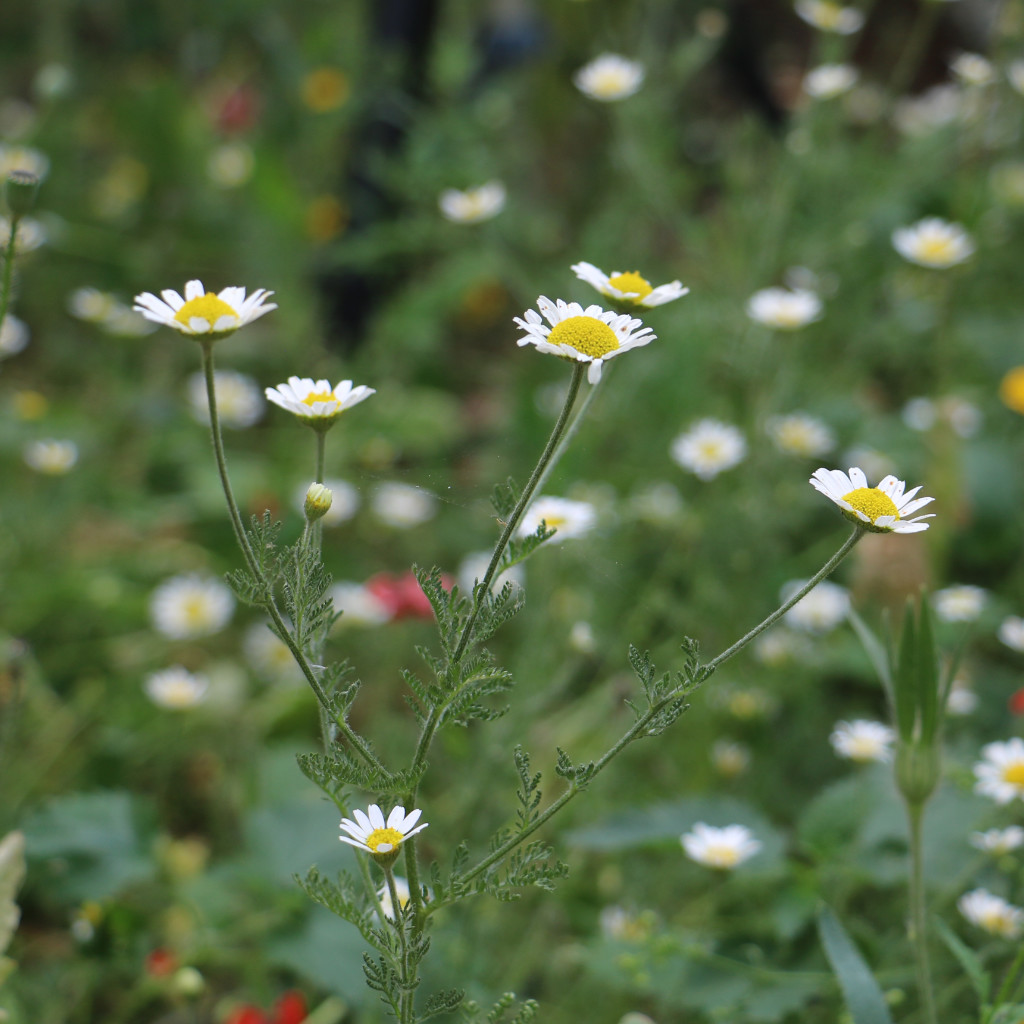
Corn Chamomile is an elegant, bushy wildflower featuring finely divided, feathery, grey-green foliage. It produces a profusion of classic daisy-like flower heads, each displaying a bright yellow central disc surrounded by a ring of crisp white ray petals. The stems are slightly hairy, and the entire plant emits a pleasant, light fragrance when handled
Interesting Facts
The common name “chamomile” stems from the ancient Greek word khamaimēlon, which literally translates to “ground apple,” highlighting how the plant grows low and gives off a distinctively sweet apple scent. Once a highly abundant, traditional weed across historic European agricultural fields, modern intensive farming has made it increasingly rare to find growing naturally in the wild today.
Importance to Wildlife
This species is widely recognized as a premier plant for boosting garden and meadow biodiversity. Included on the Royal Horticultural Society’s RHS Plants for Pollinators list, its flat, nectar-dense yellow centres act as perfect landing pads for foraging honeybees, solitary bees, and hoverflies. The fine foliage also offers exceptional ground-level shelter for predatory beetles, helping manage common garden pests naturally
Advice
While completely safe to touch, corn chamomile is toxic to dogs, cats, and horses.