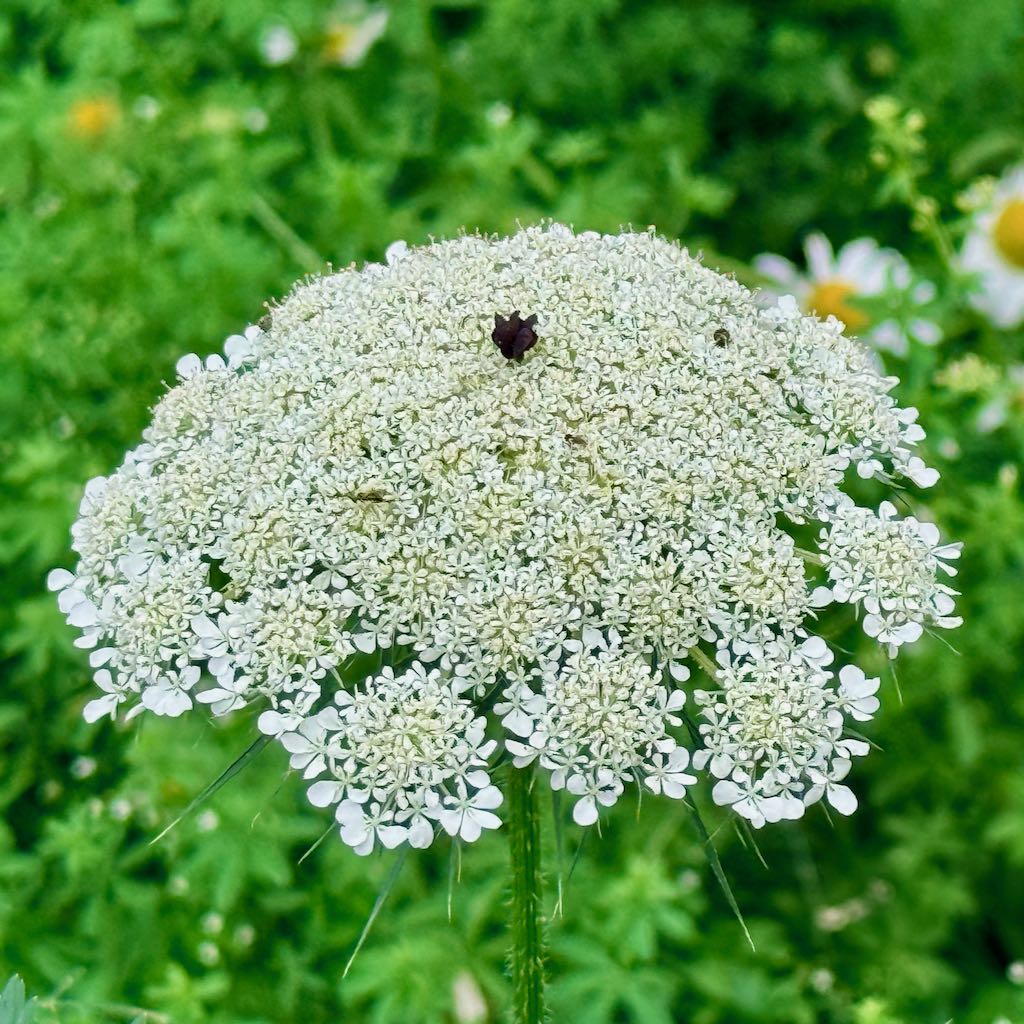
Queen Anne’s Lace is an upright biennial featuring a rigid, furrowed stem covered in coarse, stiff hairs. Its alternate, highly divided leaves display a delicate, feathery, fern-like silhouette. The plant produces complex, broad, flat-topped flower umbels made of thousands of tiny white florets, usually distinguished by a solitary, dark purple or reddish flower sitting directly in the cluster’s centre.
Interesting Facts
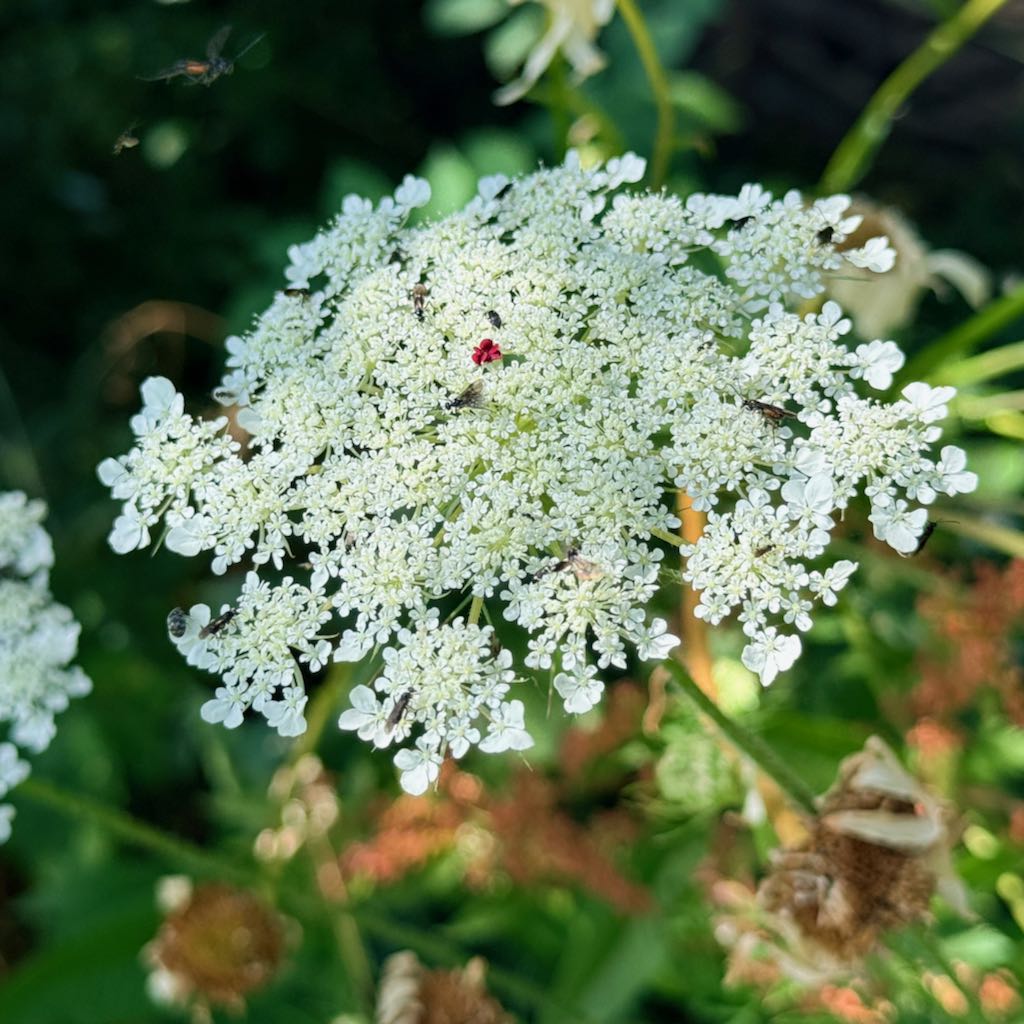
As the direct ancestor of modern cultivated carrots, its spindly, yellowish taproot emits a distinct carrot aroma when pulled from the soil. Legend states its name honors Queen Anne of Great Britain, who pricked her finger crafting lace, leaving a single drop of blood represented by the central purple floret. As seeds mature, the entire flower head curls tightly inward, resembling a miniature bird’s nest.
Importance to Wildlife
This species is an exceptional biodiversity engine and is officially included on the RHS Plants for Pollinators list. Its broad, open, lacy flower platforms function as a highly accessible nectar and pollen oasis for diverse insects, heavily attracting honeybees, solitary bees, hoverflies, and beetles. The foliage provides a vital food source for swallowtail butterfly caterpillars, while its dense growth creates canopy shelter for ground-dwelling invertebrates.

Advice
While its young roots and flowers are edible for humans, the plant sap can trigger skin irritation and sun-induced blistering if handled without gloves