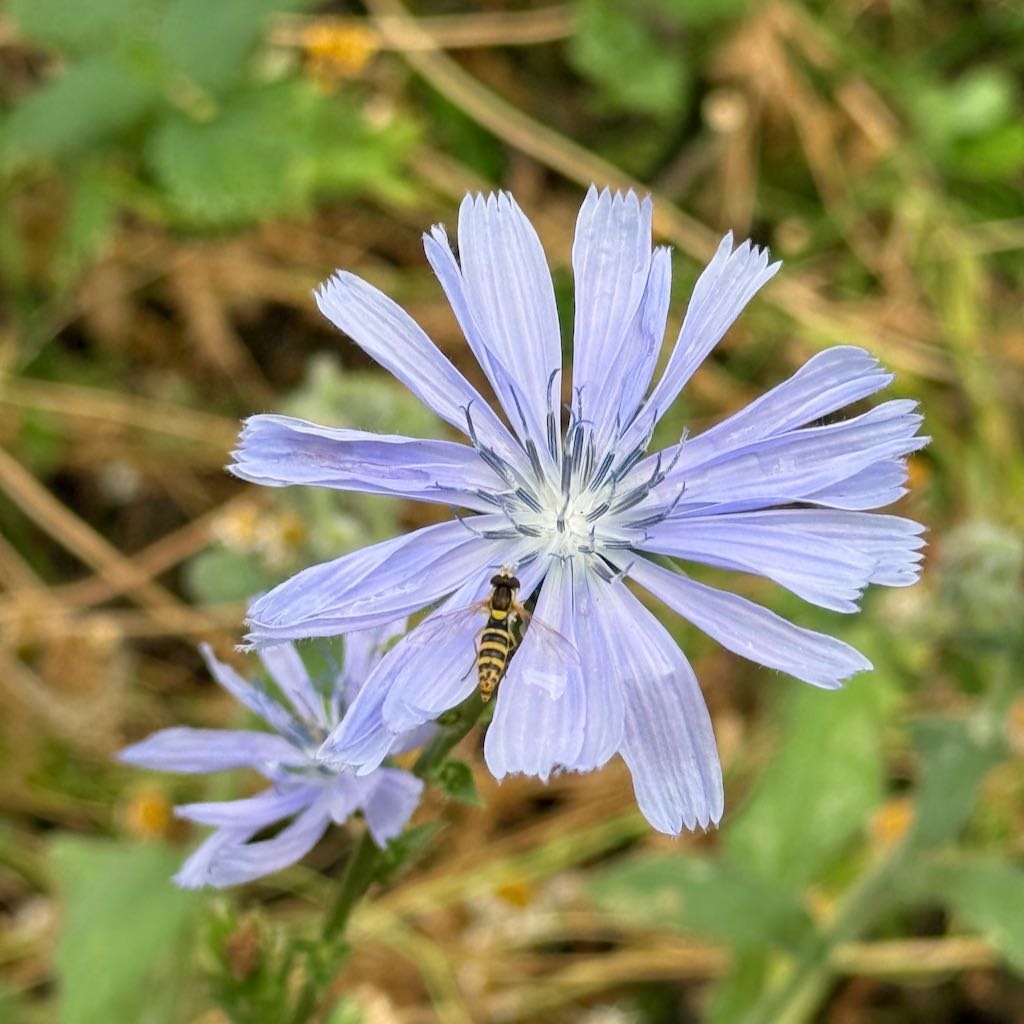
Chicory is a tough, erect, and highly branched wildflower that arises from a substantial, fleshy taproot. Its lower basal leaves are deeply lobed and closely resemble a dandelion, while the upper stem leaves are smaller and clasp the rigid, slightly hairy stalks. The plant produces striking, daisy-like flower heads of a clear, brilliant sky-blue colour that open in morning sunshine but close tightly by the afternoon.
Interesting Facts
Prized since ancient Egypt, chicory has a rich culinary history. Its thick, starch-rich roots are famously baked, roasted, and ground down to serve as a natural caffeine-free coffee substitute or additive, a tradition incredibly popular in New Orleans and historic European brewing. Culturally, its leaves are selected and cultivated in the dark to produce popular bitter salad greens like Belgian endive.
Importance to Wildlife
This long-blooming wildflower is an outstanding ecological asset for pollinators. Its vibrant blue flowers function as a highly accessible nectar and pollen station, heavily drawing honeybees, bumblebees, and diverse species of hoverflies. The deep, tough taproot pulls up vital minerals, improving soil health, while its protein-dense foliage serves as an important fodder source for larger grazing wildlife and native invertebrates.
Advice
Chicory is generally non-toxic to humans and dogs, and its root extracts are frequently used in premium pet foods for digestive health due to high prebiotic inulin fibre. However, the plant can be mildly toxic to cats.