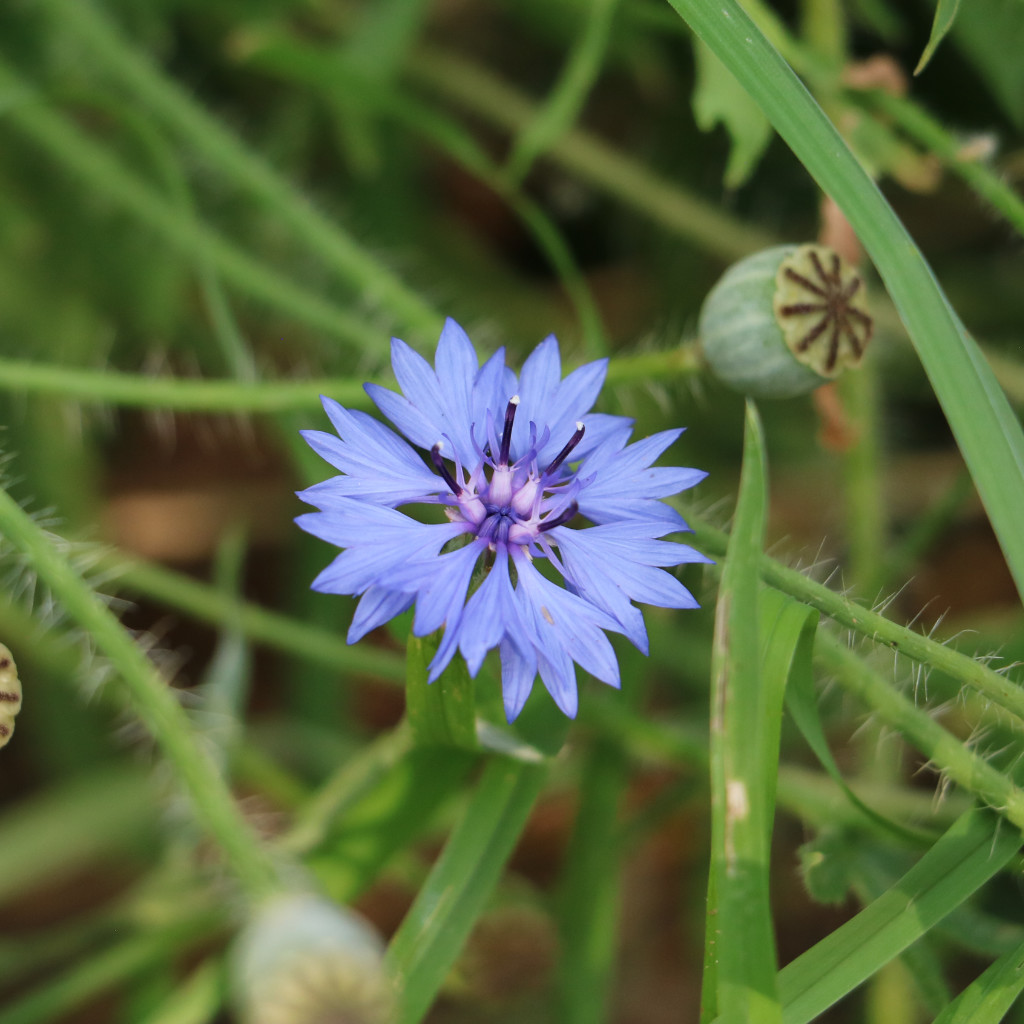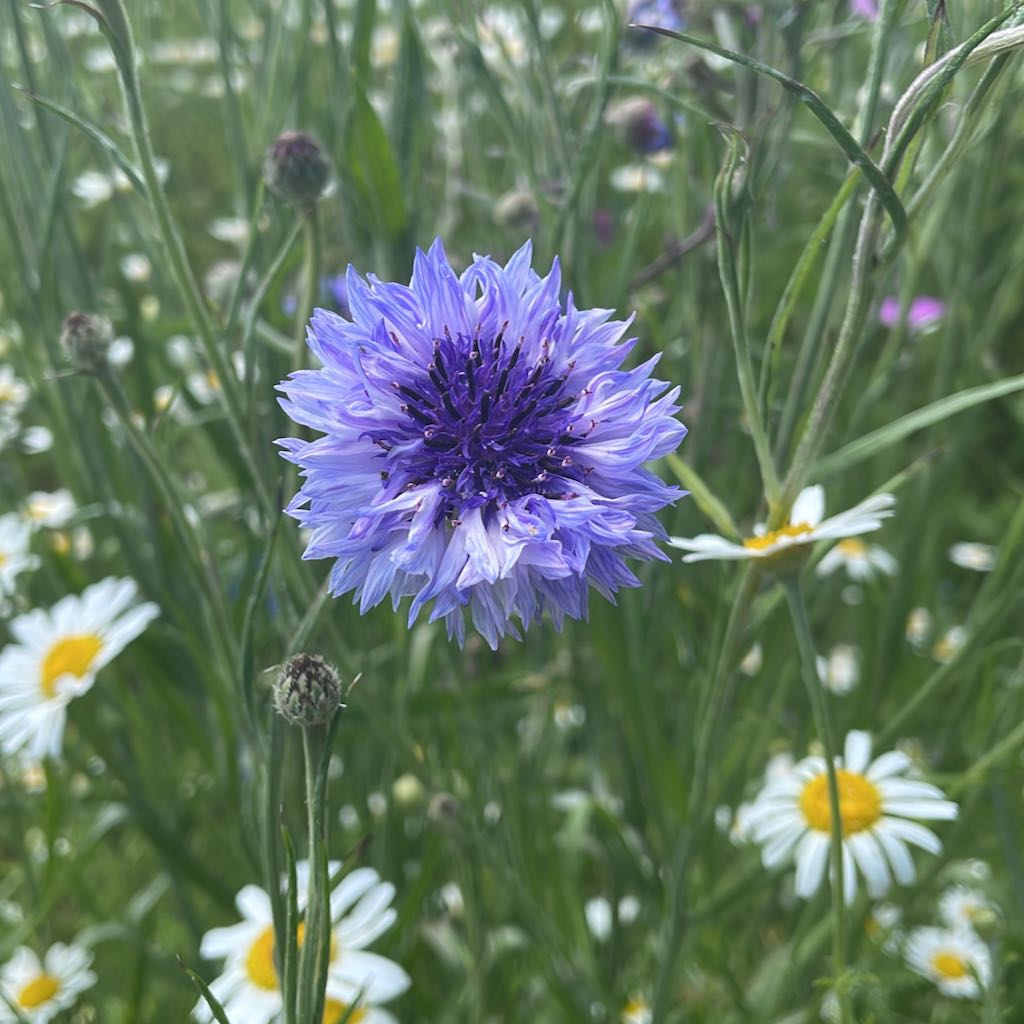
Cornflower is an upright, slender annual characterized by its slightly wiry, branched stems and narrow, grey-green leaves covered in soft, web-like hairs. The plant produces solitary, ragged-edged flower heads of an intense, vivid azure-blue hue. These striking composite flowers feature a cluster of large, trumpet-shaped outer florets surrounding a denser, darker purple central core.
Interesting Facts
The historical name “Hurtsickle” was coined by medieval farmers because the tough, fibrous stems frequently blunted their harvesting sickles. Its breathtaking blue colour comes from an unusually complex, stable pigment called protocyanin, which requires a precise mix of iron, magnesium, and plant compounds. Once a widespread arable weed, modern agricultural practices have made it a critically endangered species in the wild.
Importance to Wildlife
This species is a foundational pillar for boosting insect biodiversity. Highlighted in agricultural studies like Ecostac, it is a premier resource that benefits birds, bees, hoverflies, and predatory wasps alike. Aside from its main blooms, it features extra-floral nectaries that secrete sweet juices to feed beneficial insects. In autumn, its dry heads produce high-quality, oil-rich seeds eagerly sought by goldfinches.
Advice
The cornflower is completely non-toxic to humans and animals. Its beautiful, edible blue petals are popular for tossing raw into summer salads, blending into loose Earl Grey tea, or baking into cakes.
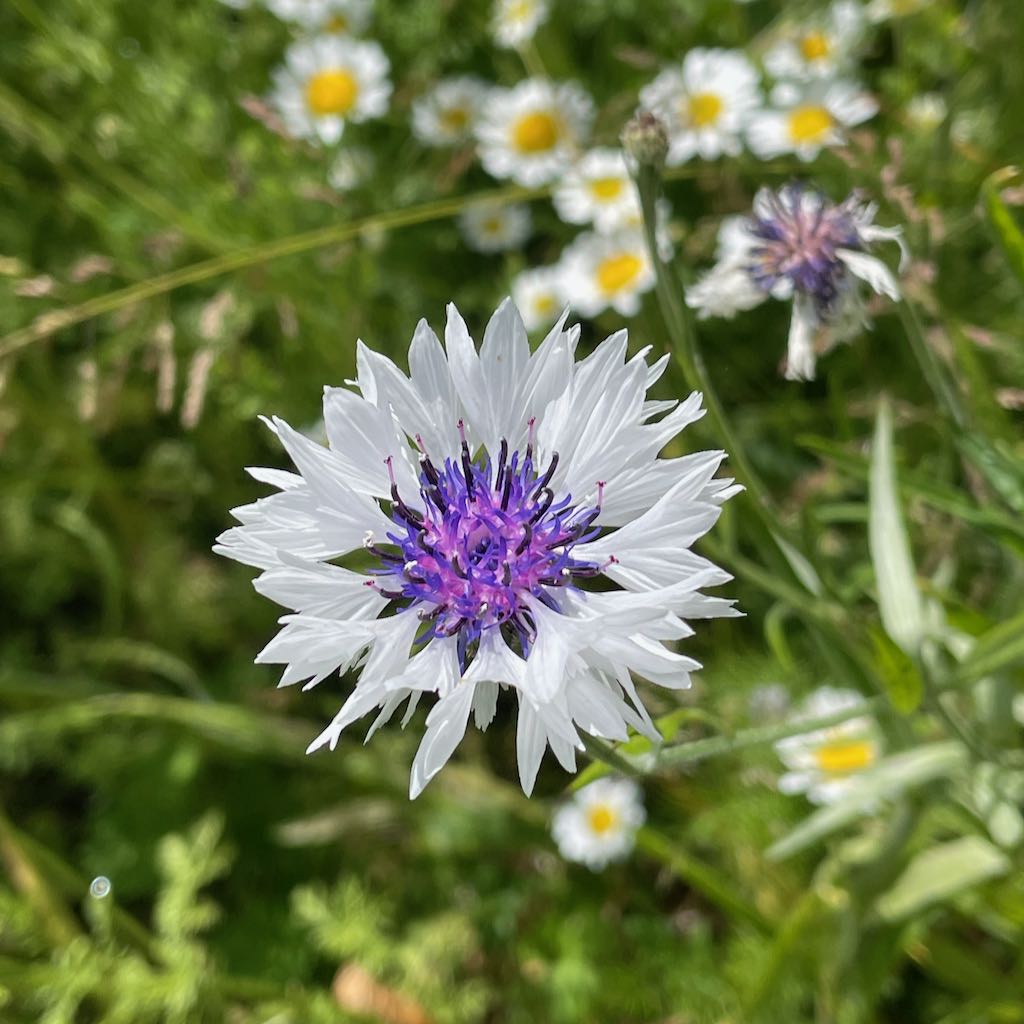
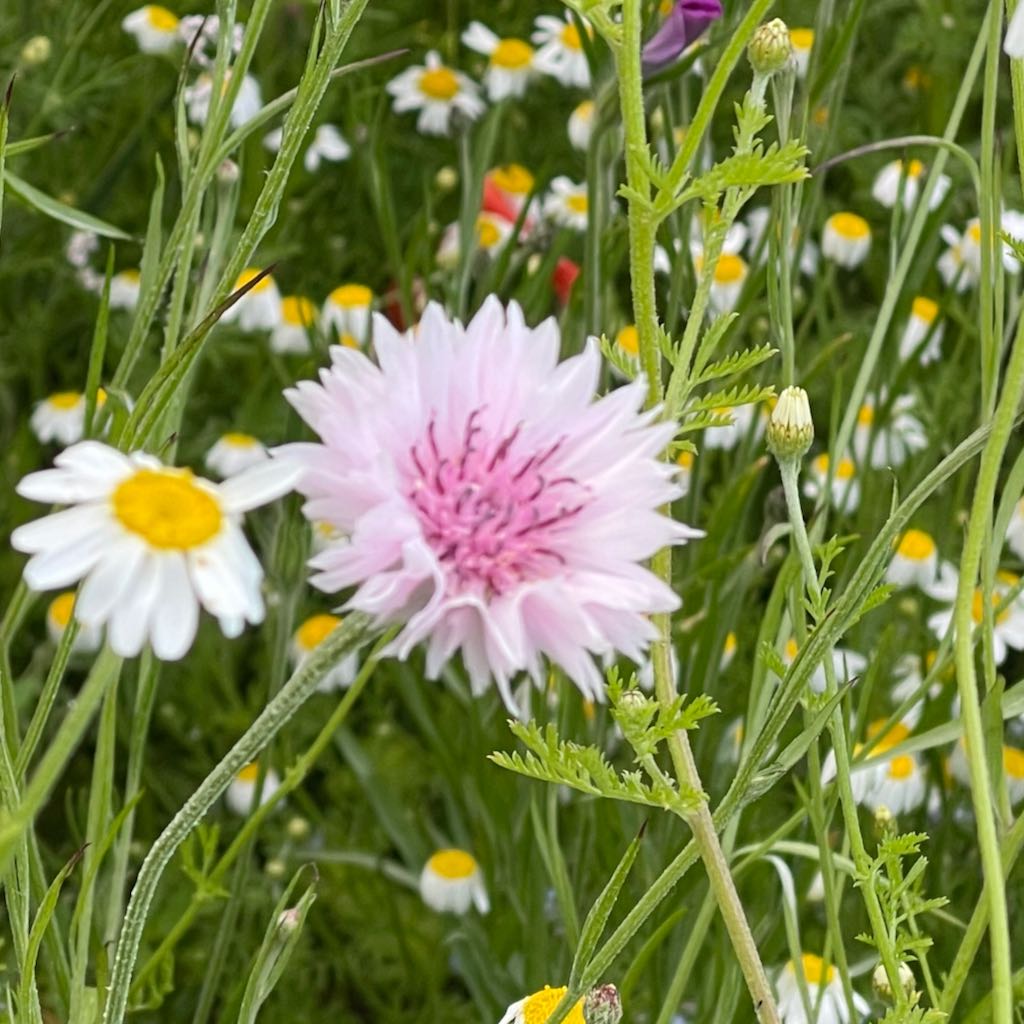
Note that, in our OurEnglishOrchard, Cornflowers come in colours other blue; it’s not unusual but it’s not planned that way.