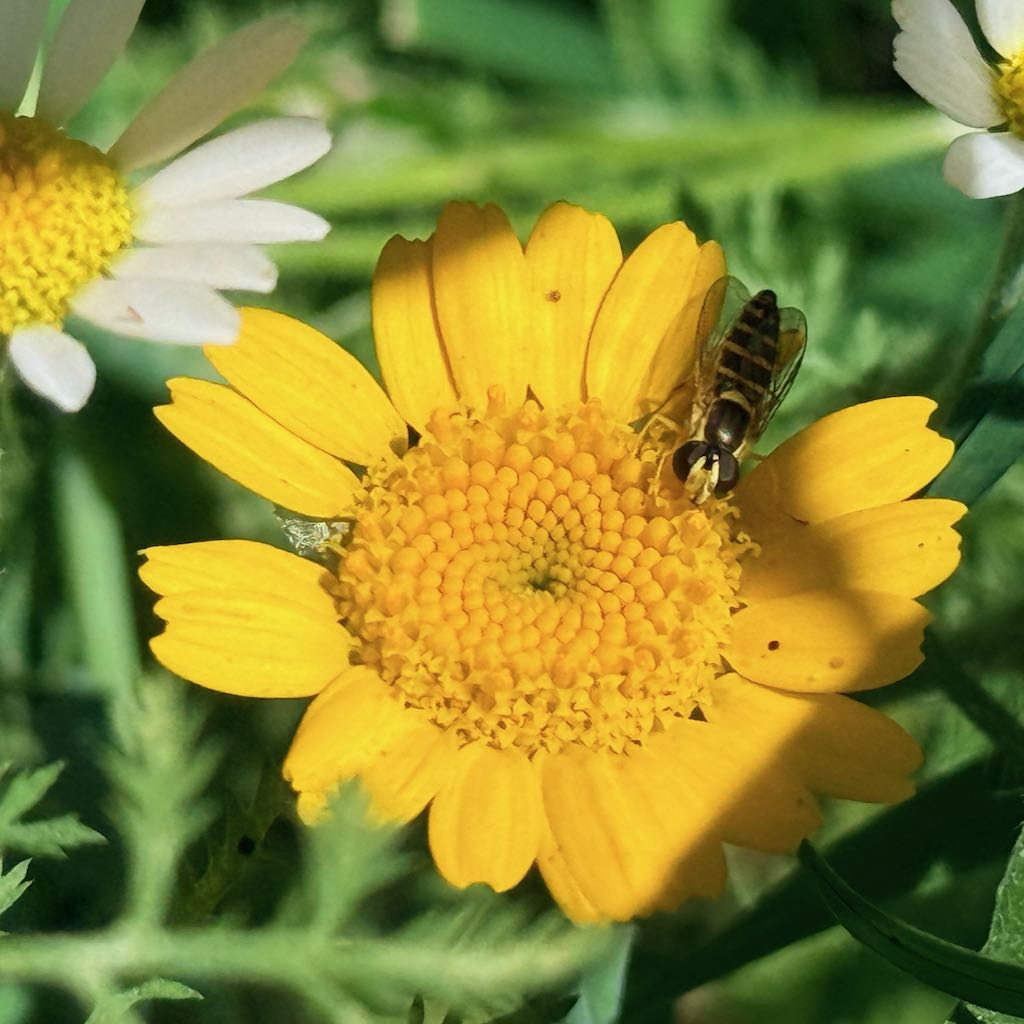
Corn Marigold is a striking, upright annual known for its luminous colour display. It features hairless, fleshy, greyish-green leaves with deeply lobed, coarsely toothed margins that hug its branching stems. The plant produces large, solitary, brilliant golden-yellow flower heads measuring up to 7 cm across, characterised by central disc florets ringed by wide, flat ray petals.
Interesting Facts
Historically, this plant was a despised agricultural weed across Europe, and medieval Scottish laws penalised farmers who allowed “guilde” (corn marigold) to taint their fields. Conversely, in traditional Chinese herbalism, the young, tender shoots were cultivated for culinary use. Intriguingly, due to modern herbicide use and clean farming practices, its wild populations have drastically plummeted, making it a vulnerable protected species in Britain.
Importance to Wildlife
This vibrant arable wildflower is an exceptional champion for boosting insect biodiversity in meadows. Included on the RHS Plants for Pollinators list, its large, flat, nectar-dense golden discs function as ideal landing zones for diverse pollinators. It heavily attracts honeybees, solitary bees, and specialised hoverflies, while its fleshy foliage provides a key food source for various native moth larvae and ground invertebrates.
Advice
Corn marigold is generally non-toxic to humans and common domestic pets like dogs and cats, making it safe for family gardens.