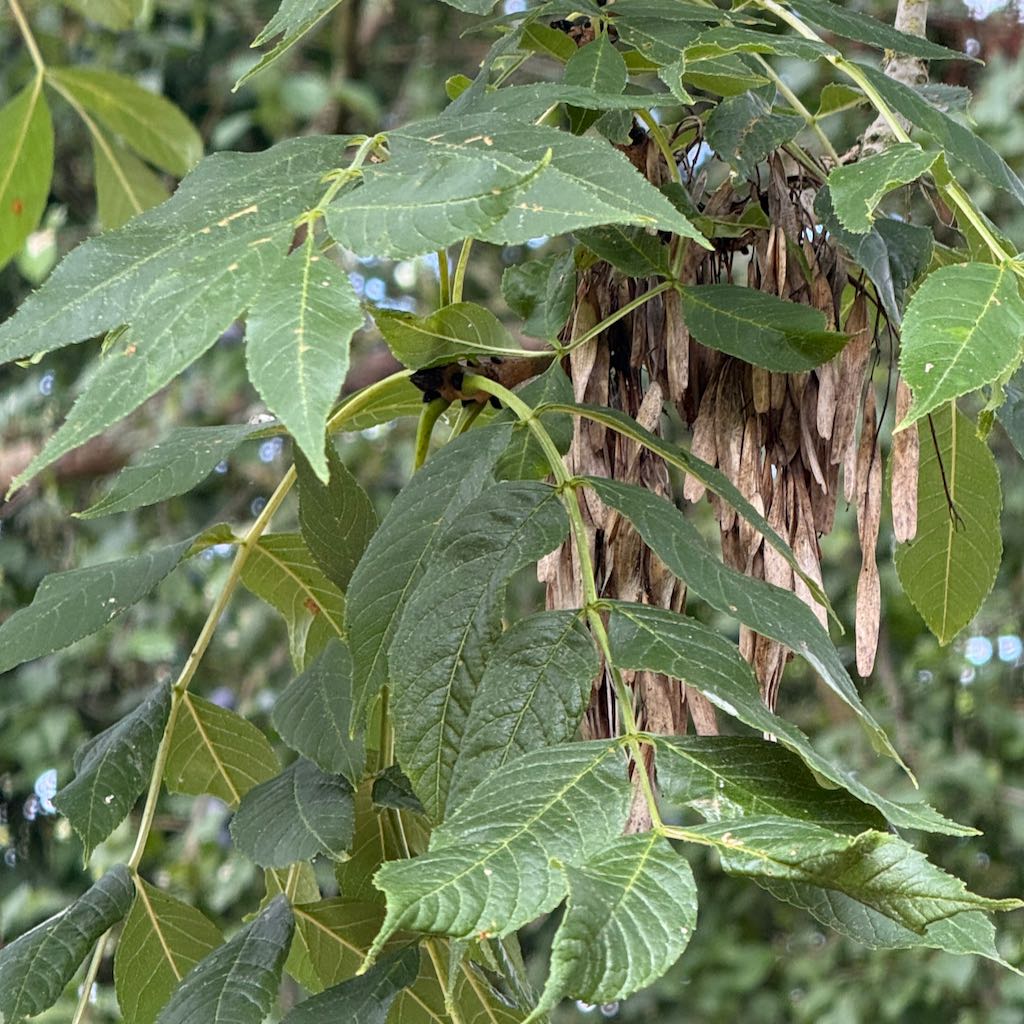
Common Ash is a majestic, tall canopy tree easily identified in winter by its distinctive, soot-black, velvety leaf buds. It develops a smooth, pale grey bark that becomes deeply fissured and ridged with age. The tree features elegant, pinnate leaves comprised of 3 to 6 pairs of opposite leaflets, and produces dense, dark purple tufts of unisexual flowers before yielding hanging bunches of winged seeds.
Interesting Facts
In Norse mythology, the ash tree is revered as Yggdrasil, the sacred “World Tree” that links the heavens, earth, and underworld. Its timber is famous for being incredibly strong yet remarkably flexible, making it the historic global standard for crafting hockey sticks, oars, and tool handles. Tragically, European ash populations are currently facing a devastating ecological crisis due to an invasive fungal pathogen called ash dieback (Hymenoscyphus fraxineus).
Importance to Wildlife
Ash trees are a massive engine for woodland biodiversity, supporting nearly 1,000 native species. The airy, loose canopy allows plenty of sunlight to filter down to the forest floor, fostering rich communities of wildflowers, mosses, and lichens. Its winged seeds—known as “keys”—provide a vital winter food source for bullfinches and small mammals, while the leaves nourish the caterpillars of the rare center-barred sallow moth.
Advice
True ash (Fraxinus genus) is completely non-toxic. However, it is vital not to confuse it with the “mountain ash” or rowan tree (Sorbus aucuparia), which belongs to a completely different plant family and contains toxic compounds.