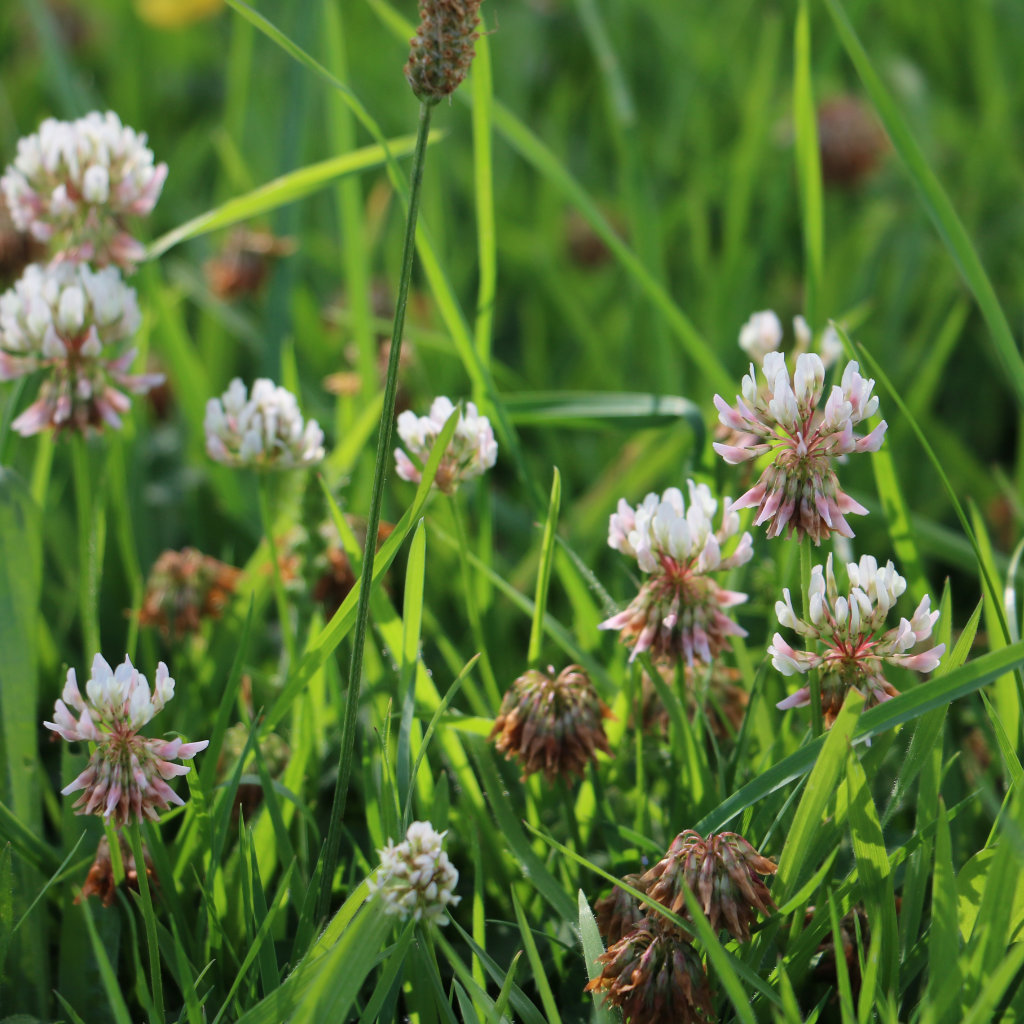
White clover is a creeping, mat-forming wildflower that spreads efficiently via above-ground runners called stolons. It features iconic, long-stalked leaves divided into three oval leaflets, which frequently display a pale, white, V-shaped band on their upper surfaces. The plant is topped by globular, sweet-scented flower heads composed of numerous small, tubular white florets that often tint pale pink as they age.
Interesting Facts
The genus name Trifolium translates to “three-leaf,” but mutations occasionally create the famous, highly coveted “four-leaf clover,” a universal symbol of good luck. For a long time, its evolutionary history was a mystery. Scientists recently discovered that white clover is a natural hybrid created during the last ice age when two distinct, ancient European wild clover species cross-pollinated on glacial edges.
Importance to Wildlife
This species is a foundational pillar for temperate ecosystems and agricultural biodiversity. Its nectar-rich, open flower heads are exceptionally attractive to honeybees, bumblebees, and numerous species of butterflies and hoverflies. It acts as an essential larval food source for several moths and blue butterflies, while its protein-dense foliage feeds grazing wildlife and its abundant seeds sustain ground-foraging birds.
Advice
White clover is non-toxic to humans, dogs, cats, and horses under normal conditions.