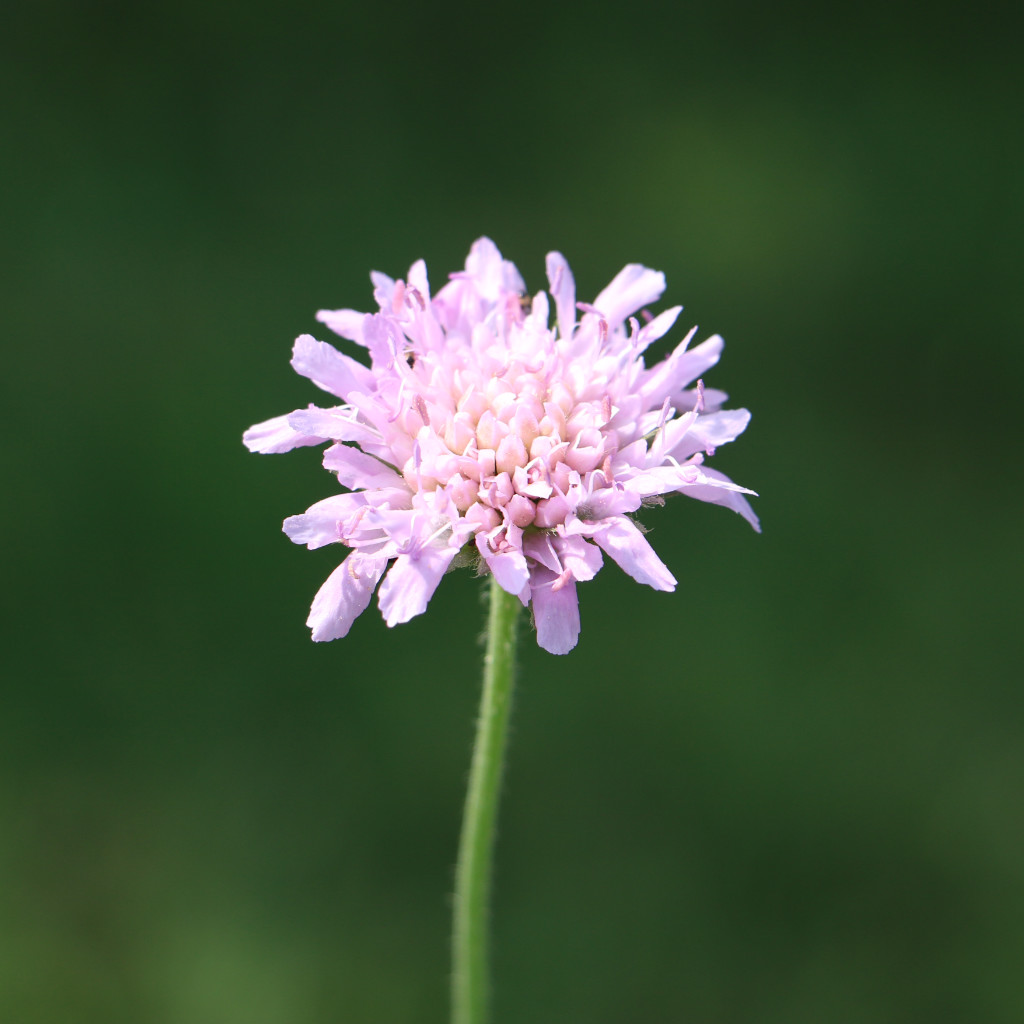
Field scabious is a tall, elegant grassland wildflower featuring stiff, hairy, branching stems. Its lower leaves form a lush rosette, while the upper stem leaves are deeply divided into narrow, tooth-like lobes. The plant is crowned by slightly domed, pincushion-like flower heads of a delicate lavender-blue or pale violet hue, displaying protruding, pin-like male stamens.
Interesting Facts
The common name “scabious” stems from the Latin scabere, meaning “to scratch.” Historically, this plant was highly prized in traditional folk medicine as a potent treatment for scabies, bubonic plague sores, and severe skin itching. Intriguingly, each composite flower head operates like a tiny community; the outer, larger florets are strictly female, designed specifically to attract passing pollinators.
Importance to Wildlife
This species is a premier ecological champion, particularly for declining insect populations. Its massive, accessible nectar reserves act as an essential service station for over 20 species of butterflies, including the small tortoiseshell and marbled white. It serves as the exclusive larval food source for the rare narrow-bordered bee hawk-moth, while its autumn seeds feed foraging finches.
Advice
Field Scabious is non-toxic to both humans and animals.