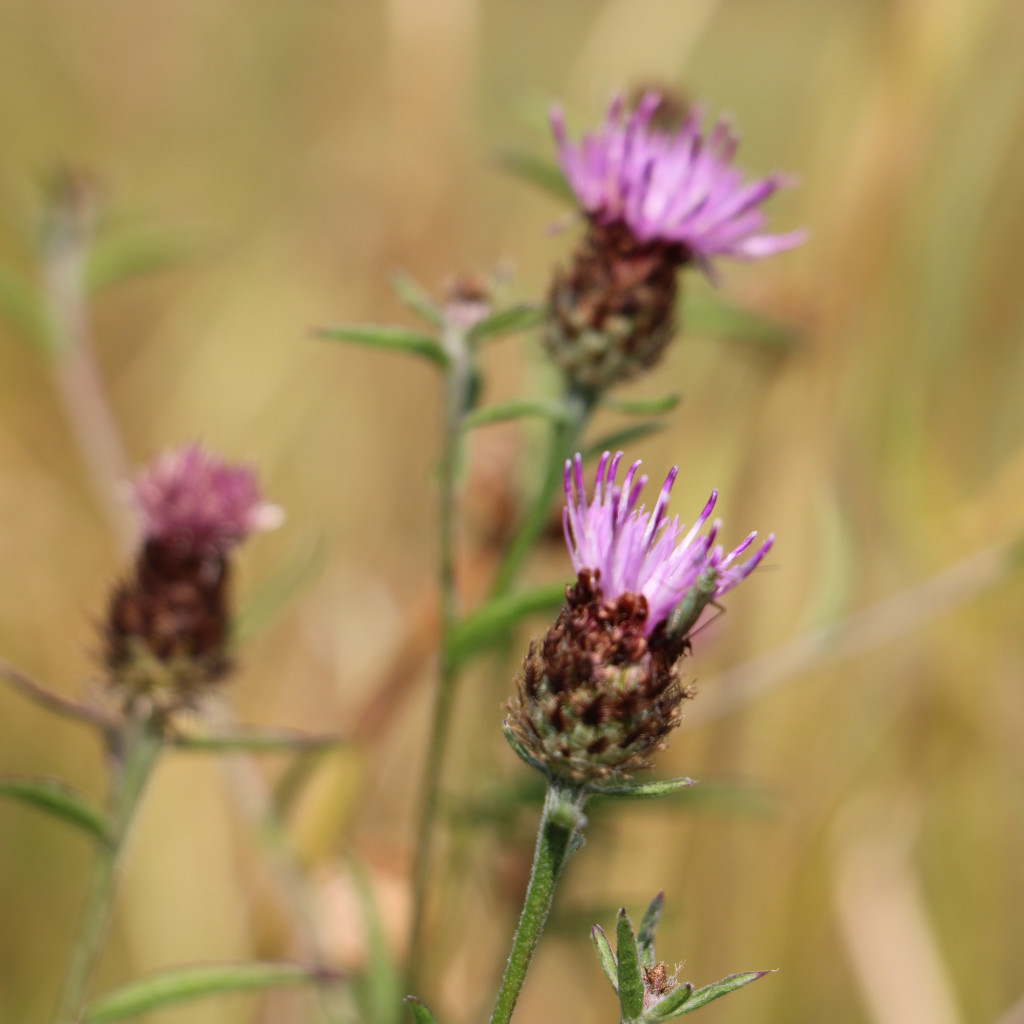
Common knapwort is a rugged, upright wildflower with a thistle-like silhouette but entirely lacks sharp spines. It features stiff, grooved, branching stems clothed in slender, matte-green, lance-shaped leaves. The plant is topped by distinctively hard, spherical, scale-covered blackish-brown buds that burst into dense, ragged crown-like flower heads of a rich, vibrant pinkish-purple colour.
Interesting Facts
Steeped in folklore, the genus name Centaurea honours Chiron, the legendary Greek centaur who used this family of plants to heal wounds. Its historic nickname “hardheads” references the dense, woody density of the flower base. In old rural customs, eligible young women would pluck the visible rays from an unopened bud, place it in their blouse, and use the subsequent bloom to divine if their true love was near.
Importance to Wildlife
Ranking as one of the UK’s ultimate heavyweights for nectar production, this meadow plant is crucial to wildlife. Its purple blooms serve as an essential service station for over ten species of butterflies, including common blues, meadow browns, and skippers. In autumn, the dried flower structures morph into safe mini-feeders, offering oil-rich seeds heavily relied upon by goldfinches.
Advice
Common Knapweed is non-toxic to humans and animals.