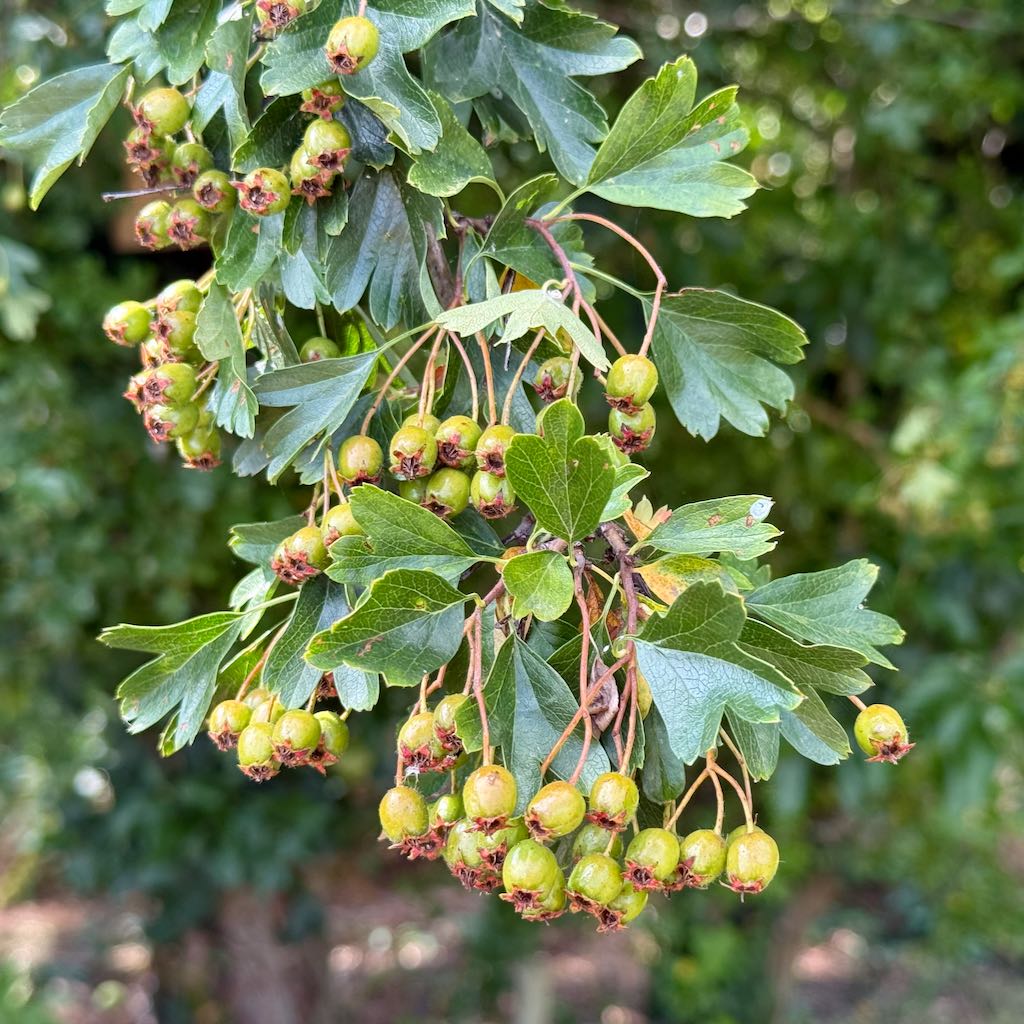
Hawthorn is a dense, thorny tree or large shrub with a characteristic knotty, twisted trunk and dark brown bark. Its deeply lobed, glossy green leaves emerge in early spring, quickly followed by explosion-like clusters of highly fragrant, creamy-white or pale pink five-petaled flowers. In autumn, these blooms transition into abundant clusters of deep-red, glossy, egg-shaped berries called haws.
Interesting Facts
Steeped in folklore, bringing hawthorn blossom indoors was traditionally considered bad luck, supposed to invite illness or death—giving rise to the grim nickname “motherdie”. This old superstition likely stems from a chemical reality: the heavy, sweet scent of the flowers contains trimethylamine, which is also one of the first chemical compounds produced by decaying animal flesh. Medicinally, the tree has been used since ancient times as a powerful cardiotonic to improve blood circulation and heart health.
Importance to Wildlife
Hawthorn is an absolute cornerstone of temperate woodland and hedgerow ecosystems, supporting over 300 insect species. Its nectar-rich spring flowers provide a massive energy boost for emerging bees, hoverflies, and butterflies, while its leaves nourish the caterpillars of numerous moth species. The tree’s dense, aggressively thorny thickets provide impregnable nesting shelter for small birds, and the nutrient-dense autumn haws are a critical winter lifeline for migrating thrushes, redwings, and fieldfares.
Advice
Hawthorn is generally non-toxic but the only real use we can make of it is to make Hawthorn Jelly from its berries.