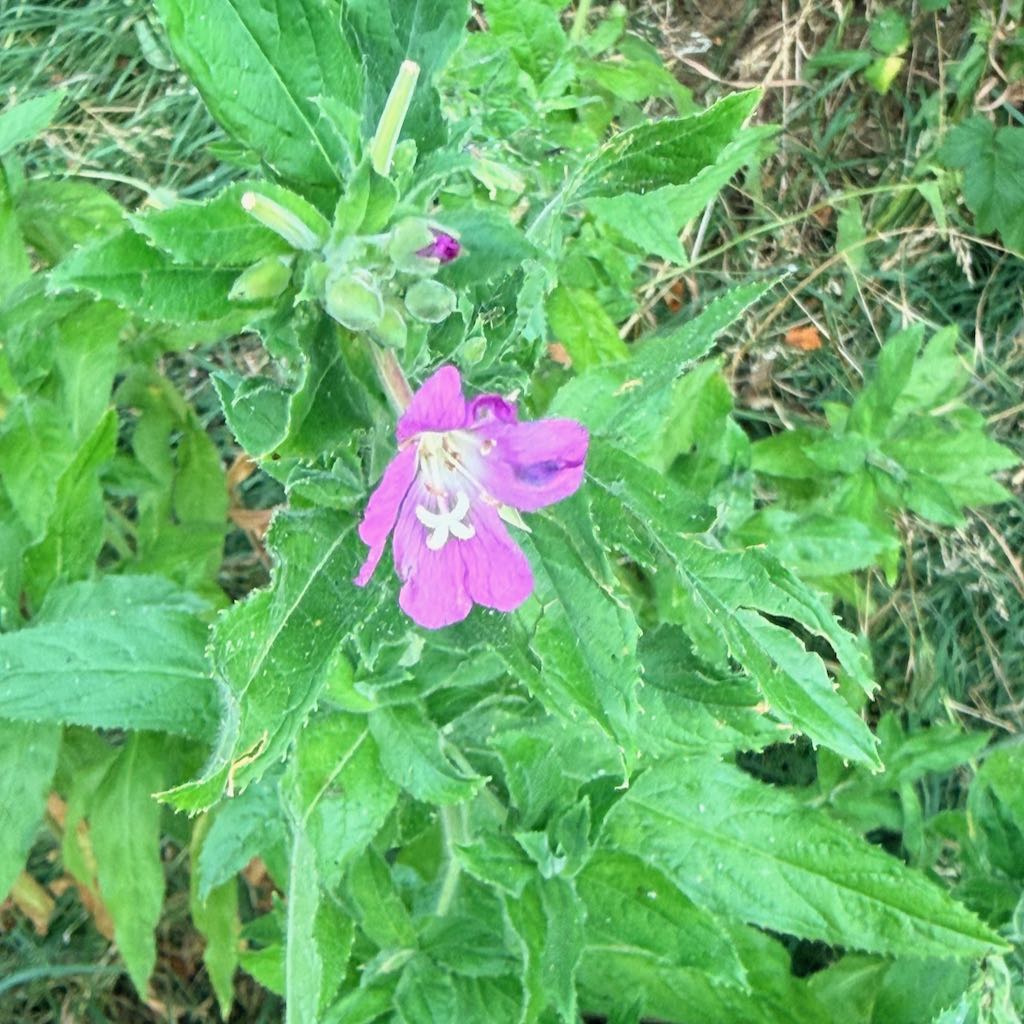
Great hairy willowherb is a tall, stately wetland wildflower wrapped in a distinct coat of soft, downy hairs. It features erect, branched stems lined with opposite, lance-shaped, serrated leaves that slightly clasp the stem. The plant is crowned by scattered clusters of vibrant, purplish-pink, cup-shaped flowers displaying prominent, cream-coloured four-lobed stigmas at their centres.
Interesting Facts
This plant earned its quirky historical nickname “codlins-and-cream” because its rosy-pink petals resting against pale, creamy bases look exactly like cooked apples (codlins) served with cream. Intriguingly, the crushed foliage gives off a distinct fragrance reminiscent of warm apple or fruit pies. While native to Eurasia, it acts as an aggressive, fast-spreading invader in North American wetlands.
Importance to Wildlife
This species is a vital pillar for biodiversity in damp habitats. The nectar-rich, vertical pink blooms are exceptionally attractive to honeybees, bumblebees, and hoverflies. Its dense, mat-forming root networks stabilize muddy riverbanks, creating safe micro-habitats for semi-aquatic life. In late autumn, its splitting seed pods release clouds of fluffy, feathery seeds that provide nesting insulation for small mammals.
Advice
Great Hairy Willowherb is generally safe but don’t consume it because there’s a chance it will make you ill.