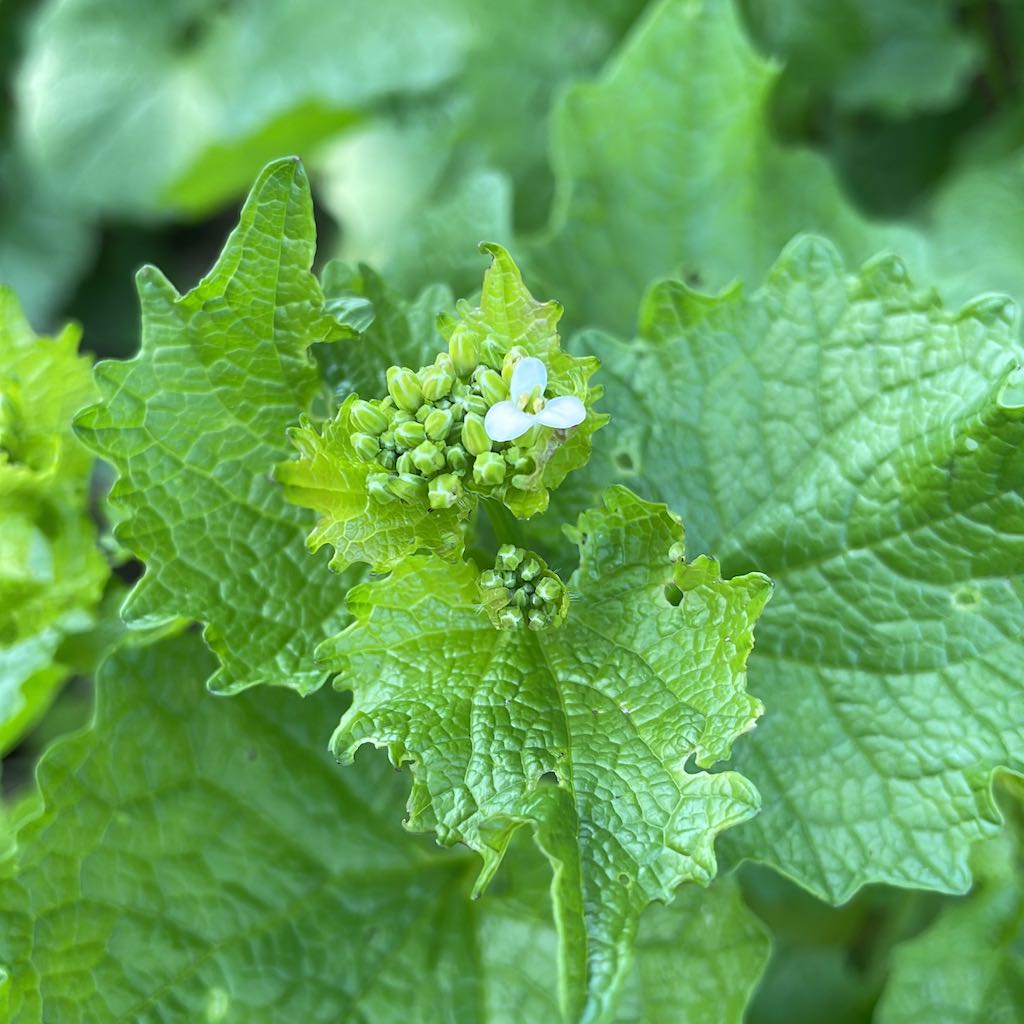
Garlic mustard is an upright, woodland wildflower that emits a distinct garlic aroma when its leaves are crushed. In its second year, it produces tall, slender stems clothed in heart-shaped, deeply veined leaves with coarsely toothed margins. The plant terminates in small, dense clusters of delicate, cross-shaped white flowers, which eventually mature into stiff, upright green seed pods.
Interesting Facts
As one of Europe’s oldest documented culinary spices, archaeologists discovered charred garlic mustard seeds on prehistoric pottery dating back over 6,000 years. While highly valued in Europe, it was introduced to North America in the 1800s and became a severely destructive invasive species. It releases phytotoxins into the soil, actively disrupting beneficial fungi and suffocating native hardwood forests.
Importance to Wildlife
This plant is a vital ecological component, serving as a primary larval host for native butterflies like the orange-tip and green-veined white. The early-spring flowers offer a critical, high-quality nectar and pollen source for newly emerged solitary bees, hoverflies, and beetles. However, in North America, it acts as a toxic trap for rare native butterflies who mistakenly lay eggs on it.
Advice
Garlic Mustard is completely non-toxic. It is sometimes used for culinary purposes but only when you know what you are doing!