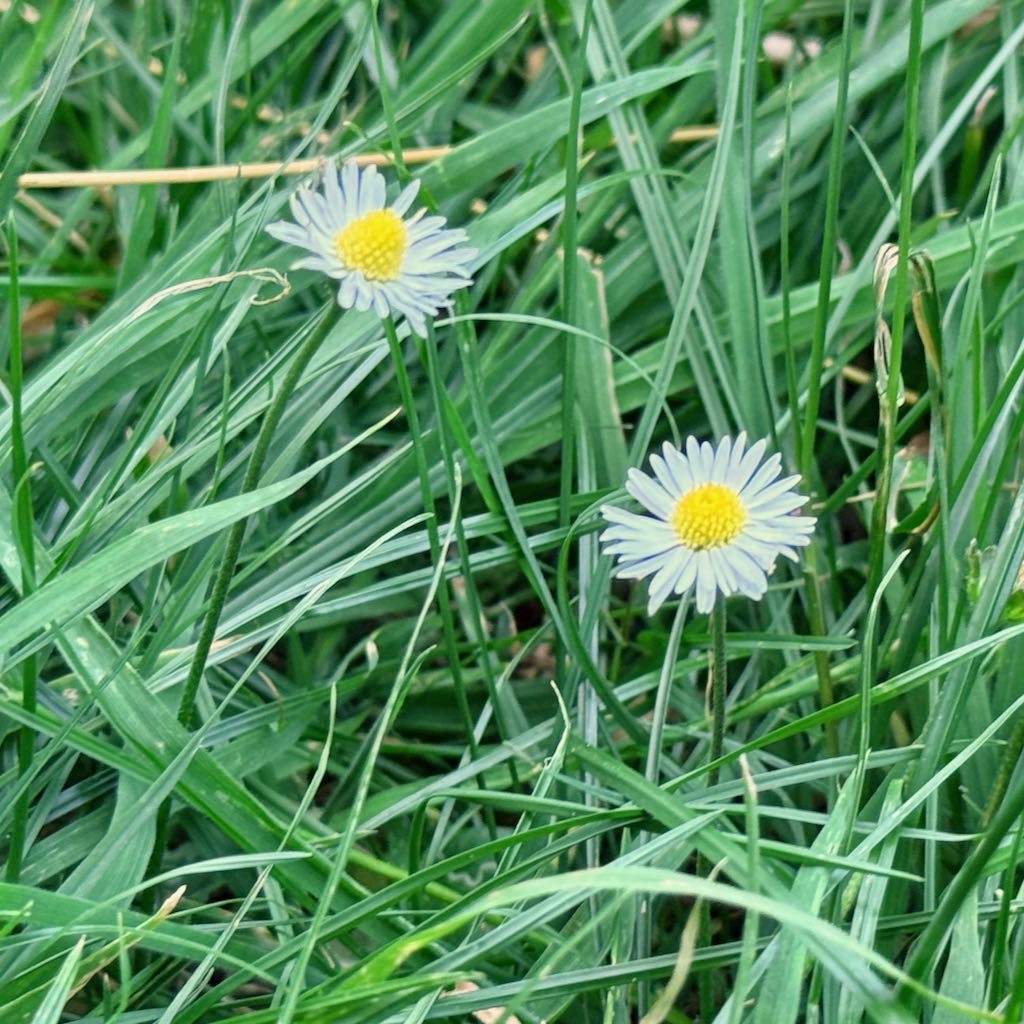
The common daisy is a low-growing, iconic wildflower that forms a flat rosette of spoon-shaped, dark green leaves. From the centre of this rosette, hairy, leafless stalks rise to support a single flower head. Each composite bloom features a bright yellow central disc made of tiny florets, beautifully framed by a dense ring of delicate, white ray petals.
Interesting Facts
The name “daisy” is a corruption of “day’s eye,” referencing how the flower head closes tightly at night and reopens at dawn. This movement is called nyctinasty. Historically, the plant was named “bruisewort” in traditional medicine because its crushed leaves were applied to heal bruises.
Historically, young girls wore daisy chains as crowns during spring festivals, like May Day, to celebrate new growth and fertility in nature.
The old common name “Measures of Love” came about through the folk game of plucking petals (“he loves me, he loves me not”) to predict a crush’s feelings.
Importance to Wildlife
As one of the earliest and longest-blooming wild flowers, the common daisy provides an essential, reliable food source for early-emerging pollinators. Its shallow, open face allows easy access for solitary bees, hoverflies, beetles, and small butterflies seeking nectar and pollen. The low-growing rosettes also offer vital ground-level cover and shelter for numerous beneficial garden invertebrates.
Advice
The Common Daisy is non-toxic to humans and animals.