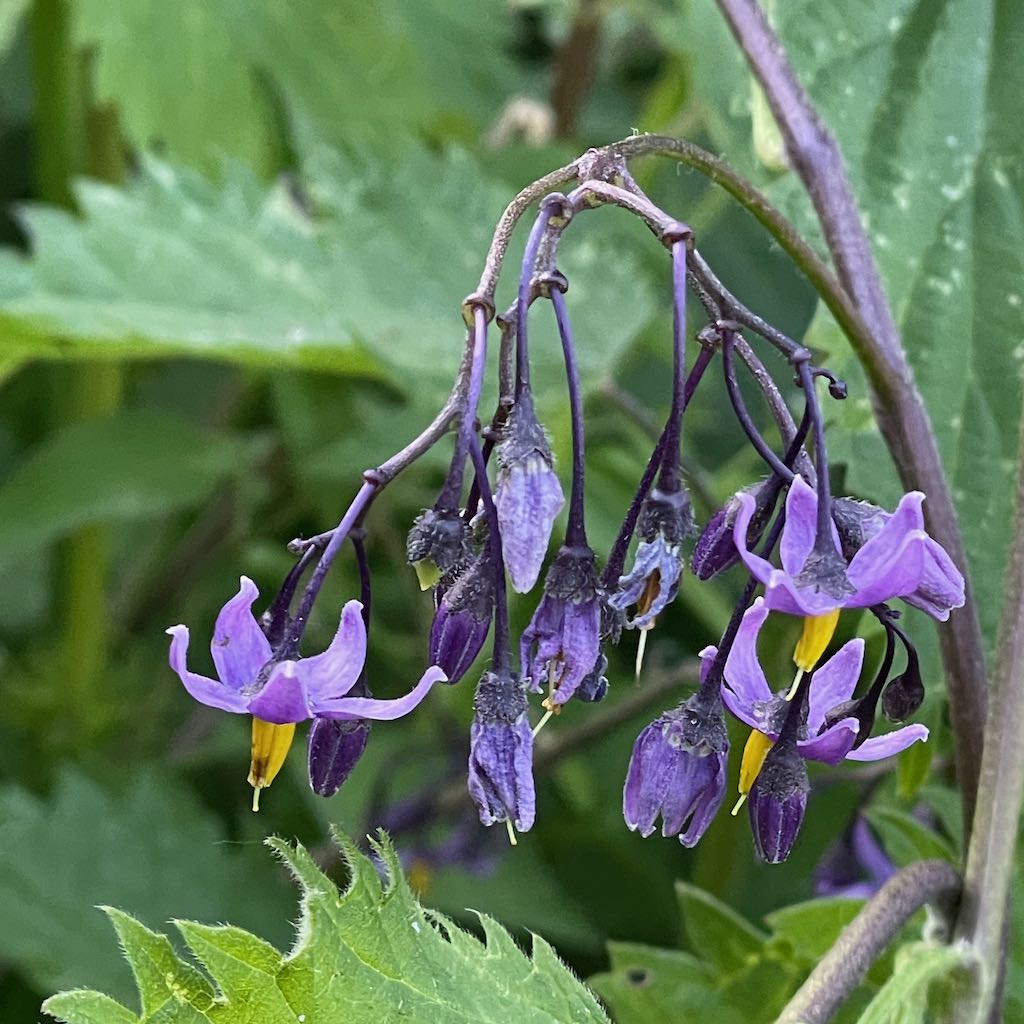
This sprawling perennial vine features dark green to purplish leaves, often shaped like spearheads with two small lobes at the base. It produces loose clusters of star-shaped flowers with five reflexed, vivid purple petals surrounding a prominent, bright yellow central cone of stamens. These distinctive summer blossoms give way to drooping clusters of oval berries that ripen to a translucent scarlet-red.
Interesting Facts
Its common name “Bittersweet” highlights a unique chemical quirk: chewing the stem releases an initial bitter taste caused by glucosides, followed instantly by a sweet sensation from its sugars. Historically, European folk healers hung it around cattle necks to ward off the evil eye, while 18th-century physicians utilized its toxic bark to treat chronic skin conditions and internal inflammation.
Importance to Wildlife
This native climber provides an indispensable late-season food supply for local biodiversity. Its unique purple blossoms are heavily pollinated by bumblebees utilising buzz-pollination. While the vibrant autumn berries are dangerously poisonous to mammals, they are a vital, highly prized food resource for foraging birds – particularly thrushes and pigeons – who safely digest the flesh and naturally disperse seeds across the orchard floor.
Advice
Climbing Nightshade is highly toxic to humans and other mammals; don’t go near it!