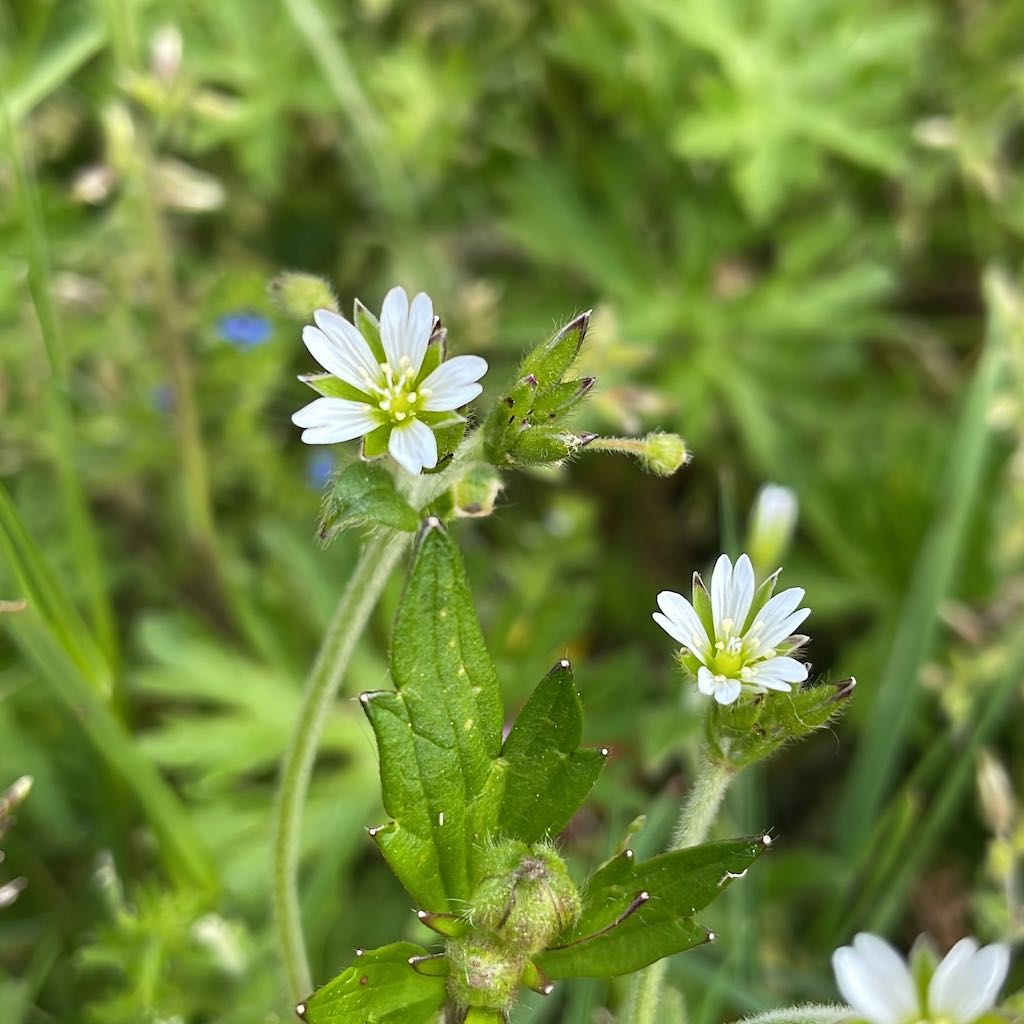
This low-growing, mat-forming plant features sprawling stems covered in a dense coat of sticky, white hairs. Its small, stalkless green leaves grow in opposite pairs and are heavily blanketed in soft, velvety fuzz, giving them a distinct greyish-green hue. It produces small clusters of tiny, star-like white flowers with five petals that are deeply notched down the centre.
Interesting Facts
Its prominent common name directly references its small, fuzzy leaves, which visually mimic the soft texture and rounded shape of a mouse’s ear. Frequently dismissed as a stubborn lawn weed, it is a master of survival; its stems root easily wherever they touch the ground. Historically, its mineral-rich leaves were boiled by rural foragers as a wild spinach substitute.
Importance to Wildlife
This humble plant functions as a highly reliable, long-season ecosystem asset on the orchard floor. Its tiny, abundant white flowers provide a vital nectar and pollen source for small solitary mining bees, hoverflies, and beneficial predatory thrips. The low, dense creeping mats provide excellent, humid hunting ground cover for orchard spiders, while songbirds eagerly feast on its massive autumn seed drops.
Advice
Mouse-ear Chickweed is non-toxic to both humans and animals.