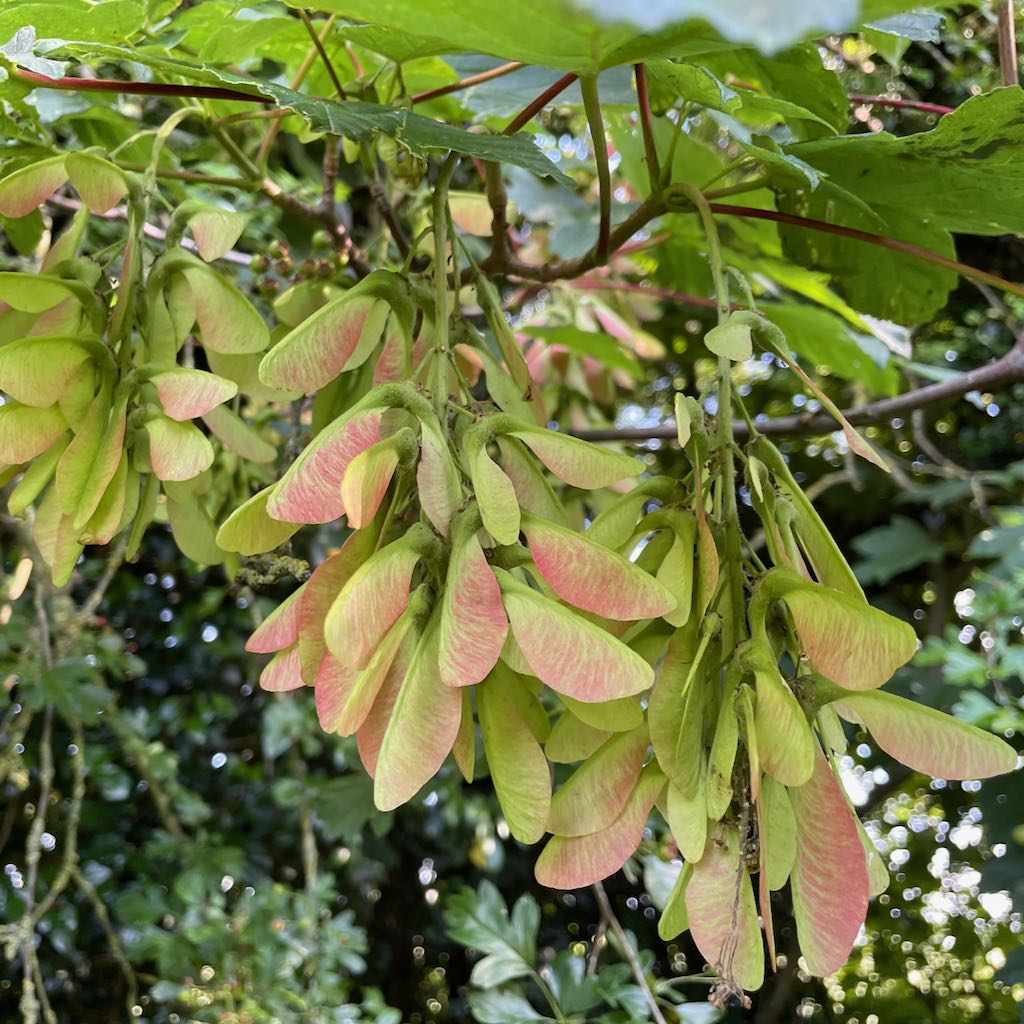
This majestic perennial tree features a broad, rounded canopy supported by smooth, grey bark that breaks into large, flaky plates as it ages. It displays large, opposite leaves with five distinct, coarsely toothed lobes on pinkish stalks. In spring, it produces hanging clusters of small, greenish-yellow flowers that ripen into distinctive, winged seeds known as samaras.
Interesting Facts
Its winged seeds act as natural helicopters, spinning beautifully through the air for great distances to colonize new ground. Introduced to the UK from Europe centuries ago, it is highly prized for its exceptionally dense, hard white timber, which was historically carved into traditional Welsh lovespoons and kitchen rollers. It is incredibly tolerant of harsh coastal winds and urban pollution.
Importance to Wildlife
This tree serves as an immense biodiversity engine. Its abundant spring flowers provide a vital, high-yield nectar bar for honeybees, bumblebees, and hoverflies. The canopy supports massive populations of aphids, which in turn attract a powerful security force of ladybirds, hoverfly larvae, and insectivorous birds. Additionally, blue tits, long-tailed tits, and small mammals feast on its heavy autumn seeds.
Advice
We have one large Sycamore along the back hedgerow and several self seeded specimens in the orchard.