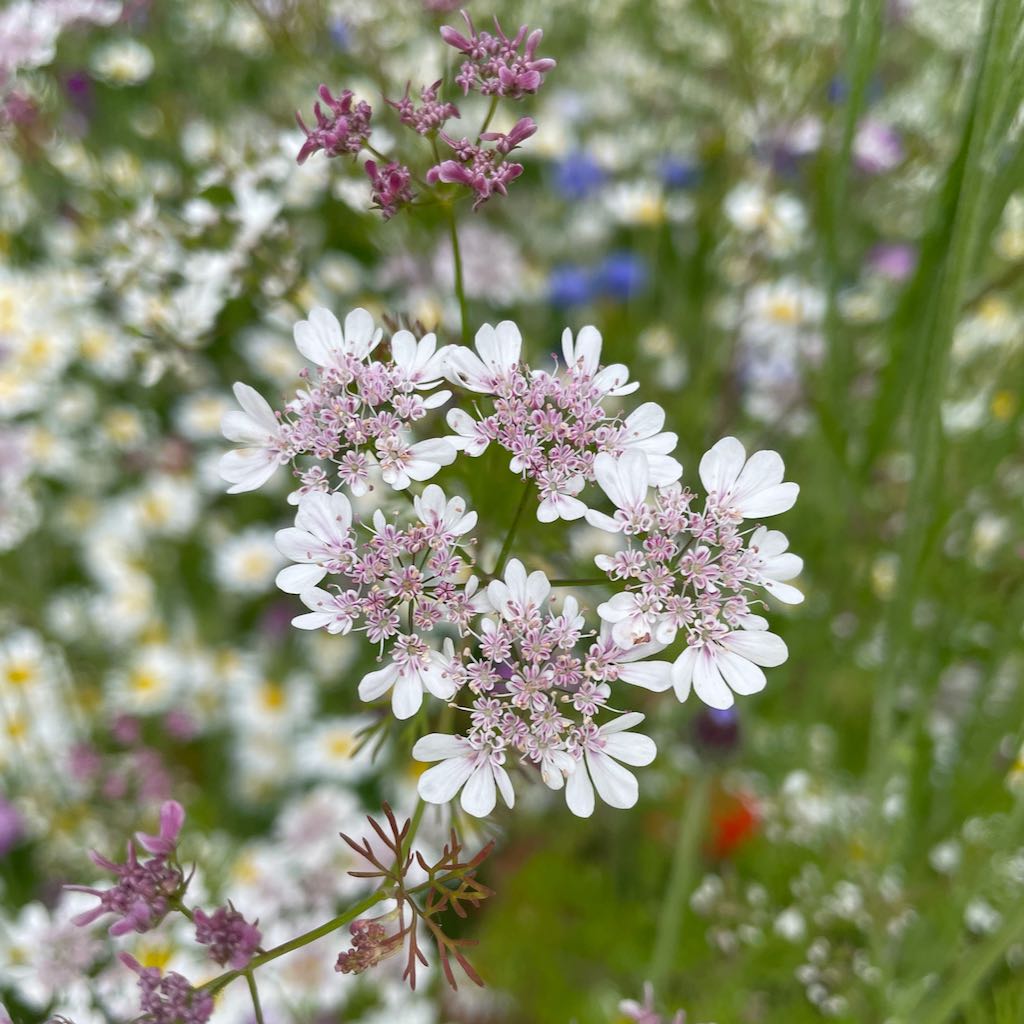
This upright annual features slender, branching stems with two distinct types of foliage. The lower leaves are broad and deeply lobed, resembling flat-leaf parsley, while the upper stem leaves are finely divided into feathery, thread-like segments. It produces flat, umbrella-like clusters (umbels) of tiny, five-petalled flowers that range in colour from pale pink to pure white.
Interesting Facts
An absolute global culinary staple, it is entirely unique because humans use different names for its life stages: “cilantro” for the citrusy fresh summer leaves, and “coriander” for its warm, spicy autumn seeds. Intriguingly, due to a specific genetic variation in the OR6A2 olfactory receptor gene, roughly ten percent of the global human population perceives the taste of its leaves as offensively soapy
Importance to Wildlife
An exceptional biodiversity asset for any orchard garden, its wide, open white flower tables offer effortless nectar access for highly beneficial predatory insects. It heavily attracts hoverflies, ladybirds, lacewings, and tiny parasitic wasps, which act as a formidable natural security force by devouring destructive fruit tree aphids. The abundant, fragrant blossoms simultaneously provide excellent forage for native solitary bees and hoverflies.
Advice
Coriander is entirely safe for human consumption.