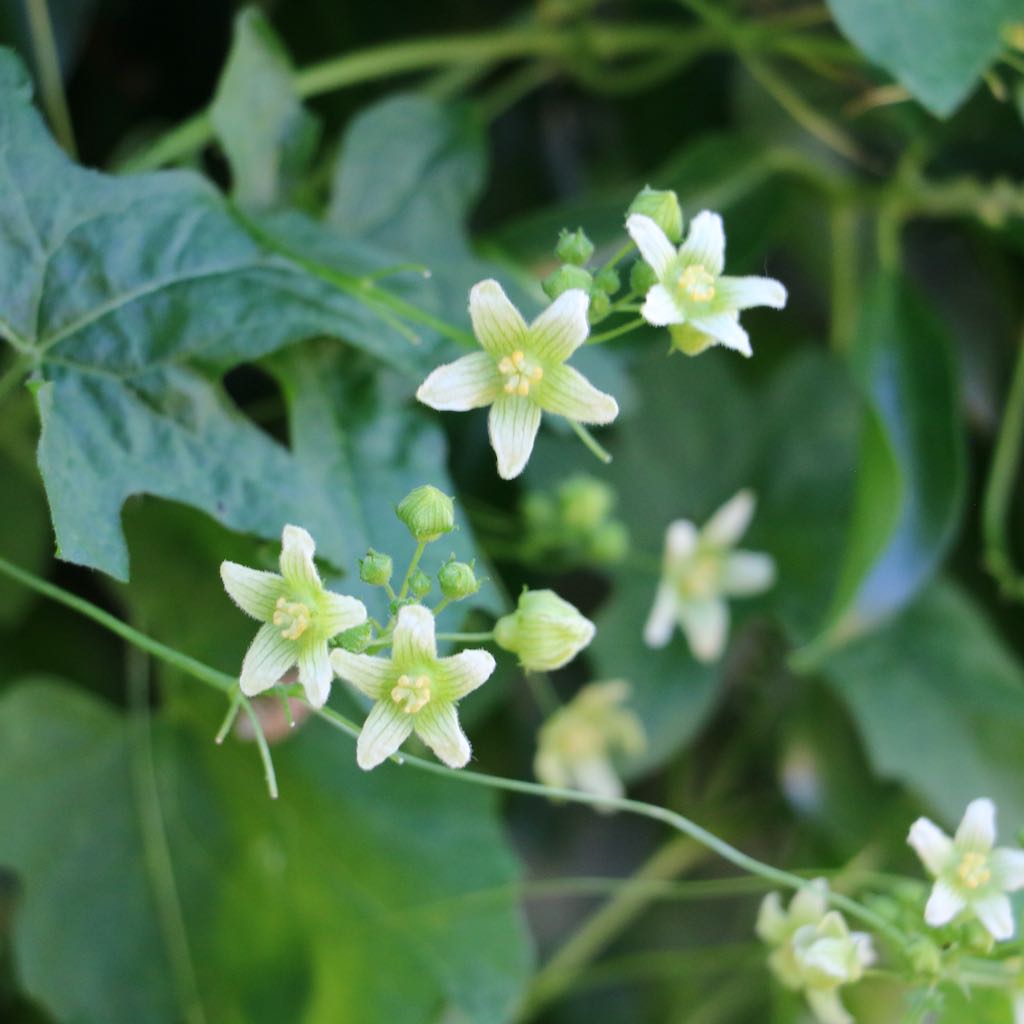
This scrambling climber features rough, hairy stems equipped with coiled tendrils that latch tightly onto orchard hedgerows. Its large, vine-like green leaves are deeply divided into five distinct lobes and possess a sandpaper texture. It produces small, clusters of greenish-white, five-petalled flowers that develop into glossy green berries, which ripen into a brilliant, translucent red by autumn.
Interesting Facts
Historically, its massive, fleshy, humanoid underground roots were deceptively carved by unscrupulous medieval herbalists and sold as highly prized, magical true “Mandrake” roots. This earned it the lasting folk name English Mandrake. Despite its common name, it belongs directly to the Cucurbitaceae (cucumber) family, making it the UK’s only native representative of this tropical plant group.
Importance to Wildlife
This climber is a critical biodiversity engine for specialized insects. Its flowers are the exclusive pollen source for the rare, native Bryony Mining Bee (Andrena florea), which cannot survive without this specific plant. The dense foliage provides excellent summer nesting camouflage for birds, while the bright autumn berries offer a vital late-season feast for hungry thrushes and small mammals.
Advice
Don’t touch White Bryony; it contains poisons that can make you really ill.