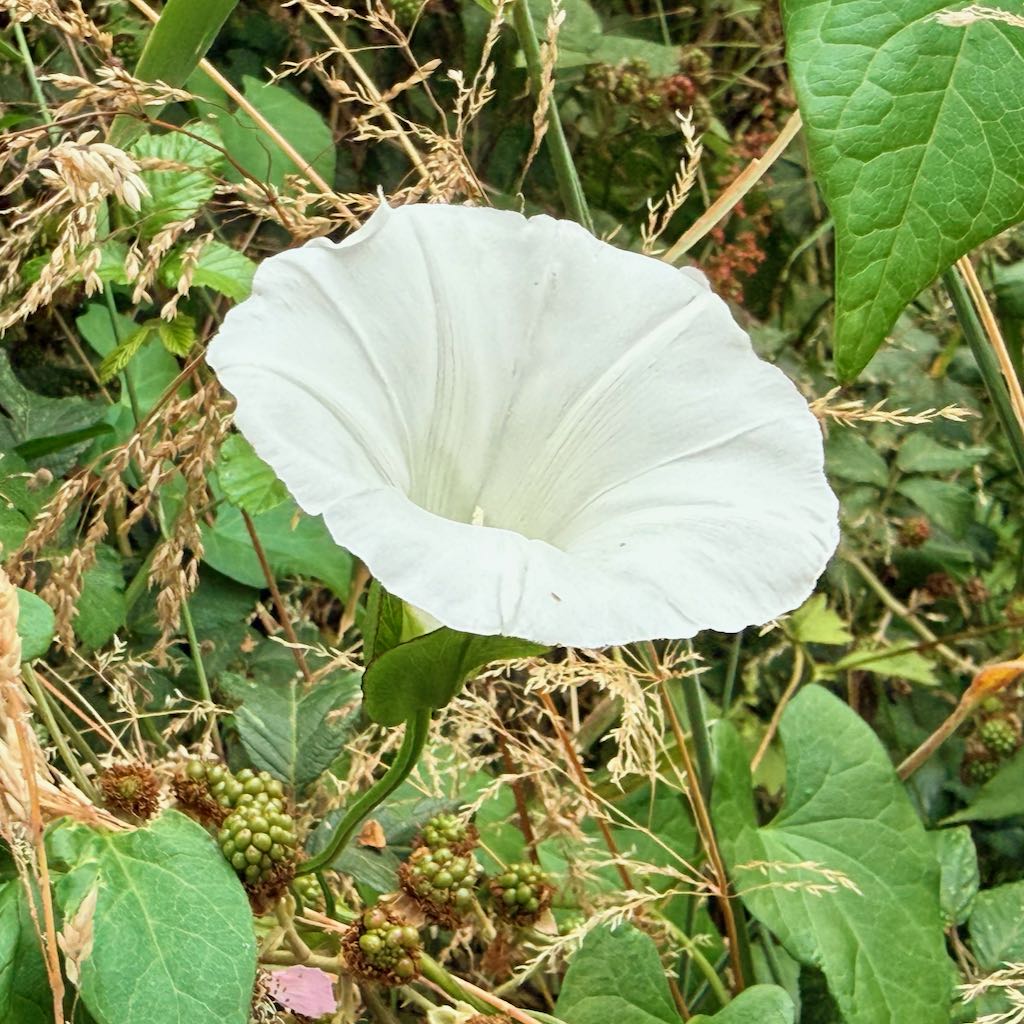
This scrambling, twin-stemmed perennial features distinct, alternate leaves shaped like arrowheads or shields. It produces elegant, trumpet-shaped blossoms that open wide during bright daylight and twist tightly closed at night or during rainfall. The flowers are typically brilliant white or soft pink with white stripes, creating a deceptively delicate appearance as they twine aggressively around orchard tree trunks.
Interesting Facts
Its relentless survival system is an absolute marvel of botanical engineering. The plant develops a massive, fragile network of underground roots that can plunge up to nine metres deep into the soil. If a gardener snaps the root while digging, a microscopic fragment measuring just a few millimetres can successfully regenerate into an entirely new, fully functioning plant within days. Interestingly, the vines always bind clockwise!
Importance to Wildlife
Despite its reputation as a fierce agricultural weed, its wide trumpet blossoms function as high-yield summer nectar bars. They serve as a critical food source for bumblebees, honeybees, and diverse hoverflies. The dense, twining mats provide excellent nesting camouflage and hunting cover for small garden birds, while the foliage hosts the caterpillars of the striking Convolvulus Hawk-moth.
Advice
Hedge Bindweed shouldn’t be touched since it can be slightly poisonous.