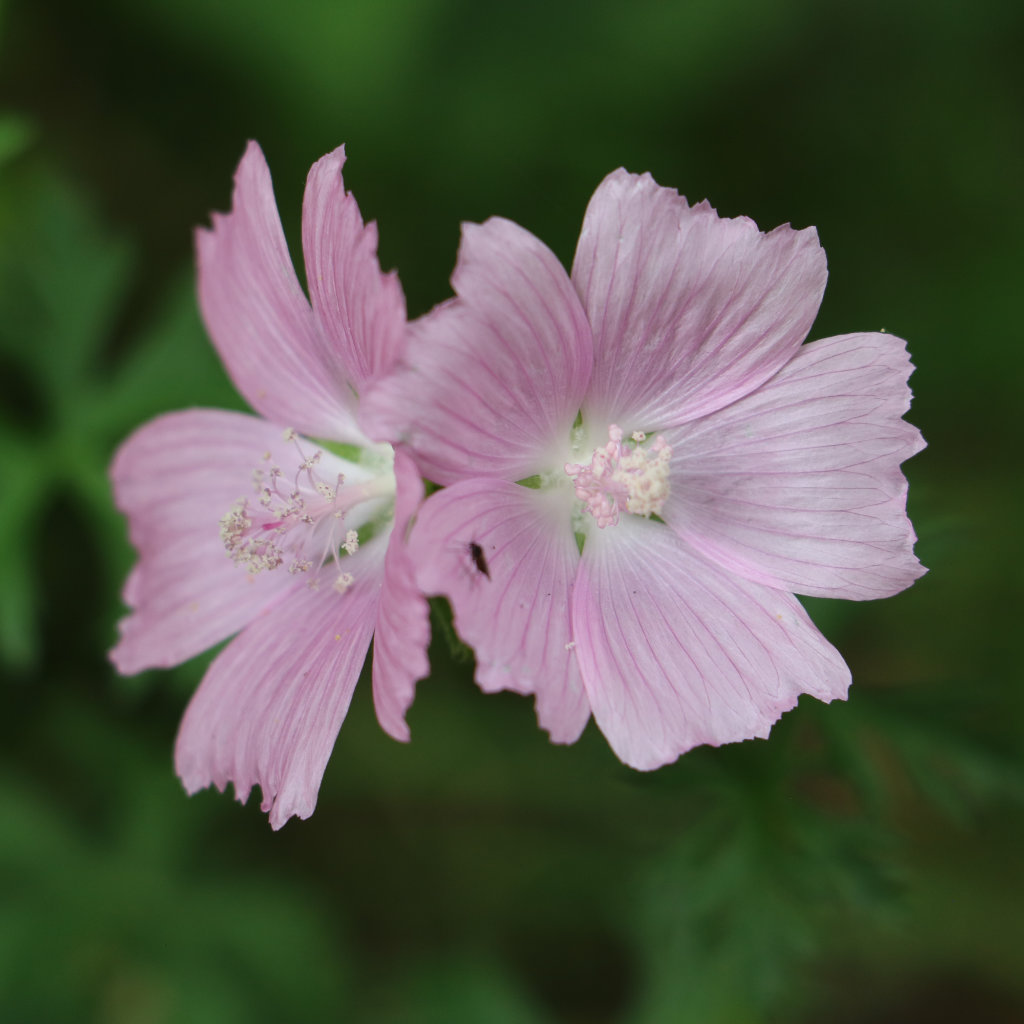
This bushy, upright perennial features a central stem covered in fine hairs. It displays two distinct leaf shapes: the lower base leaves are kidney-shaped, while the upper stem leaves are deeply divided into five narrow, lace-like lobes. It produces clusters of beautiful, five-petalled, saucer-shaped flowers in a delicate rose-pink or pure white, accented by prominent columns of fused pink stamens.
Interesting Facts
The plant derives its common name from the distinct, sweet musky fragrance emitted by its foliage, which becomes especially potent when handled or on warm summer evenings. Historically, its high mucilage content made it highly valued in European herbal medicine as a soothing cough remedy. Culturally, it is often grown as an elegant, old-fashioned favorite in traditional English cottage gardens.
Importance to Wildlife
An exceptional biodiversity booster, its wide, open saucer blossoms function as highly accessible nectar platforms. They draw a massive variety of pollinators, including honeybees, solitary bees, and hoverflies. Crucially, it serves as an essential larval host plant for several native insects, most notably the striking Painted Lady butterfly, making it a stellar addition to any eco-friendly orchard floor.
Advice
Musk Mallow can be used as a salad garnish; it’s best not to try it though.