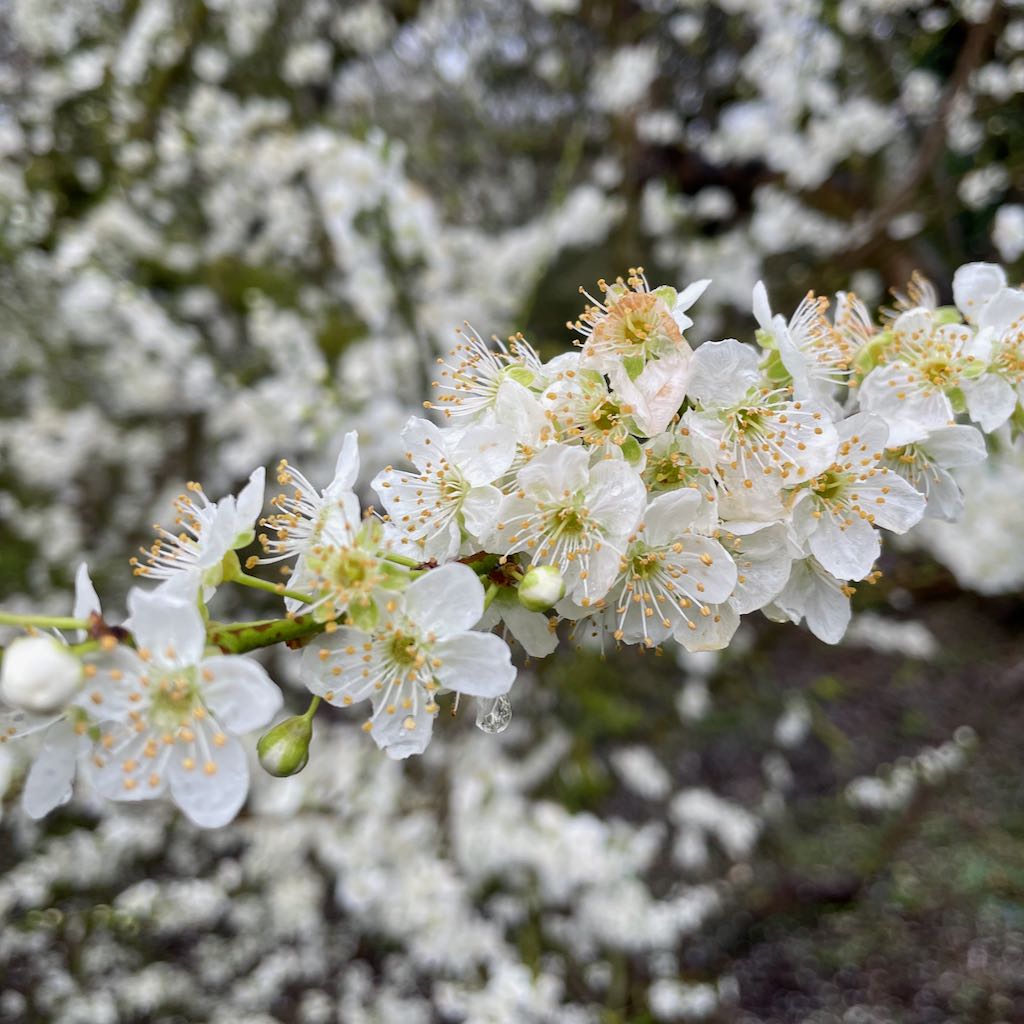
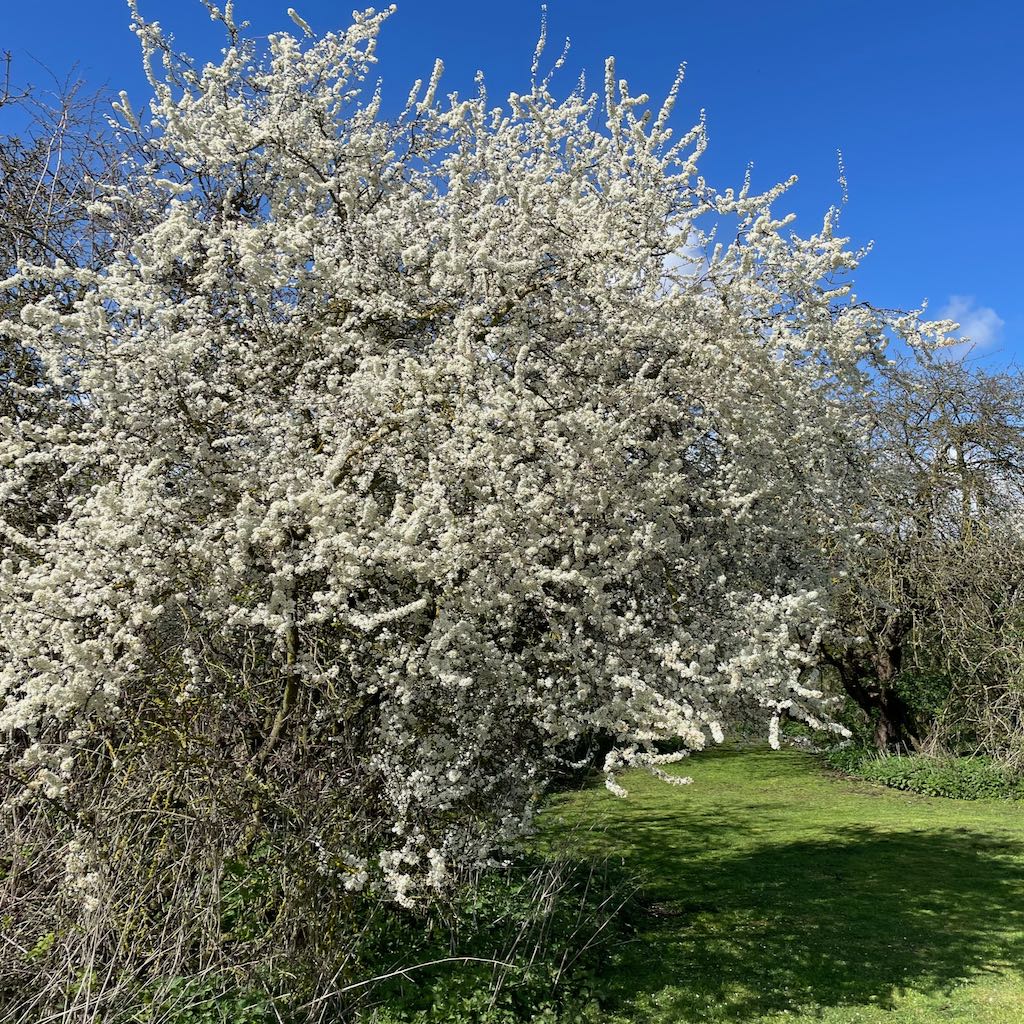
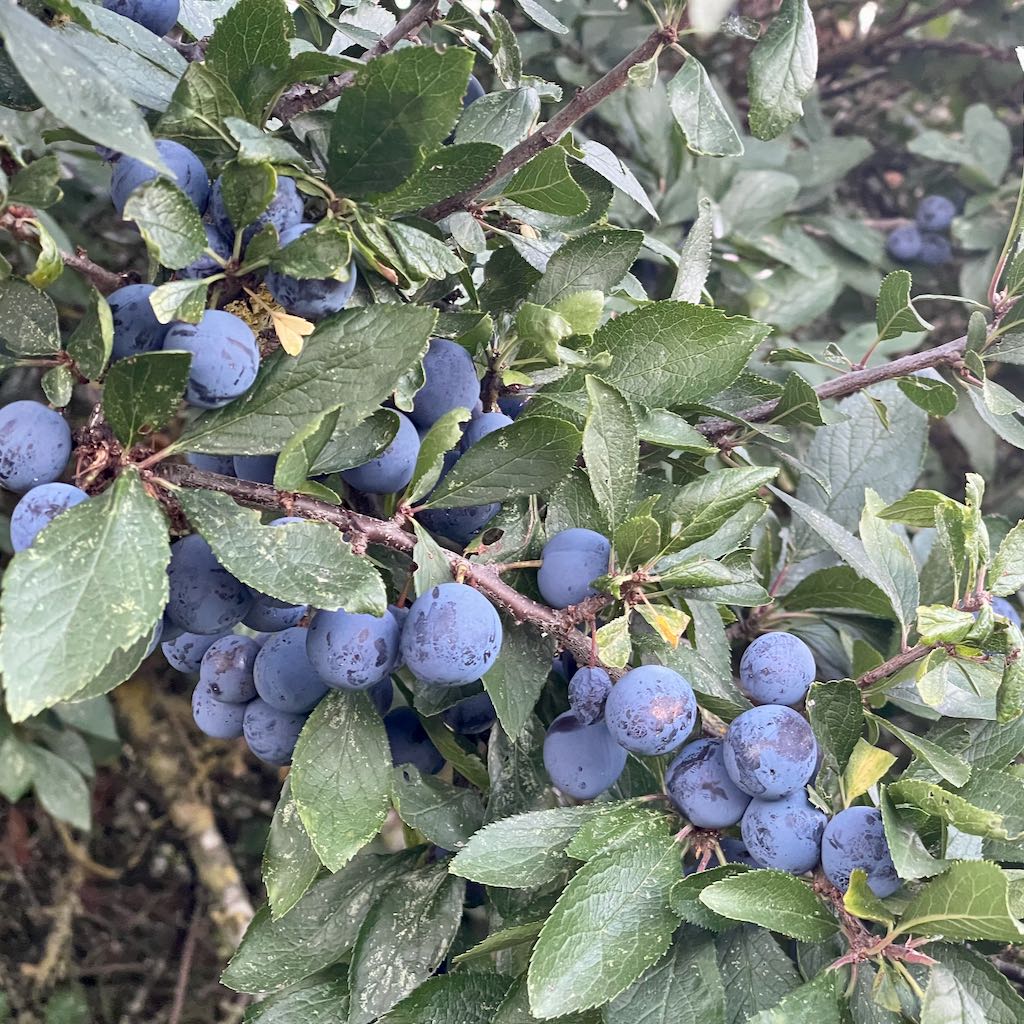
This dense, hardy, deciduous perennial grows as a tangled, branching shrub with dark, near-black bark and twigs that terminate in incredibly sharp, rigid thorns. In early spring, it erupts with a snowy abundance of small, five-petalled white flowers. These blossoms develop into small, ink-blue, globe-shaped fruit berries known as sloes, which feature a intensely tart and astringent taste.
Interesting Facts
Its fruit, the sloe, is the essential flavoring ingredient used to create traditional British sloe gin. Historically, its straight, durable wood was highly prized for carving traditional Irish shillelaghs and walking sticks. In European folklore, it was considered a sinister plant associated with witchcraft, dark magic, and the traditional “witches’ wands,” contrasting sharply with the gentle white Hawthorn.
Importance to Wildlife
An absolute cornerstone of early spring biodiversity, its early blossoms provide a vital, life-saving food source for emerging queen bumblebees and butterflies. It serves as the primary, essential caterpillar host plant for the rare and declining Black Hairstreak butterfly. Its intensely thorny, tangled thickets offer completely safe, impenetrable nesting shelter for songbirds, while winter sloes feed hungry thrushes.
Advice
Blackthorns are everywhere in the orchard but remember they are very thorny!