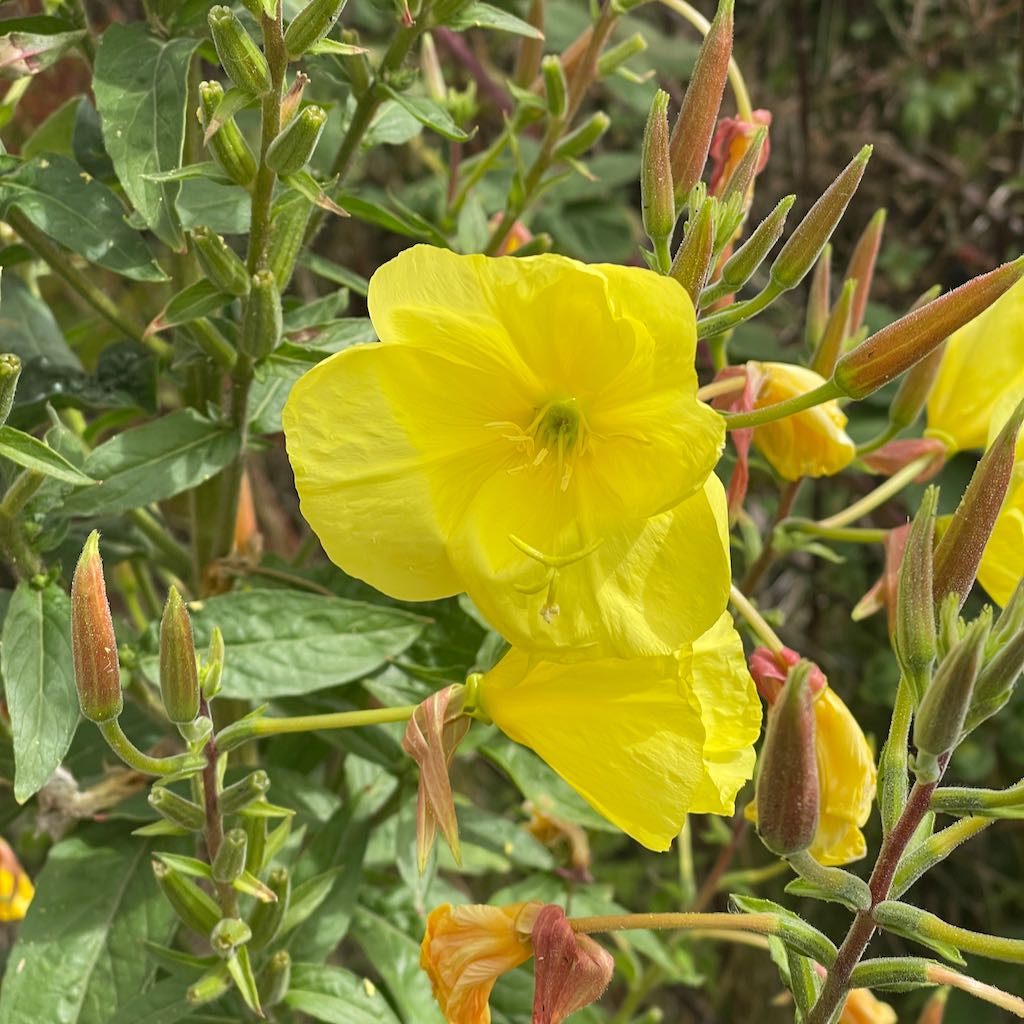
This statuesque biennial features a sturdy, reddish, hairy stem lined with lance-shaped, grey-green leaves. In its second summer, it produces large, fragrant, cup-shaped flowers with four bright yellow petals. The blossoms form in dense, spike-like clusters at the top of the plant, opening dynamically at dusk and remaining open until the following morning’s bright sun arrives.
Interesting Facts
True to its name, a single blossom can unfurl visibly in less than a minute at twilight. Indigenous to North America before naturalising extensively across Europe, it was historically dubbed “King’s Cure-all” due to its vast medicinal uses. Modern wellness industries heavily harvest its oil-rich seeds, which contain high concentrations of gamma-linolenic acid used globally to manage chronic inflammation.
Importance to Wildlife
This plant acts as a vital, night-time biodiversity engine in orchards. Opening at dusk, its heavily scented blossoms release a sweet perfume specifically designed to attract and sustain nocturnal pollinators like hawkmoths. By day, the remaining open flowers feed bumblebees and hoverflies. Come winter, its large seed spikes provide a highly valuable food source for goldfinches and other foraging birds.
Advice
Evening Primrose has appeared recently along the stream, However, it’s biennial so it may not appear each year.