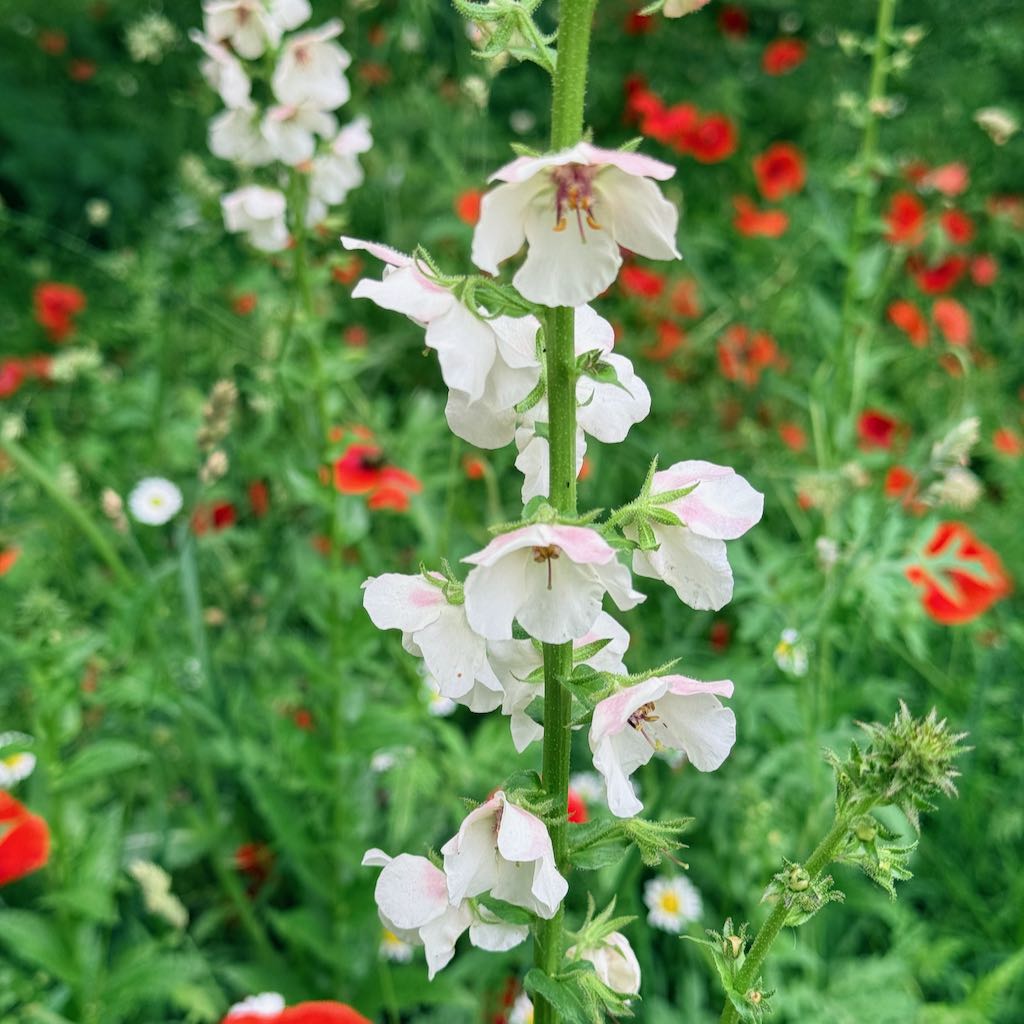
This stately, upright biennial features a strongly angled stem lined with dark green leaves that are smooth on top but heavily coated in dense, woolly white hairs underneath. In its second summer, it produces multiple branching spires packed with small, creamy-white or pale yellow flowers, adorned with uniquely fuzzy, woolly-filament stamens that mimic a cluster of bright, glowing torches.
Interesting Facts
Its historical folk names tell stories of human survival. Roman soldiers dipped the rigid, dried winter stalks into animal fat to create brilliant, long-burning torches. The thick, felt-like leaves were widely stripped down by early settlers to serve as soft, insulating winter boot inserts and as natural, oil-absorbent candlewicks, earning it a permanent place in local agricultural folklore.
Importance to Wildlife
This towering plant is an architectural masterpiece for biodiversity. The bright, open blooms act as a vital daytime nectar and pollen highway for bumblebees, hoverflies, and solitary bees. It serves as a crucial caterpillar food plant for the striking, brightly patterned Mullein Moth. Once winter arrives, its tall, hollow seed heads transform into an essential nesting shelter for hibernating insects and ladybirds.
Advice
White Mullein is generally low-toxicity and exceptionally safe compared to its lookalike relative, the highly toxic Foxglove, but it still possesses basic defences so it’s best left alone.