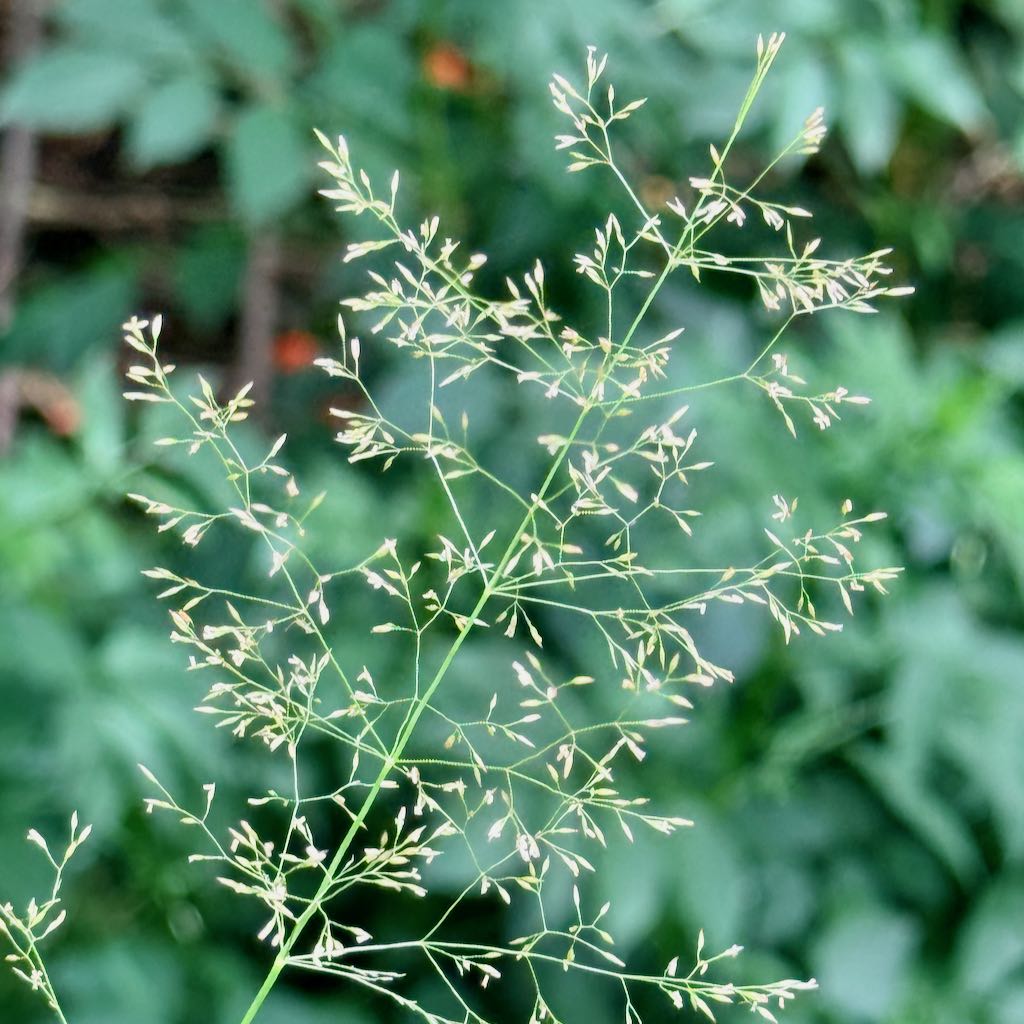
This perennial grass forms fine-textured, dense turf patches using short, shallow underground rhizomes. Its hairless, flat green leaf blades are sharply pointed at the tips. In summer, it produces exceptionally airy, highly branched, purplish-brown flower panicles. These delicate, shimmering seed heads give a soft, distinctly hazy appearance to open meadows and orchards.
Interesting Facts
Its common name “bent” explicitly references its shallow, creeping roots that bend horizontally just beneath the soil surface to spread laterally. Exceptionally resilient to low mowing, it is highly prized for luxury lawns and professional golf course putting greens. Intriguingly, it possesses an extraordinary genetic capacity to evolve a rapid, highly specialized tolerance to toxic heavy metals.
Importance to Wildlife
This grass functions as a vital, high-value ecosystem nursery by serving as a primary larval host plant for diverse native butterfly species, including the Meadow Brown and Gatekeeper. Its dense, fine tufts supply crucial nesting cover for ground-nesting birds and small mammals. Come late summer, its massive yields of microscopic, nutrient-dense grains provide an indispensable food source for foraging songbirds.
Advice
Common Bent is easy to see in any grassy area.