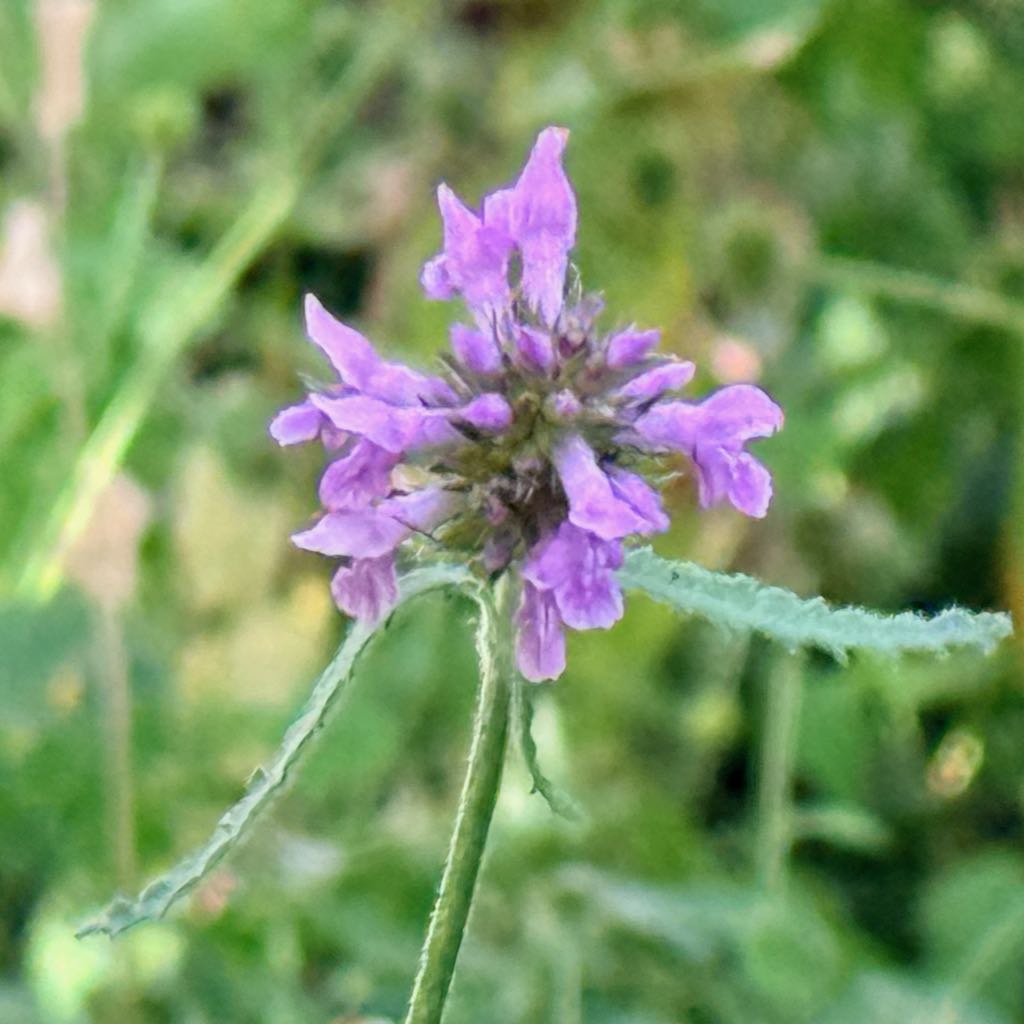
This upright perennial features a basal rosette of oblong, deeply textured, wrinkled green leaves with scalloped margins. In summer, stiff, square, mostly leafless stems arise, topped by dense, dense spikes of tubular, two-lipped flowers. The striking blossoms are usually a rich reddish-purple or pink, creating a compact and highly attractive architectural display in grasslands and open woodlands.
Interesting Facts
In medieval Europe, this plant was revered as a magical cure-all, sparking the famous Italian proverb, “Sell your coat and buy betony.” People planted it around churchyards to ward off evil spirits and wore it in amulets for protection. Rich in tannins, it was historically used as an external poultice for wounds and brewed into traditional tonic teas.
Importance to Wildlife
An invaluable asset for late-summer biodiversity, its bright flower spikes are a magnet for long-tongued pollinators. It is particularly adored by bumblebees, solitary bees, and specialised hoverflies. The plant acts as a vital nectar lifeline when spring flowers fade, and serves as an important larval host plant for several native moth species, including the vulnerable Marsh Fritillary butterfly.
Advice
Betony is non-toxic to humans, dogs, cats, and livestock when handled or encountered naturally.
It’s usually found in sparse areas of the orchard; it’s doesn’t like to be too crowded.