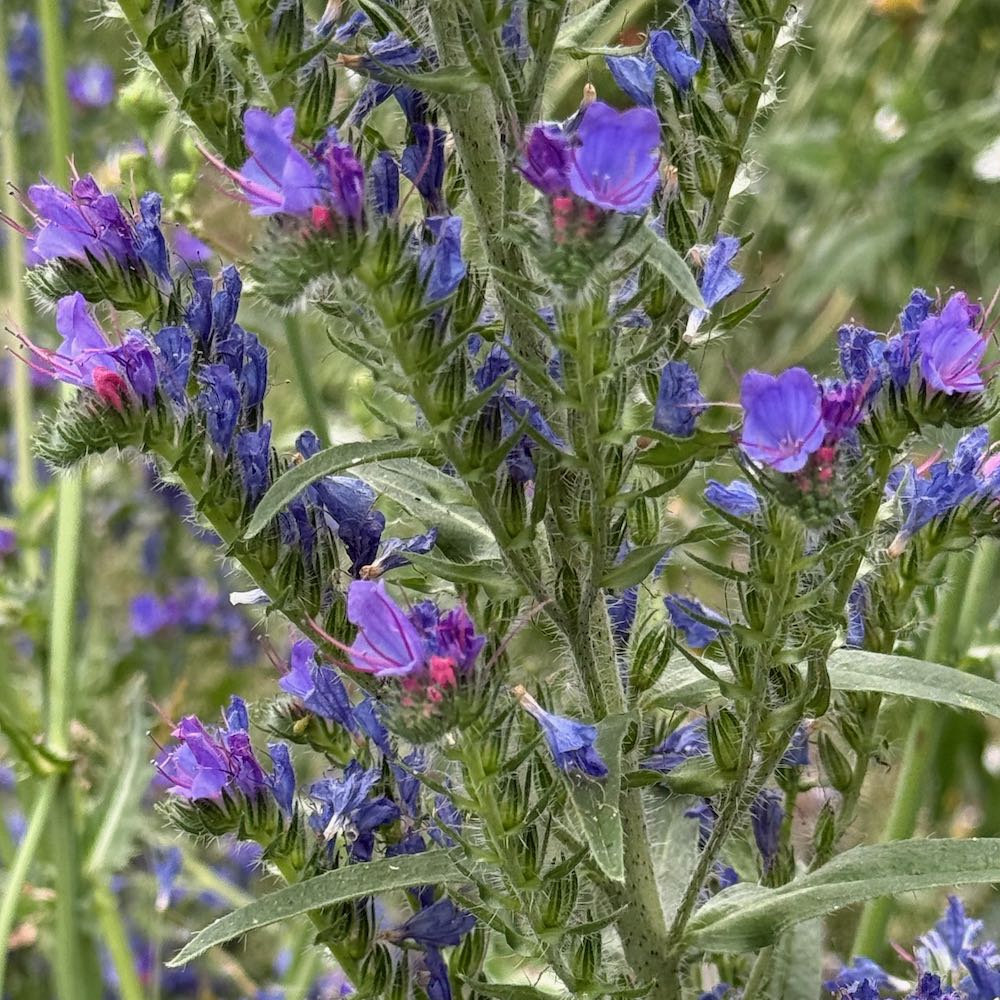
Viper’s-bugloss is a hairy plant with dense spikes of bright blue, funnel-shaped flowers. It provides food for a range of insects but is especially important to Buff-tailed and Red-tailed Bumblebees, Large Skipper and Painted Lady butterflies, Honeybees and Red Mason Bees.
Interesting Facts
Viper’s Bugloss may have got the ‘Viper’ part of it’s common name from its spotted stem, which is said to resemble a snake’s markings, or from the shape of its flowers, which look like the head of a snake. The ‘Bugloss’ part of its name comes from the Greek meaning ‘ox’s tongue’ and refers to the rough, tongue-shaped leaves.
Importance to Wildlife
During summer its vibrant blue flower spikes provide an exceptionally long-lasting, uninterrupted supply of high-sugar nectar and pollen. This consistent fuel source nourishes honeybees, endangered solitary bees, and hoverflies daily. Additionally, it serves as a critical food plant for butterflies and moths; the Painted Lady butterfly relies on it for nectar and as a caterpillar host. In autumn, its dense seed heads feed ground-foraging birds like goldfinches, driving year-round biodiversity.
The Bumblebee Conservation Trust once named it the single best plant for Bumblebees.
Advice
The leaves can be a mild skin irritant so it’s best not to touch it too much.