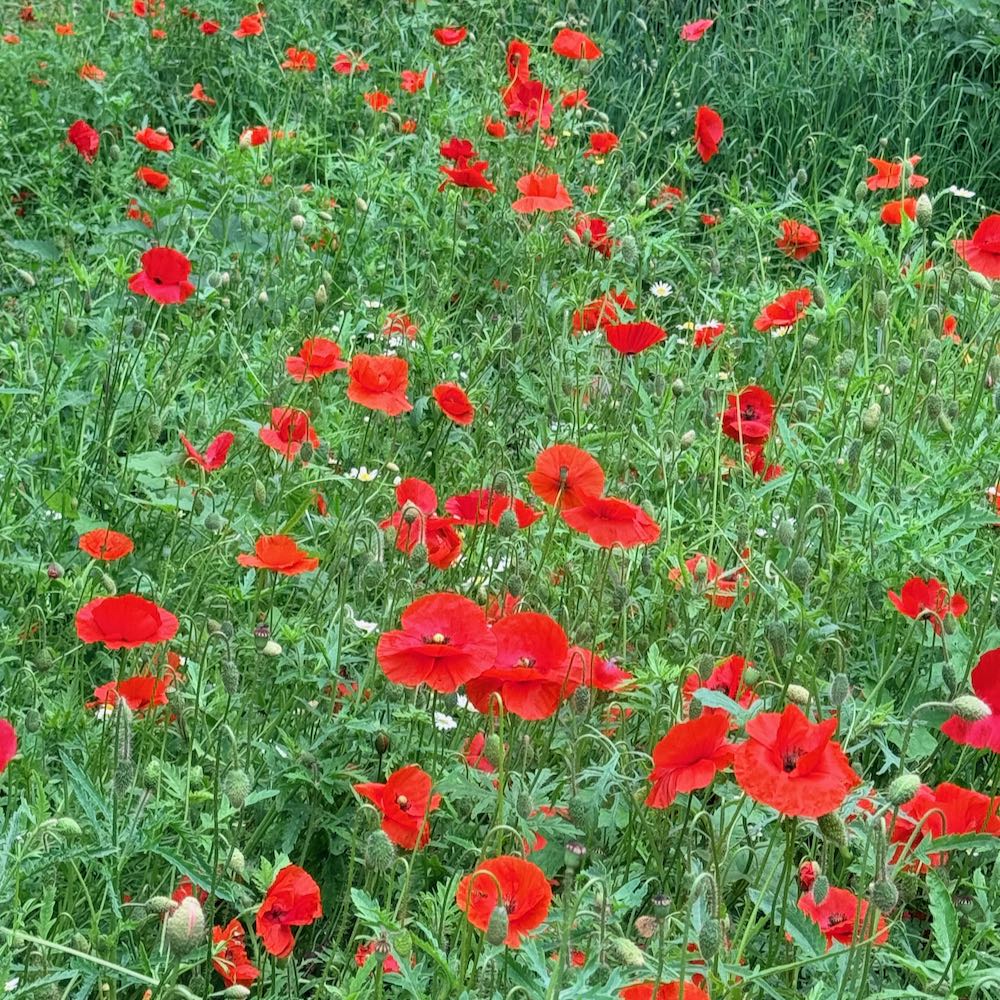
The Poppy thrives in disturbed soil that has been churned or dug by a tractor or a gardener. They have become associated with our wartime history since they sprung up on the disturbed soil of the battlefields of Northern France. Today, it remains the ultimate UK symbol of remembrance and hope. Beyond their beauty and history, they are highly valuable to biodiversity, providing a vital pollen source for bumblebees and other native pollinators.
Interesting Facts
Every Poppy can produce up to 50,000 seeds and each seed can lay dormant in the earth for up to 100 years. So any Poppy you look at in this orchard could have grown from a seed that fell to the ground before the Second World War.
Importance to Wildlife
Poppies are vital for wildlife, serving as key biodiversity hubs. While they produce no nectar, their single-petalled blooms offer huge amounts of protein-rich black pollen. This clean nutrient source is highly sought after by honeybees, bumblebees, and hoverflies during early morning foraging rushes. In autumn, the dried seed heads scatter thousands of oil-rich seeds. These provide a crucial winter food supply for declining farmland birds, like finches.
Advice
If there are Poppies in flower then you will see them (they are not shy).